
Basil Beef Stir Fry Done Right

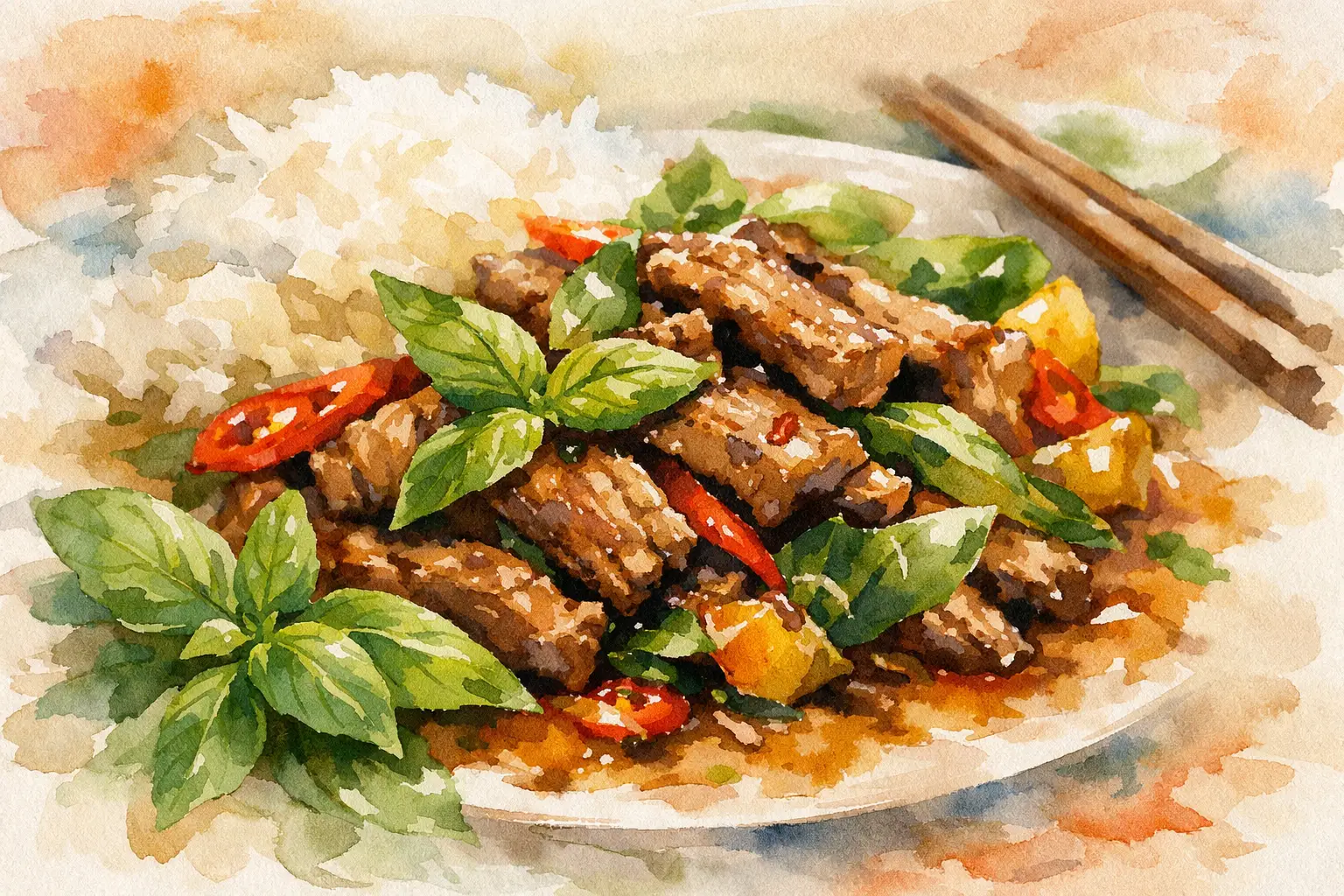
When basil beef stir fry is done well, you notice it right away – tender slices of beef, plenty of garlic, quick heat from chili, and fresh basil that hits at the end instead of getting lost in the pan. It is one of those dishes that feels easy to order because the flavors are familiar, but it still delivers something bolder and more satisfying than a standard takeout stir fry.
This is the kind of plate people come back to when they want real flavor without a heavy, complicated meal. You get savory sauce, aromatic herbs, and enough heat to keep every bite interesting. For lunch, it works because it is fast and filling. For dinner, it holds its own next to rice, noodles, or a spread of other Thai favorites.
What makes basil beef stir fry stand out
A lot of stir fries lean too hard on sauce. The result is salty, glossy, and one-note. A good basil beef stir fry depends more on balance. The beef should stay juicy, the garlic should be noticeable, and the basil should bring a fresh, peppery finish that changes the whole dish.
That balance matters because basil is not just a garnish here. It is part of the flavor structure. When it hits the hot pan near the end, it softens just enough to perfume the sauce. That gives the dish a brighter finish than heavier brown-sauce stir fries.
The beef also changes the experience. Chicken can be lighter, and shrimp brings sweetness, but beef gives this dish a deeper, richer base. It stands up well to garlic, chili, soy-based seasoning, and oyster sauce. That is why basil and beef work so naturally together.
The flavor profile customers can expect
If you have never ordered basil beef stir fry before, the easiest way to think about it is savory first, aromatic second, spicy third. The exact heat level can vary, and that is one of the useful things about this dish. It can stay mild enough for someone who wants flavor without too much chili, or it can lean hotter for customers who like a stronger kick.
The core flavor usually comes from garlic, soy sauce, oyster sauce, and a touch of sweetness to round everything out. Then basil lifts the whole pan. In Thai cooking, that herbal finish is what keeps a stir fry from tasting flat or overly heavy.
Texture is part of the appeal too. The beef should be sliced thin enough to stay tender but still have some bite. Onions or peppers often add a little sweetness and crunch. Served over jasmine rice, the sauce settles into the grains and makes the dish feel complete without needing anything extra.
Why basil matters in basil beef stir fry
Not all basil tastes the same, and that makes a real difference. Sweet basil is softer and more familiar to many diners. Thai basil has a slightly firmer leaf and a more peppery, anise-like flavor. If you want a dish with more character and a more authentic Thai profile, Thai basil usually gives better results.
That said, it depends on the style of the kitchen and the kind of finish you want. Some versions are built to be approachable and milder, especially for diners who want something easy to enjoy on a first order. Others push the herb forward and let it compete more directly with garlic and chili. Neither is wrong. It is simply a matter of style and audience.
For a restaurant serving a broad mix of customers, basil beef stir fry works especially well because it is recognizable but still distinct. People may not know every Thai herb by name, but they understand basil, beef, garlic, and chili. That makes the dish easy to choose and easy to enjoy.
How a great basil beef stir fry is cooked
This is a fast dish, and that speed is part of its quality. The pan or wok needs to be hot enough to sear the beef quickly without steaming it. If the heat is too low, the meat releases liquid, the vegetables soften too much, and the sauce becomes dull. If the heat is right, the beef keeps its texture and the aromatics stay sharp.
Timing matters just as much as heat. Garlic goes in early so it perfumes the oil, but it cannot sit long enough to burn. The beef needs a quick toss, not a slow simmer. Sauce should coat the ingredients rather than drown them. Basil goes in last, just long enough to wilt and release its fragrance.
That short cooking window is why this dish tastes best when it is made fresh to order. It is also why a dependable kitchen matters. Stir fry sounds simple, but simple dishes leave no room to hide weak ingredients or sloppy cooking.
The best pairings for this dish
Jasmine rice is the most natural partner for basil beef stir fry. It absorbs the sauce, softens the chili heat, and lets the basil stay at the center of the dish. If you want a straightforward meal, this is usually the best choice.
For a bigger spread, the dish pairs well with lighter starters and soups. A crisp papaya salad can add acidity and crunch. Tom Yum brings heat and citrus. Tom Kha gives you a richer, coconut-based contrast that works especially well if the stir fry is on the spicy side.
If you are ordering for a group, basil beef stir fry also fits nicely beside noodles, fried rice, or appetizers. It has enough bold flavor to stand out, but it does not dominate the table. That makes it a smart middle dish when everyone wants something slightly different.
Who usually enjoys basil beef stir fry most
This dish works for more people than you might expect. It is a strong option for diners who like beef and want something more aromatic than a standard pepper steak. It also suits customers who enjoy Thai flavors but do not necessarily want a curry.
For working lunches, it makes sense because it is quick, satisfying, and not overly complicated. For family dinners, it is approachable enough for mixed preferences, especially when served with rice and a few sides. For customers ordering at home, it holds up well because the sauce keeps the beef flavorful without making the dish too heavy by the time it arrives.
Spice preference is the main thing to consider. Some basil beef stir fry versions are very chili-forward, while others use chili more as background heat. If you like bold flavor but not intense spice, a balanced version is usually the better fit.
What to look for when ordering basil beef stir fry
A good dish description should tell you more than just the name. You want to know whether the focus is on garlic, chili, basil, and tender beef, not just generic stir-fried sauce. Clear menu language helps set expectations, especially for first-time customers deciding between several beef or noodle dishes.
You should also expect freshness to come through in the final taste. Basil should be visible and fragrant. The beef should taste seared, not boiled. The sauce should cling lightly rather than pool at the bottom of the container.
That is one reason this dish fits so well on a practical, flavor-led menu. At Rustic Thai Kitchen, dishes built around basil, garlic, and fresh stir-fried ingredients appeal to diners who want restaurant-quality food that still feels easy to order on a busy day.
Basil beef stir fry for lunch, dinner, or delivery
Some dishes are better in the dining room than they are in a delivery bag. Basil beef stir fry generally performs well in both settings. Fresh from the pan, it has the strongest aroma and best texture. Delivered properly, it still keeps its flavor because the sauce protects the beef and the rice balances everything out.
For lunch, it gives you enough substance without the heaviness of a very rich curry or fried dish. For dinner, it is flexible. You can keep it simple as a single plate, or build around it with soup, salad, and appetizers if you want a fuller meal.
That flexibility is part of the reason it stays popular. It suits people eating alone, couples sharing a few dishes, and families ordering a table’s worth of food. It feels familiar enough to be an easy pick, but flavorful enough to avoid feeling routine.
A well-made basil beef stir fry does not need extra hype. It just needs good beef, real basil, a hot pan, and proper balance. When those pieces come together, you get a dish that is fast, fragrant, and worth ordering again.