Green Papaya Salad Review: Fresh or Too Sharp?

Some dishes tell you exactly what they are from the first bite. A good green papaya salad review should do the same. This is not a soft, mild starter that fades into the background. It is crisp, sharp, salty, sour, lightly sweet, and often very spicy. If you order it expecting a gentle side salad, you will be surprised. If you order it for contrast, freshness, and real Thai flavor, it earns its place fast.
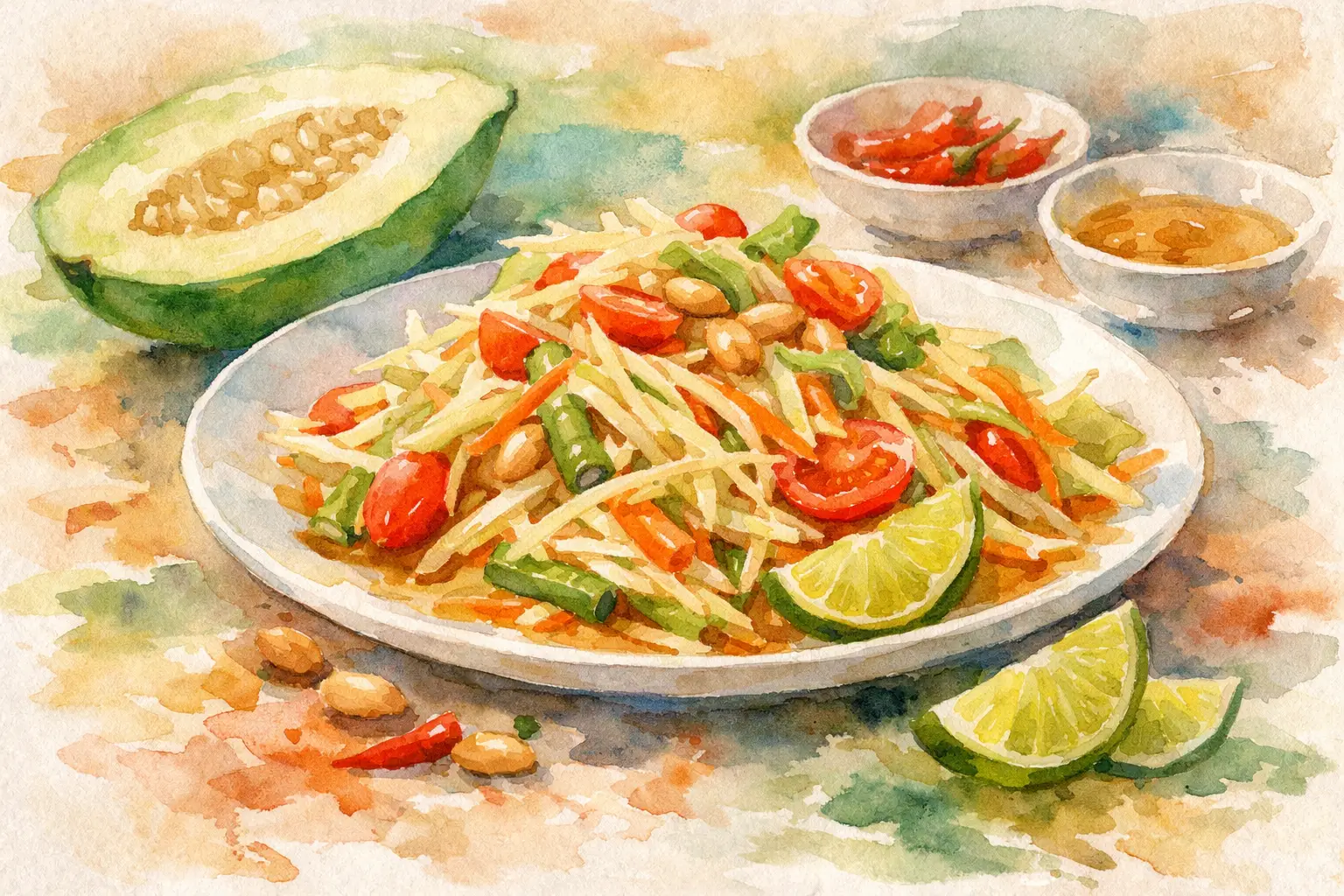
Green papaya salad, often known as Som Tam, is one of those dishes that looks simple but depends on balance. Shredded green papaya brings crunch more than sweetness. The dressing does the heavy lifting with lime, fish sauce, garlic, chilies, and palm sugar. Tomatoes add juiciness, long beans add another snap, and peanuts usually round it out with nuttiness. In the right hands, every bite feels bright and alive.
Green Papaya Salad Review: What Stands Out
The first thing that stands out is texture. Green papaya has a firm, clean crunch that sits somewhere between cucumber and underripe mango, but lighter than both. It does not taste fruity in the way many people expect. That matters because the dish is built less around sweetness and more around freshness and bite.
The second thing is the dressing. This is where green papaya salad either works or falls apart. Too much lime and it tastes harsh. Too much fish sauce and the whole dish turns heavy and overly salty. Too much sugar and it starts tasting like a sweet slaw instead of a Thai salad. The best versions keep all three in tension, with chilies cutting through and garlic giving it depth.
Then there is the heat level. Authentic versions can be intense. Not dramatic for effect – just genuinely hot. For diners who love Thai food, that heat is part of the appeal because it lifts the acidity and keeps the salad from feeling flat. For newer customers, a milder version is often the better choice, especially if this is being added to a larger meal with soup, curry, or noodles.
Flavor Profile: Bright, Salty, Sour, and Spicy
A proper green papaya salad review has to be clear about flavor, because this dish is not aiming for universal comfort. It is aiming for balance with edge. The lime brings brightness. Fish sauce adds salt and savoriness. Palm sugar smooths out the corners without making the dish dessert-like. Garlic and chilies give it punch.
That combination makes green papaya salad especially good when the rest of the meal is richer. If you are ordering coconut-based curry, fried appetizers, or stir-fried noodles, this salad cuts through the heaviness and refreshes your palate. It does a different job than soup or spring rolls. It wakes up the table.
Tomatoes make more difference than many people realize. When they are fresh and slightly crushed into the dressing, they soften the salad just enough and add moisture without turning it watery. Peanuts help too, but only when they stay crisp. Soft peanuts or soggy papaya dull the whole experience.
Who Will Actually Enjoy It
This dish is ideal for diners who like contrast and strong seasoning. If you enjoy foods with clear acidity, raw crunch, and a chili kick, green papaya salad is easy to appreciate. It is also a smart choice for anyone who wants something lighter without feeling like they ordered the least interesting item on the menu.
It may be less appealing for customers who prefer creamy, mellow, or heavily savory dishes. If your usual order is mild fried rice, sweet stir-fried noodles, or rich coconut soup, the first bite can feel aggressive. That does not make it bad. It just means the dish is doing something very specific.
For group orders, it depends on the mix of diners. A green papaya salad can be a great shared starter when everyone likes bold flavor. In a group with mixed spice tolerance, it is better to request medium heat so the sourness and crunch still come through without overwhelming the table.
What Makes a Restaurant Version Good
Freshness is non-negotiable. Because the ingredients are mostly raw and lightly dressed, there is nowhere to hide. The papaya has to be crisp. The long beans should snap. The tomatoes should taste ripe, not refrigerated into blandness. Lime should taste fresh squeezed, not bottled and dull.
Technique matters too. A strong version is usually lightly pounded and tossed so the dressing gets into the papaya instead of sitting at the bottom of the container. That pounding should release flavor, not crush everything into a wet pile. The salad should still look vibrant and have shape.
Portioning is another detail that affects the overall review. A small portion can work as a starter, but the dish feels more satisfying when there is enough papaya to carry the dressing and enough garnish to add texture in every few bites. Too often, restaurants are generous with tomato and stingy with papaya, which throws off the balance.
Green Papaya Salad Review for Delivery Orders
This is one of the better Thai salads for delivery, but only if it is packed properly. The main risk is moisture. If the dressing sits too long, the papaya softens and the peanuts lose their crunch. That does not ruin the dish, but it takes away the fresh edge that makes it worth ordering in the first place.
The best delivery versions arrive chilled or cool, with the salad still crisp and the dressing not overly pooled at the bottom. If the peanuts are packed separately, even better. That small detail keeps texture intact and makes the salad taste closer to a dine-in order.
For customers ordering online, green papaya salad makes the most sense as part of a mixed meal. Pair it with grilled items, fried appetizers, or noodle dishes and it brings balance. Ordered on its own, it can feel more like a sharp snack than a full lunch unless you already know that is exactly what you want.
At Rustic Thai Kitchen, this kind of dish fits the menu well because it gives customers something bright and traditional next to richer staples like curries, soups, and stir-fried noodles. It is a practical order if you want variety on the table rather than more of the same textures and flavors.
Common Trade-Offs to Know Before You Order
The biggest trade-off is authenticity versus broad appeal. A more traditional version will be saltier, sourer, and hotter than many casual diners expect. A more adjusted version may be easier to enjoy on first try, but it can lose the lively character that makes green papaya salad memorable.
The second trade-off is freshness versus convenience. This salad is best soon after it is made. It holds up better than delicate lettuce salads, but it is still not a dish that improves with time. If you are ordering delivery during a long commute or saving food for later, choose with that in mind.
There is also the issue of protein expectations. Some people assume salad means a lighter but complete meal. Green papaya salad is usually more of a side, starter, or shared plate unless the menu offers added shrimp, crab, or another topping. If you are hungry, order it as a complement, not the whole plan.
Final Verdict
As a straight green papaya salad review, this dish earns high marks when you judge it for what it is supposed to be: crisp, bright, spicy, and unapologetically bold. It is not for every mood, and it is not the safest first pick for diners who want mild, familiar flavors. But when made with fresh papaya, lively lime, balanced fish sauce, and real chili heat, it does exactly what a great Thai salad should do.
If you want a dish that cuts through rich food, adds crunch to the meal, and delivers clear Thai flavor in a few sharp bites, green papaya salad is worth ordering. Just choose your spice level honestly, and let the salad be the lively counterpoint your table needed.