
Thai Chicken Curry with Coconut Milk and Basil

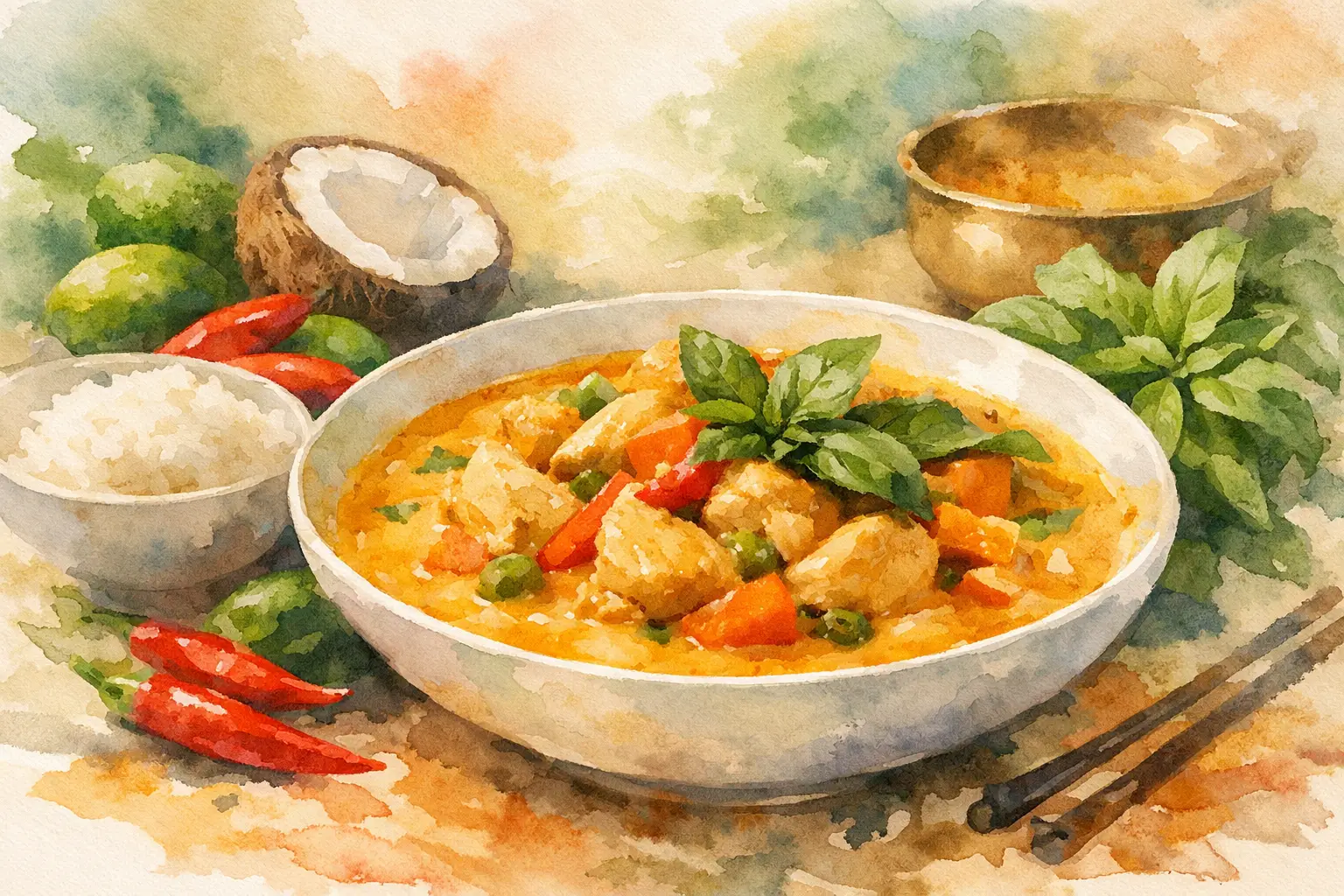
Some curries announce themselves with heat first. This one leads with aroma. Thai chicken curry with coconut milk and basil hits the table with a creamy, savory base, then follows with the sweetness of coconut milk, the gentle bite of curry paste, and the fresh lift of basil. It is the kind of dish that feels comforting right away but still has enough depth to keep every bite interesting.
For diners who want something richer than a stir-fry but not as sharp as a sour soup, this curry lands in the middle in the best way. It is warm, fragrant, and easy to pair with jasmine rice. If you are ordering for a family, a work lunch, or a quiet dinner at home, it is one of the most dependable choices on a Thai menu because it delivers flavor without asking you to guess what you are getting.
Why thai chicken curry with coconut milk and basil works so well
The appeal starts with balance. Chicken gives the dish substance without making it heavy, while coconut milk softens the edges of the spices and carries the aromatics through the sauce. Basil changes the finish completely. Instead of tasting flat or overly creamy, the curry stays bright and fresh.
That balance matters because curry can easily go too far in one direction. Some are all heat, some are too sweet, and some lean so heavily on coconut milk that the other ingredients disappear. A well-made version keeps each part visible. You taste the curry paste, but it does not overpower the chicken. You notice the basil, but it does not turn the dish into an herb salad. The coconut milk is present from the first spoonful, yet the final result still feels lively.
For many customers, that is exactly what makes it easy to order again. It feels familiar enough for someone new to Thai food, but it still has the herbal, layered taste that experienced Thai food fans expect.
The flavor profile in plain terms
If you have never tried this dish before, the simplest description is creamy, savory, lightly spicy, and aromatic. The chicken absorbs the sauce well, so each bite carries flavor instead of feeling separate from the curry. Coconut milk gives body and a smooth texture, while basil adds a slightly peppery, sweet note that freshens the whole dish.
Depending on the kitchen, you may also pick up garlic, chilies, fish sauce, or a little palm sugar. Some versions include vegetables such as bell peppers, bamboo shoots, or onion, which bring sweetness and texture. Those details can shift the dish slightly, but the core character stays the same: rich curry sauce, tender chicken, and basil layered over coconut milk.
The spice level can vary. That is worth knowing if you are ordering for a group. Coconut milk naturally tones down some of the chili heat, so the dish often tastes gentler than it smells. Still, not every kitchen builds curry the same way. If you prefer a milder dinner, it is reasonable to ask for less spice. If you like stronger heat, this curry can usually handle it without losing its flavor.
What makes the ingredients matter
A curry like this is only as good as its base. Coconut milk should taste creamy and clean, not oily or overly sweet. Curry paste should bring depth from chilies and aromatics, not just raw heat. Chicken should stay tender, because dry chicken can make even a good sauce feel disappointing.
Basil is the finishing ingredient that often tells you whether the dish was handled with care. Added at the right moment, it perfumes the curry without turning dull. Added too early, it can disappear into the sauce. Added too late in excess, it can feel harsh. The best result is a clear basil note that lifts the richness rather than competing with it.
Freshness also matters more here than many people expect. Because the ingredient list is relatively focused, there is nowhere for stale herbs or a weak sauce to hide. When the aromatics are right, the curry smells inviting before you even take the first bite.
Thai chicken curry with coconut milk and basil on a restaurant menu
On a practical level, this is one of the easiest curries to recommend because it fits different appetites and ordering habits. It works for a solo lunch, but it also travels well for delivery and holds its texture better than some fried dishes. With rice, it becomes a full meal without needing much else.
For customers browsing a menu quickly, this dish also makes sense because the name tells you what you are getting. Chicken is familiar. Coconut milk signals creaminess. Basil suggests freshness. Compared with more specialized dishes that may need explanation, thai chicken curry with coconut milk and basil feels approachable right away.
That matters in mixed orders. One person may want noodles, another may prefer fried rice, and someone else may be looking for a richer curry. This dish fits comfortably into that kind of order because it pairs well with a range of sides and still stands on its own.
Best pairings for a complete meal
Jasmine rice is the obvious partner, and for good reason. It absorbs the sauce without distracting from it. A curry this flavorful needs something neutral beside it, and rice gives the dish structure. If you skip rice entirely, the sauce can feel too concentrated by the end of the meal.
If you are building a fuller table, fresh and sharper dishes work especially well next to it. A green papaya salad brings crunch and acidity that cut through the richness. Tom Yum offers a hotter, more citrusy contrast if you want stronger flavor across the meal. Even a simple appetizer with a crisp texture can make the curry feel more balanced.
The one trade-off is ordering too many rich dishes together. Coconut-based soups, heavy fried appetizers, and creamy curries in the same meal can start to blur into one another. If your goal is variety, mix this curry with something bright, grilled, or crunchy.
Who will enjoy this dish most
This curry is a strong choice for diners who like layered flavor but do not want extreme heat. It is also a smart entry point for anyone interested in Thai food and unsure where to start. The ingredients are recognizable, the texture is comforting, and the basil keeps it from feeling one-note.
Families tend to like it because it is easy to share. Working professionals ordering lunch often choose it because it feels satisfying without being complicated. For evening delivery, it has that same appeal – restaurant flavor, familiar ingredients, and a sauce that still tastes good by the time it reaches your door.
If you want intense sourness or a very dry stir-fried texture, this may not be your first pick. This is a sauce-forward dish. It is meant to be spooned over rice, eaten slowly, and appreciated for its balance rather than speed.
What to look for when ordering
Start with the basics. Ask yourself whether you want mild comfort or stronger spice. Then think about sides. Rice is usually essential, while a fresh salad or soup can round out the meal depending on how hungry you are.
It also helps to think about timing. This curry works well for delivery because the sauce protects the chicken from drying out. That makes it a reliable option on busy evenings when you want something that still tastes complete after travel. At Rustic Thai Kitchen, dishes built around fresh herbs, coconut milk, and clear Thai seasoning are especially good for customers who want authentic flavor in a format that is easy to order and easy to enjoy at home.
If you are ordering for a group with mixed preferences, this is one of the safest shared mains on the menu. It is flavorful enough for regular Thai food fans and accessible enough for someone ordering curry for the first time.
A good curry should do more than fill the plate. It should make the next bite easy to want. Thai chicken curry with coconut milk and basil does that with creamy sauce, tender chicken, and a fresh basil finish that keeps the whole dish in balance.