Pad Kee Mao vs Pad See Ew: Which to Order

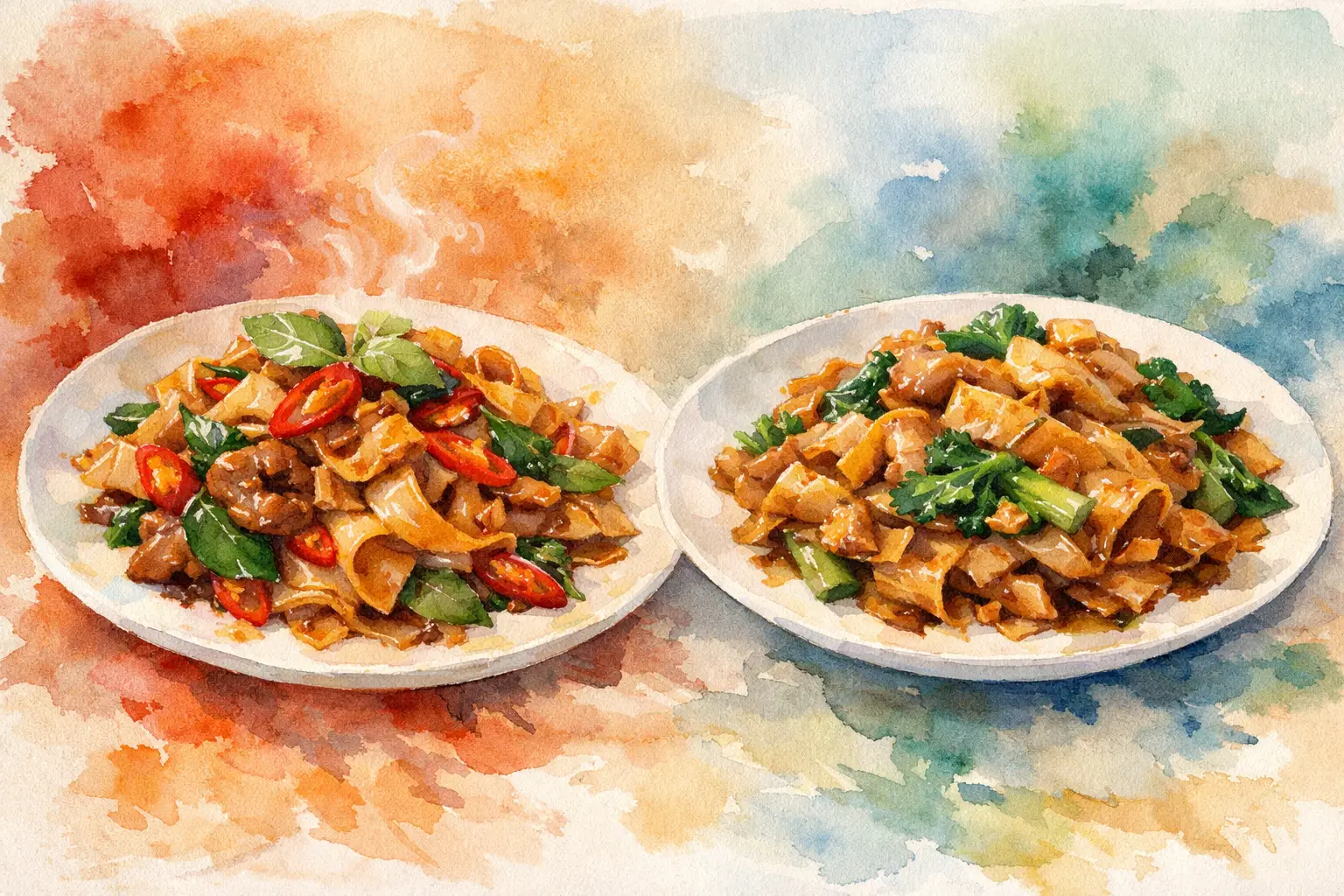
Stuck between pad kee mao vs pad see ew? It usually comes down to one question: do you want bold heat and basil, or a sweeter, darker stir-fried noodle with a softer finish? Both are popular Thai noodle dishes, both use wide rice noodles, and both can be built with chicken, beef, shrimp, or vegetables. But once they hit the wok, they go in very different directions.
If you have ever looked at a Thai menu and felt like these two dishes sound almost the same, you are not alone. They share a noodle base, they are both stir-fried fast over high heat, and they both feel satisfying enough for lunch or dinner. The difference is in the sauce, the aromatics, the vegetables, and the overall mood of the dish. One is louder and more peppery. The other is smoother, slightly sweet, and more familiar for diners who want comfort over heat.
Pad kee mao vs pad see ew: the main difference
Pad kee mao is often known as drunken noodles. It is bold, savory, spicy, and aromatic, usually cooked with garlic, chilies, basil, and vegetables that keep some bite. The flavor is sharper and more layered, with heat playing a central role.
Pad see ew leans in a different direction. It is stir-fried with a dark soy-based sauce that gives the noodles a rich brown color and a mildly sweet, savory taste. Chinese broccoli is a classic addition, and the dish is usually less spicy unless extra chili is added on the side. The overall feel is softer, slightly smoky from the wok, and easier for many first-time Thai food diners.
So if you want a quick shortcut, choose pad kee mao when you are craving heat, basil, and stronger seasoning. Choose pad see ew when you want something mellow, rich, and deeply comforting.
What pad kee mao tastes like
Pad kee mao is the dish people order when plain noodles will not cut it. The sauce is savory, but it is not heavy in the same sweet-dark way as pad see ew. Instead, the flavor comes from a mix of soy-based seasoning, garlic, fresh chili, and Thai basil. That basil matters. It gives the dish a peppery, slightly sweet aroma that makes it feel brighter and more aggressive at the same time.
The vegetables are also part of the experience. You might get bell pepper, onion, baby corn, green beans, or other crisp vegetables depending on the kitchen. That gives pad kee mao more texture contrast than pad see ew. Each bite usually has noodle, protein, chili heat, and a fresh herbal lift.
It is a strong choice if you like stir-fried noodles with personality. It is less ideal if you are sensitive to spice or if you want a sweeter sauce. Even when made at a medium heat, pad kee mao tends to carry more edge.
What pad see ew tastes like
Pad see ew is one of the easiest Thai noodle dishes to love on the first try. The noodles are coated in a dark soy sauce mixture that is savory, lightly sweet, and rounded out by wok char. There is usually no strong herbal note like basil, and the spice level stays low unless you add it yourself.
A classic version includes egg and Chinese broccoli. The broccoli brings a mild bitterness that balances the sweeter sauce, while the egg softens the dish and helps everything cling together. The wide rice noodles often get those slightly crisp, caramelized edges from the wok, which is one of the best parts.
If pad kee mao is bold and restless, pad see ew is steady and comforting. It is often the safer order for kids, for mixed group meals, or for anyone easing into Thai food without wanting a lot of heat.
Noodles, sauce, and texture
This is where the comparison gets practical. Both dishes commonly use wide rice noodles, so the difference is not really the noodle type on its own. It is how the noodle is treated.
In pad kee mao, the noodles are usually more separated, more glossy, and surrounded by vegetables and aromatics that keep the dish feeling active on the palate. The sauce coats the noodles without burying them. You taste chili, garlic, and basil quickly.
In pad see ew, the noodles often feel more coated and slightly heavier in the best way. The dark soy sauce gives them more color and a richer surface flavor. You notice sweetness first, then savoriness, then the char from the wok.
If texture matters more to you than spice, think of pad kee mao as lighter and more layered, while pad see ew feels silkier and more sauce-driven.
Which dish is spicier?
Pad kee mao wins that category almost every time.
It is built to have heat, and even when the spice is adjusted, the dish still leans spicy because chili is part of its core flavor. Pad see ew is usually mild by default. That makes it easier to customize for different diners, but it also means it does not bring the same kick unless you add chili separately.
This matters when you are ordering for a group. If one person wants a safer noodle dish and another wants something bolder, these two dishes can cover both preferences without feeling repetitive.
Which is sweeter?
Pad see ew is sweeter, though not dessert-sweet. The sweetness is balanced by soy sauce and wok char, so it stays savory overall. That subtle sweetness is one reason the dish has such broad appeal.
Pad kee mao is more savory and spicy, with sweetness playing a much smaller role. If you do not like sweet-savory noodle dishes, pad kee mao may be the better fit. If you enjoy that rich dark soy profile, pad see ew is usually the easier win.
Best protein choices for each dish
Both dishes work well with chicken, beef, shrimp, tofu, or mixed vegetables. Still, some pairings make more sense depending on what you want from the plate.
Pad kee mao works especially well with chicken or shrimp because the chilies, basil, and vegetables keep the dish lively and fresh. Beef can also be excellent if you want a deeper savory flavor against the spice.
Pad see ew is great with chicken and beef because the dark soy sauce and egg create a fuller, rounder bite. Tofu also fits nicely here, especially if you want a mild, satisfying noodle dish without extra richness from meat.
There is no wrong choice, but if you are after contrast and brightness, pad kee mao shines with lighter proteins. If you want comfort and deeper sauce flavor, pad see ew handles richer combinations beautifully.
Pad kee mao vs pad see ew for first-time Thai food diners
For most first-time diners, pad see ew is the easier introduction. It is familiar in the sense that it tastes like a stir-fried noodle dish many people already understand, just with better wok flavor and Thai balance. It is approachable, not too spicy, and easy to enjoy without overthinking it.
Pad kee mao is the better pick for diners who already know they like chili, garlic, and basil-forward dishes. It feels more distinctly Thai in flavor because of the herbs and heat. If you are ordering with confidence and want something less sweet and more expressive, it is often the more exciting dish.
That does not mean one is better than the other. It depends on appetite, spice tolerance, and what kind of comfort food you want that day.
When to order pad kee mao
Pad kee mao makes sense when you want energy in the dish. It is a strong lunch if you like a little heat, and it is a satisfying dinner when you want noodles that taste fresh from the wok rather than heavy. It also works well when you are pairing it with milder sides, since the noodles bring enough flavor on their own.
If you already love basil, garlic, and chili, this is usually the better order. At Rustic Thai Kitchen, it fits the kind of meal people choose when they want bold Thai flavor without getting into curry.
When to order pad see ew
Pad see ew is the move when you want comfort, less spice, and a sauce that feels rich without becoming overwhelming. It travels well, holds its texture nicely, and tends to please a wide range of eaters, which makes it a smart delivery choice for families or office meals.
It is also a good option when you are ordering several dishes and want one noodle item that stays approachable for everyone at the table. If your meal needs a reliable crowd-pleaser, pad see ew usually earns that role.
So which one should you choose?
Choose pad kee mao if you want spicy, savory noodles with basil, garlic, and a more assertive Thai flavor. Choose pad see ew if you want soft, smoky, dark-sauced noodles with light sweetness and a calmer finish.
Neither dish is the “better” one in every situation. One suits a spice craving, the other suits a comfort craving. If you order Thai food often, there is a good chance you will keep both in rotation for different moods.
The easiest way to decide is simple: if you want heat and herbs, go for pad kee mao. If you want rich sauce and easy comfort, go for pad see ew. Either way, you are getting a dish built around fresh rice noodles, high-heat wok cooking, and the kind of flavor that makes Thai stir-fried noodles worth coming back for.