Thai Herbs and Spices Guide for Better Orders

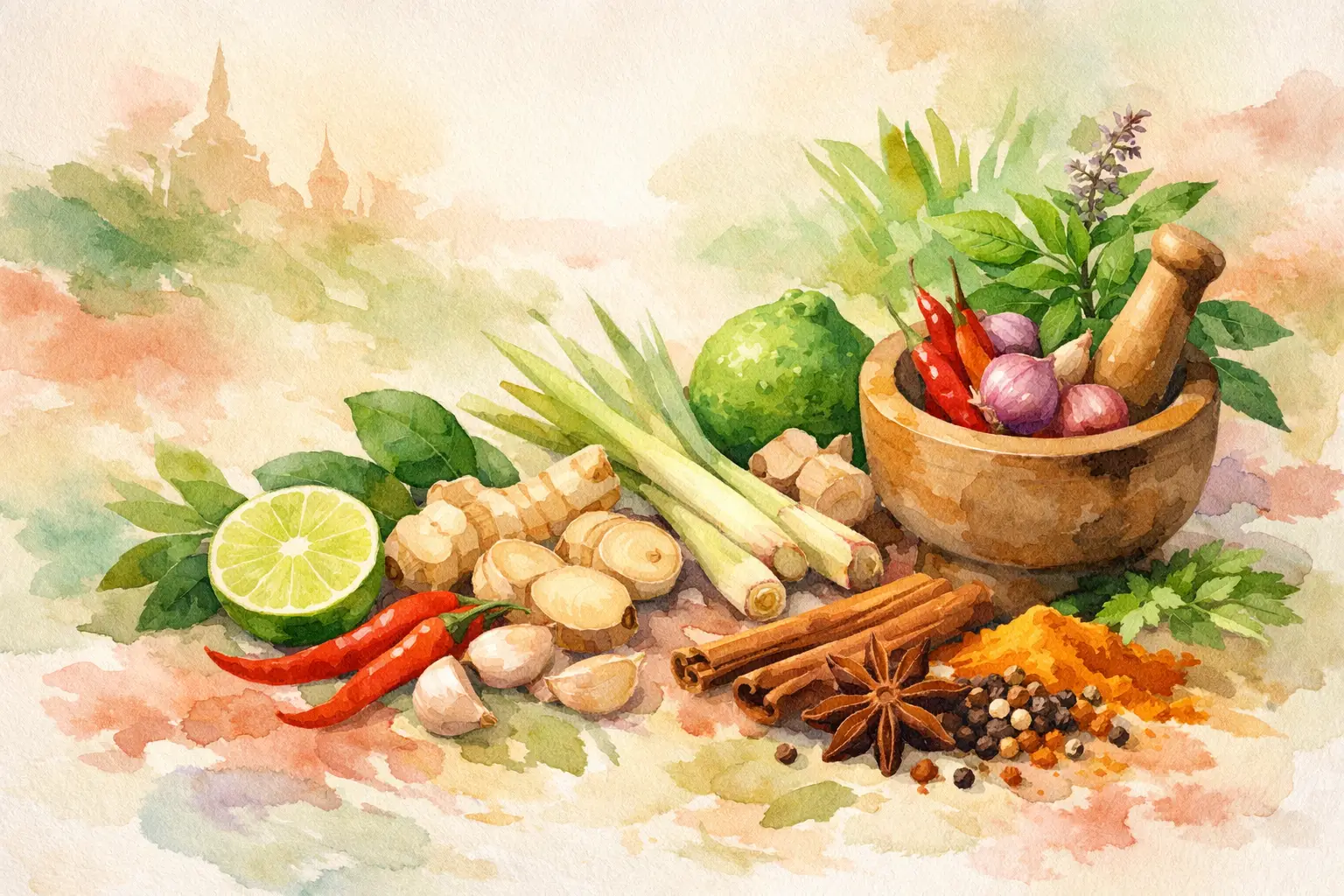
If you have ever looked at a Thai menu and wondered why one soup tastes bright and citrusy while another feels creamy, warm, and gentle, this thai herbs and spices guide will make ordering much easier. A few key ingredients do most of the heavy lifting in Thai cooking, and once you know them, dish descriptions start to make real sense.
Thai food is not built on heat alone. The best dishes balance fresh herbs, aromatic roots, savory sauces, and a little sweetness or sourness where it belongs. That is why Tom Yum tastes sharp and lively, green curry smells herbal and rich, and papaya salad lands with crunch, chili, lime, and fish sauce all at once.
A practical thai herbs and spices guide
When people say Thai food is full of flavor, they usually mean layers rather than intensity. One herb gives a dish a citrus edge, another adds peppery freshness, while a spice or root brings warmth underneath. Knowing those layers helps you choose between soup, curry, noodles, and stir-fry without guessing.
For everyday ordering, it helps to think in three groups. Fresh herbs brighten a dish. Aromatic roots build the base. Seasonings and spice pastes bring depth, saltiness, heat, and color. Most Thai menu favorites are a combination of all three.
Lemongrass
Lemongrass is one of the easiest Thai flavors to recognize once you know it. It has a clean citrus aroma, but it is not the same as lemon juice. It smells fresher, greener, and more savory.
You will often notice lemongrass in Tom Yum soup, marinades, and some curries. It gives broth a light, lifted character that keeps spicy dishes from tasting heavy. If you like soups that feel fresh and sharp rather than creamy, lemongrass is usually a good sign.
Galangal
Galangal looks a bit like ginger, but the flavor is different. Ginger is warmer and more familiar. Galangal is sharper, more piney, and slightly peppery.
This ingredient matters a lot in classic Thai soups, especially Tom Kha. In a coconut milk broth, galangal cuts through the richness and keeps the soup balanced. If you enjoy creamy dishes but do not want them to feel flat, galangal is one of the reasons Thai soup stays lively.
Kaffir lime leaf
Kaffir lime leaf adds a fragrant citrus note that is deeper and more floral than fresh lime juice. It does not usually make a dish sour. Instead, it perfumes the broth or curry.
You will find it in curries and soups where aroma is just as important as taste. If a dish smells bright before you even take a bite, kaffir lime leaf is often part of that first impression.
Thai basil
Thai basil is not the same as Italian basil. It has a slightly spicy, anise-like flavor that stands up well to heat and savory sauces. It adds freshness, but with more attitude.
This is the herb that gives many stir-fries and some curries their signature finish. In basil chicken or basil beef, it turns a simple savory dish into something more aromatic and distinctly Thai. If you like garlic-forward stir-fries but want more fragrance, Thai basil usually delivers.
Cilantro and green onion
These are familiar ingredients, but in Thai food they are more than garnish. Cilantro adds a fresh, slightly citrusy note, while green onion brings a mild sharpness.
In soups, salads, and noodle dishes, these herbs help lighten stronger flavors like fish sauce, chili, and garlic. They may seem minor, but without them many dishes would taste heavier and less balanced.
The roots and spices behind the flavor
Fresh herbs get a lot of attention, but roots and spice blends are what give Thai dishes their backbone. They build the base that carries sauces, curries, and soups.
Garlic
Garlic is everywhere in Thai cooking, especially in stir-fries, fried rice, marinades, and dipping sauces. It brings savory depth and that familiar comfort people often crave when ordering noodles or rice dishes.
On its own, garlic is not what makes a dish taste Thai. Combined with chili, fish sauce, basil, or black pepper, it becomes part of that unmistakable flavor profile. If you prefer approachable Thai dishes, garlic-heavy options are usually an easy place to start.
Thai chilies
Thai chilies are small, but they are serious. They add direct heat, and depending on how they are used, they can also bring a fresh grassy sharpness.
The important thing is that spice level depends on the dish and the kitchen. A papaya salad with chilies can feel very different from a red curry or a basil stir-fry. Heat is not just about quantity. Coconut milk softens it, lime sharpens it, and sugar rounds it out. If you enjoy spicy food, Thai chilies are part of the appeal. If you are cautious, choose dishes where the heat is balanced by broth or coconut milk.
Black and white pepper
Pepper plays a quieter role than chili, but it is still important. Black pepper adds warm bite to stir-fries and marinades. White pepper shows up in soups, meat dishes, and fried items where a cleaner heat works better.
These are often the flavors people notice as warmth rather than spice. If a dish is not visibly red with chili but still has a gentle kick, pepper is likely doing the job.
Coriander root and seed
Coriander seed has a mild citrusy, earthy quality that supports curry pastes and marinades. Coriander root, used fresh, has even more depth and is common in flavor bases.
This is not the loudest ingredient, but it helps tie together garlic, pepper, and herbs. In grilled meats, soups, and curry pastes, it adds that rounded savory background that makes flavors feel complete.
The seasonings that make Thai food taste Thai
A lot of customers think of herbs and spices first, but Thai flavor depends just as much on seasoning. These ingredients shape the sweet, sour, salty, and savory balance that defines many dishes.
Fish sauce
Fish sauce is salty, savory, and deeply important in Thai cooking. Used well, it does not make food taste fishy. It makes food taste fuller.
In papaya salad, stir-fries, fried rice, and dipping sauces, fish sauce brings the salt and umami that soy sauce alone cannot provide. If a dish tastes bold and rounded, fish sauce is often part of why.
Tamarind
Tamarind adds a sour, slightly sweet tang that is darker and fruitier than lime. It is one of the key flavors in Pad Thai and some sauces.
If you like noodles with a sweet-sour profile instead of straightforward heat, tamarind is worth watching for. It gives dishes a distinctive tang without making them feel sharp or acidic.
Coconut milk
Coconut milk is not a spice, but it changes how every herb and spice lands on the palate. It softens chili heat, carries curry aromas, and adds body to soups and sauces.
In green curry, red curry, and Tom Kha, coconut milk makes strong ingredients feel smooth and balanced. If you want Thai flavor with less edge, coconut-based dishes are often the safest choice.
How these ingredients show up in real dishes
Knowing ingredients is helpful, but most people order by dish. The faster way to use this guide is to match flavors to what you are craving.
Tom Yum is for people who want a hot, clear, aromatic soup with lemongrass, kaffir lime leaf, galangal, and chili. It tastes bright, savory, and sharp. Tom Kha uses many of the same aromatics, but coconut milk gives it a gentler, creamier finish.
Green papaya salad is all about contrast. Fish sauce, lime, chili, and sometimes a touch of sweetness hit first, while the papaya keeps everything crisp and refreshing. It is a good choice if you want something punchy and fresh instead of rich.
Curries depend on the paste and the balance around it. Green curry often feels more herbal, with basil and green chili notes. Red curry is usually deeper and warmer. Both rely on aromatic ingredients, but one may feel fresher while the other feels fuller.
Pad Thai is a smart option for customers who want a balanced noodle dish without a broth or curry base. Tamarind, garlic, and savory seasoning create that sweet-sour-salty profile people come back to. Basil stir-fries, on the other hand, are usually more direct – garlic, chili, sauce, and Thai basil working together in a hotter, more savory style.
How to order with more confidence
The best use of a thai herbs and spices guide is not memorizing every ingredient. It is learning what signals a dish will likely taste like before it arrives.
If you see lemongrass, lime leaf, and galangal, expect fragrance and lift. If you see coconut milk, expect a smoother, rounder result. If basil, garlic, and chili lead the description, the dish will likely be savory, aromatic, and more direct. If tamarind is involved, there is usually a sweet-sour angle. At Rustic Thai Kitchen, those flavor cues help customers move from browsing to ordering without second-guessing every category.
There is also some room for personal preference. People who love bold heat may choose chili-forward salads and stir-fries. Customers who want comfort usually lean toward coconut soups, curry, or fried rice with garlic-based seasoning. Neither is more authentic. It just depends on how you want the meal to land.
The easiest way to enjoy Thai food more often is to stop treating the menu like a mystery. Once you know what lemongrass, galangal, basil, tamarind, and fish sauce actually do, every order gets simpler, and usually a lot more satisfying.