Thai Curry vs Chinese Curry Explained

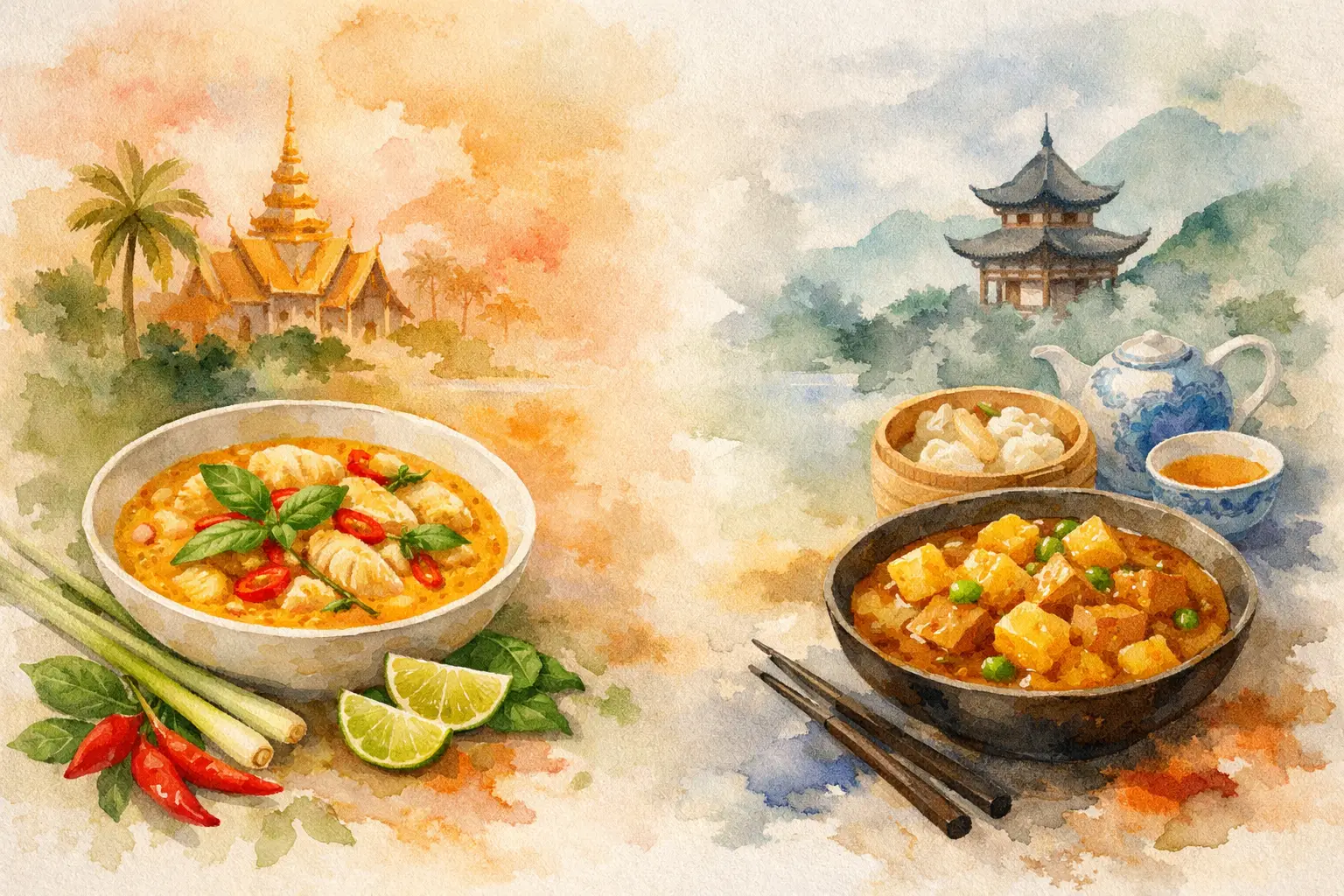
If you are staring at a menu and deciding between thai curry vs chinese curry, the fastest way to choose is this: Thai curry usually leans brighter, more aromatic, and more herb-driven, while Chinese curry tends to be warmer, thicker, and more savory. Both can be rich, comforting, and full of spice, but they get there in very different ways.
That difference matters when you are ordering dinner. One bowl may bring coconut milk, lemongrass, kaffir lime leaf, and Thai basil. Another may give you a smoother, gravy-style sauce built around curry powder, onion, garlic, and stock. If you know how each style tastes, you can order with a lot more confidence.
Thai curry vs Chinese curry: the core difference
The biggest contrast is the flavor base. Thai curry is usually built from curry paste made with fresh ingredients such as chilies, garlic, galangal, lemongrass, shrimp paste, and aromatic herbs. That gives it a layered taste that feels sharp, fragrant, spicy, and fresh all at once.
Chinese curry often starts from curry powder or a curry seasoning blend rather than a fresh herb paste. The result is usually rounder and more mellow. You still get spice, but it often comes with a softer profile – earthy turmeric notes, gentle sweetness from onion, and a savory finish from broth or sauce.
Texture is another clear separator. Thai curry is often more fluid and silky, especially when coconut milk is involved. Chinese curry is commonly thicker, closer to a gravy, and designed to coat rice, noodles, or fried items well.
Neither is better across the board. It depends on what kind of comfort food you want. If you want brightness and aromatic heat, Thai curry usually wins. If you want a hearty, saucy dish with familiar savory depth, Chinese curry may be the better fit.
What makes Thai curry taste like Thai curry?
Thai curry gets much of its identity from fresh herbs and roots. Lemongrass brings a citrusy lift without tasting like lemon juice. Galangal adds peppery warmth with a cleaner edge than ginger. Kaffir lime leaf brings a distinct floral aroma. Thai basil adds a sweet, slightly spicy note that stands out at the end of each bite.
Then comes the curry paste. Red curry, green curry, and yellow curry all use different balances of chilies and spices. Green curry often tastes the freshest and hottest, with green chilies and basil leading the way. Red curry is deeper and fuller, with dried red chilies and a balanced heat. Yellow curry usually feels the gentlest, often warmer and slightly sweeter, with turmeric and curry spices working alongside coconut milk.
Coconut milk also changes the experience. It softens the heat, adds body, and gives Thai curry that smooth, spoonable consistency people often expect. But even rich Thai curry still tends to taste lively because the herbs keep it from feeling heavy.
Protein matters too. Chicken, beef, shrimp, tofu, and seafood all absorb Thai curry differently. Shrimp and fish pair especially well with the bright herbal side of Thai curry, while chicken and beef hold up nicely in richer red or panang-style sauces.
How Chinese curry builds flavor
Chinese curry is less about fresh herb intensity and more about savory balance. In many Chinese-style curry dishes, you will find curry powder blended into a base of onion, garlic, stock, and sometimes soy sauce. Potato, carrot, and peas are common in some versions, especially in curry dishes inspired by takeaway favorites.
That creates a flavor that feels warmer and more familiar to diners who enjoy rich sauces and milder spice. The spice is often there, but it does not usually hit with the same fresh chili-and-herb sharpness you get in Thai curry. Instead, it lands as a steady warmth.
Chinese curry also adapts easily to different formats. You might find it with chicken over rice, spooned over fried cutlets, served with noodles, or paired with crispy appetizers. Because the sauce is often thicker, it clings well and gives each bite a more concentrated, gravy-like feel.
This is why Chinese curry can be a strong choice for diners who want comfort first and complexity second. It is approachable, filling, and easy to pair with familiar sides.
Heat level and spice are not the same thing
One of the biggest ordering mistakes is assuming all curry heat works the same way. It does not. Thai curry often delivers sharper heat because fresh chilies are part of the paste. Even when the dish is creamy, the spice can feel immediate and aromatic.
Chinese curry is often milder in that specific way, even when it is well seasoned. You may taste more warm spice than chili heat. That makes it appealing for customers who want curry flavor without a strong burn.
Of course, there are exceptions. Some Thai yellow curries are quite gentle. Some Chinese curry dishes can be spicy depending on the kitchen and style. But if you are ordering blind, Thai curry usually carries more aromatic heat, while Chinese curry usually leans toward mellow savory spice.
Thai curry vs Chinese curry on texture and body
If texture helps you decide, think about the sauce before anything else. Thai curry is usually smooth, glossy, and loose enough to pool around rice. It feels rich without being overly dense. The sauce becomes part of the rice, soaking in while still tasting fragrant.
Chinese curry is more likely to feel thick and structured. It can resemble a gravy or stew sauce, especially when potato or starch is involved. That makes it satisfying in a different way. Instead of a light, flowing sauce, you get a coating sauce that feels hearty from the first bite.
This is not a small difference. When people say they are craving curry, they may actually be craving a certain texture. If you want something spoonable and silky, Thai curry is often the better match. If you want something denser and more filling, Chinese curry may hit the spot.
Which one pairs better with rice, noodles, or sides?
Thai curry and steamed jasmine rice are a natural match. The rice absorbs the sauce without competing with the herbs. Thai curries also work well with roti in some cases, but rice remains the cleanest pairing because it lets the aromatics stand out.
Chinese curry is very flexible. It works with white rice, fried rice, noodles, and crisp side dishes. Because the sauce is often thicker and more savory, it can support a wider mix of textures. That is one reason it appears in many takeout-friendly combinations.
If you are building a full meal, Thai curry usually pairs best with fresh sides such as papaya salad, spring rolls, or light soup. Chinese curry often sits comfortably next to fried appetizers, stir-fried noodles, or rice dishes with stronger seasoning.
When to order Thai curry
Order Thai curry when you want bold aroma, clear herb notes, and a sauce that feels rich but still lively. It is especially satisfying if you enjoy coconut milk, basil, lemongrass, and layered chili flavor.
It is also a smart pick when you want a dish that tastes distinctive right away. Thai curry tends to announce itself quickly. You notice the fragrance first, then the creaminess, then the heat, then the herbs that linger after the bite.
For many diners, green curry is the choice for brighter heat, red curry for a balanced classic, and yellow curry for a softer, warmer profile. If you are new to Thai food, yellow or red curry is often the easiest starting point.
When Chinese curry makes more sense
Order Chinese curry when you want comfort, thickness, and savory warmth over fresh herbal intensity. It is often the safer choice for diners who like curry flavor but are unsure about strong lemongrass, galangal, or coconut notes.
It also works well for group orders. Chinese curry tends to be broadly appealing because the flavor profile feels more familiar to many customers. If your table includes both adventurous eaters and people who want something straightforward, it can be an easy middle ground.
And if you want a sauce that stands up well in takeout or delivery, Chinese curry often travels nicely because of its thicker consistency.
A practical way to choose on the menu
If the description mentions coconut milk, Thai basil, lemongrass, kaffir lime leaf, or curry paste, expect a Thai-style curry with brighter aroma and more herbal character. If the description leans on curry powder, onion, gravy, potato, or a thicker brown or yellow sauce, you are likely looking at a Chinese-style curry.
For customers ordering online, this matters even more because you are choosing from a short description and a photo. At Rustic Thai Kitchen, the easiest approach is to ask yourself one simple question: do you want fragrant and fresh, or hearty and savory? That answer will usually point you in the right direction.
Some diners genuinely enjoy both styles for different moods. Thai curry fits when you want something expressive and full of herbs. Chinese curry fits when you want easy comfort and a fuller, thicker sauce. Knowing that difference makes the menu feel much easier.
The best curry is the one that matches your appetite that day – bright and aromatic, or warm and deeply savory. Once you know which side of that line you are craving, ordering gets simple.