What Does Pad See Ew Taste Like?

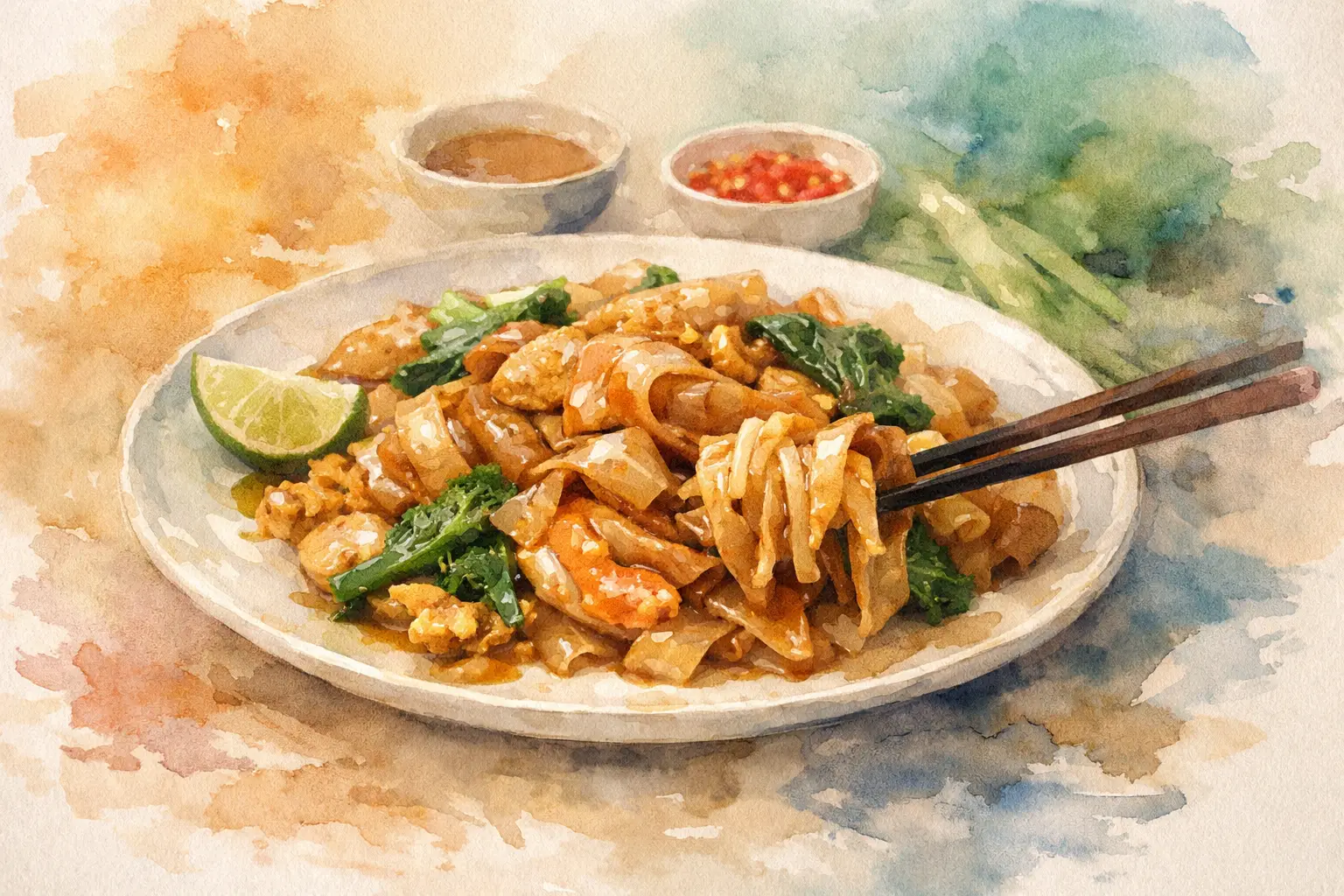
If you are scanning a Thai menu and wondering what does pad see ew taste like, the short answer is this: it is savory, lightly sweet, garlicky, and smoky, with wide rice noodles that stay soft and chewy. It is one of the easiest Thai noodle dishes to enjoy on the first try because the flavor is bold without being sharp, sour, or heavily spicy.
Pad see ew is a stir-fried noodle dish built around balance and comfort. The name is often translated as stir-fried soy sauce noodles, which already tells you a lot about the flavor. Instead of leaning on tamarind or lime, this dish gets its character from dark soy sauce, light soy sauce, garlic, protein, egg, and Chinese broccoli. When cooked well in a hot wok, the noodles pick up a slightly charred taste that gives the dish its signature depth.
What does pad see ew taste like in real terms?
The easiest way to picture the flavor is to think of a rich, savory noodle dish with a gentle sweetness and a touch of wok smoke. It is not a soupy noodle bowl, and it is not a dry plain stir-fry either. The sauce clings to the noodles, giving every bite a glossy, seasoned coating.
The first thing most people notice is the soy-based flavor. It is fuller and darker than Pad Thai, with more umami and less tang. Then comes the sweetness, but not in a dessert-like way. It is just enough to round out the salty soy and keep the dish from tasting heavy. Garlic adds aroma, egg adds softness, and the Chinese broccoli brings a mild bitterness that keeps the whole plate balanced.
Texture matters just as much as flavor here. Wide rice noodles are soft, elastic, and slightly chewy. That texture is a big part of why pad see ew feels so satisfying. You are not just tasting sauce. You are getting tender noodles, crisp-tender greens, and bits of protein in each bite.
The core flavors in pad see ew
Pad see ew is usually loved for being approachable. Even people who do not usually order Thai food tend to like it because the flavors are familiar enough to feel comfortable, but still distinct enough to feel special.
Savory and soy-forward
Dark soy sauce gives pad see ew its deeper color and mild sweetness, while light soy sauce brings salt and sharp savory notes. Together, they create a flavor that is richer than many basic noodle stir-fries. It tastes seasoned and full, not bland.
Slightly sweet
A little sugar is usually added to balance the soy. That sweetness is one reason pad see ew feels smooth and easy to eat. It is not sugary, but it does have a mellow finish that makes the noodles especially moreish.
Garlicky and aromatic
Garlic is a key background flavor. It is not supposed to overpower the dish, but it gives warmth and a fresh cooked aroma that makes the noodles smell as good as they taste.
Smoky from the wok
Good pad see ew has a light char from high-heat stir-frying. This is sometimes the difference between decent pad see ew and really memorable pad see ew. That smoky edge adds depth and keeps the sauce from feeling flat.
Mild bitterness from Chinese broccoli
Chinese broccoli, also called gai lan, brings a fresh green note and a slight bitterness. That matters because it cuts through the sauce and stops the dish from becoming too rich. If you have only had noodle dishes with sweet vegetables, this part can be a pleasant surprise.
Is pad see ew spicy?
Usually, no. Traditional pad see ew is not known as a spicy dish. It is often served mild, which makes it a reliable choice for families, kids, and anyone who wants flavor without heat.
That said, spice can be added at the table or during cooking depending on the restaurant. If you enjoy chili, pad see ew takes heat well because the savory noodles can handle it. If you do not, it is easy to order mild and still get a full-flavored meal.
How pad see ew compares to Pad Thai
People often ask about pad see ew when they are choosing between it and Pad Thai. Both are popular Thai noodle dishes, but they do not taste the same.
Pad Thai is brighter and more layered with sweet, sour, and nutty flavors. Tamarind gives it tang, and peanuts often add crunch. It has more acidity and usually feels lighter on the palate, even when it is rich.
Pad see ew is darker, softer, and more savory. It does not lead with sour notes. Instead, it goes for soy, garlic, a hint of sweetness, and that wok-fired finish. If you like noodles that taste hearty and comforting, pad see ew is often the better pick. If you want something more tangy and slightly sharper, Pad Thai may be closer to your taste.
Neither is better in every situation. It depends on what you are craving. Pad Thai is great when you want contrast and brightness. Pad see ew is great when you want depth and comfort.
What ingredients shape the taste?
Pad see ew is simple, but every ingredient has a job. The wide rice noodles give the dish its chewy body and absorb the sauce well. Egg adds richness and soft texture. Garlic builds aroma. Soy sauces create the dish’s signature savory-sweet profile.
Chinese broccoli brings freshness and slight bitterness, while the protein changes the overall feel of the dish. Chicken keeps it classic and mild. Beef makes it richer. Shrimp adds a little sweetness and a lighter seafood note. Tofu works well too, especially because it soaks up the sauce.
This is why pad see ew can taste slightly different from one kitchen to another. One version may be sweeter, another smokier, and another more garlic-forward. The core identity stays the same, but the balance can shift.
Who will usually like pad see ew?
Pad see ew is a smart order for anyone who likes savory noodle dishes, soy-based stir-fries, or comfort food with a little complexity. If you already enjoy lo mein, chow fun, or other pan-fried noodle dishes, there is a strong chance you will like pad see ew too.
It is also a good starting point if you are new to Thai food. Some Thai dishes lead with fish sauce, lime, herbs, or strong chili heat. Pad see ew is more familiar for many American diners because the flavor starts with soy, noodles, egg, and greens. It still tastes Thai, but it is very approachable.
If you prefer very spicy food or strong sour flavors, pad see ew may feel too gentle unless you add chili. On the other hand, if you want a satisfying meal that is flavorful without being aggressive, it lands in a very comfortable spot.
What does pad see ew taste like from restaurant to restaurant?
Not every plate tastes exactly alike. That is normal. The biggest differences usually come from heat, sauce balance, and noodle handling.
A restaurant using strong wok heat will give you more smokiness and slight caramelization on the noodles. A sweeter version may feel softer and more crowd-pleasing. A more savory version may taste deeper and saltier. Fresh noodles also make a difference because they stay tender and silky instead of turning dry or brittle.
This is one reason people often become loyal to a favorite version. With a dish this simple, technique matters. A good kitchen knows how to keep the noodles chewy, the greens fresh, and the sauce balanced rather than heavy.
When pad see ew is the right order
Pad see ew fits best when you want a filling lunch or dinner that feels comforting right away. It is a practical choice for takeout too because the flavors travel well. The noodles hold sauce, the dish reheats better than many lighter noodle dishes, and it still tastes satisfying even after delivery.
It is also an easy crowd-pleaser if you are ordering for a group with mixed preferences. Not everyone wants curry, soup, or spicy basil. Pad see ew sits in the middle – flavorful, familiar, and easy to enjoy.
At Rustic Thai Kitchen, dishes like this work especially well for customers who want restaurant-quality Thai food without overthinking the menu. If you are ordering online and want something dependable, savory, and satisfying, pad see ew is often one of the safest and most rewarding choices.
So what does pad see ew taste like when it is done right? It tastes like soft chewy noodles coated in savory soy sauce, balanced with mild sweetness, garlic, fresh greens, and a little wok-charred depth. If you want a Thai noodle dish that feels easy to love from the first bite, this is a very good place to start.