How to Order Family Thai Meals That Work

Ordering for one person is easy. Ordering for a family is where things get tricky fast. One person wants noodles, another wants rice, someone likes spicy food, someone definitely does not, and suddenly a simple dinner turns into guesswork. If you are wondering how to order family Thai meals without over-ordering, under-ordering, or ending up with five dishes that all taste too similar, the best approach is to build variety across a few key categories.
Thai food works especially well for group meals because it is naturally shareable. A good family order gives you contrast – something brothy, something creamy, something stir-fried, something filling, and at least one dish that feels safe for everyone at the table. When you order with balance in mind, dinner feels generous instead of random.
How to order family Thai meals without guessing
The simplest way to plan a family Thai order is to think in layers. Start with one soup, then add a salad or appetizer, choose two or three mains depending on your group size, and finish with enough rice or noodles to make everything stretch. That structure works for small households, larger family dinners, and mixed groups where not everyone knows Thai dishes by name.
For a family of three to four, one soup, one starter, two mains, and two starches is often enough. For five to six people, move toward one or two soups, two starters, three mains, and a mix of jasmine rice, fried rice, or noodles. It depends on appetite, but the bigger mistake is usually ordering too many dishes from the same category rather than too little food overall.
If the group includes both adventurous eaters and cautious ones, order one familiar item and one more traditional Thai item side by side. That could mean pairing Pad Thai with green curry, or fried rice with papaya salad. Everyone gets something comfortable, but the meal still feels like Thai food rather than a collection of backups.
Start with the flavors, not just the dish names
Families usually order better when they think about flavor profiles first. Thai meals are at their best when the table has a little heat, a little sweetness, some acidity, and a savory base that ties everything together. If every dish is creamy, the meal feels heavy. If every dish is spicy, the table gets one-dimensional.
Tom Yum Soup is a smart place to start if your family likes bright, hot, citrusy flavors. The lemongrass, kaffir lime leaf, and chili bring energy to the table, especially if the rest of your order leans rich or fried. شوربة التوم كا does a different job. With coconut milk, galangal, and gentle aromatics, it gives you a softer, creamier bowl that works well for mixed spice tolerance.
For mains, curry adds depth while stir-fried dishes add texture. A coconut curry can carry the richer side of the meal, while a basil stir-fry or garlic-based dish keeps things punchy and direct. Noodles like Pad Thai bring sweetness and tamarind, while fried rice gives you a neutral base that helps younger diners and less adventurous eaters settle in.
That balance matters more than chasing the most popular dishes. A strong family order is not just a list of favorites. It is a meal where each item helps the next one taste better.
Choose one safe dish, one bold dish, and one shared favorite
If you want a practical rule for how to order family Thai meals, use this one. Build the order around three types of mains.
First, pick a safe dish. This is the item nearly everyone will eat, even if they are not in the mood to experiment. باد تاي, chicken fried rice, or a mild noodle stir-fry often fills this role. It is useful, not boring. In a family meal, reliability matters.
Second, choose a bold dish. This is where Thai flavor really shows up. A green curry with basil and coconut milk, a spicy basil stir-fry, or a tangy papaya salad can bring contrast to the table. You do not need every dish to be bold. One well-chosen standout is enough.
Third, add the shared favorite. This is the dish your household orders again and again, whether that is crispy wings, a seafood stir-fry, or a specific curry. Repeating one known winner keeps everyone happy and makes the rest of the meal easier to build around.
This mix works because it respects the reality of family dining. Not everyone wants the same level of spice, not everyone likes the same textures, and not every dinner needs to become a lesson in regional Thai cooking. You want good food that lands well with the whole table.
Spice level can make or break the order
One of the biggest group-order mistakes is setting every dish at the same spice level. That sounds simple, but it usually creates problems. If everything comes mild, the meal may feel flat for people who want heat. If everything comes spicy, half the table reaches for water and stops enjoying dinner.
A better move is to spread the spice across the order. Keep one or two dishes mild or medium, especially noodle or rice dishes that children and spice-sensitive adults are likely to choose first. Then let one curry, salad, or stir-fry carry the stronger chili profile.
This also keeps flavors clearer. Thai food is not only about heat. Coconut milk, fish sauce, lime, tamarind, garlic, basil, and fresh herbs all need room to come through. When every item is pushed to maximum spice, those details can get buried.
If you are ordering for a mixed-age group, think about the actual eaters, not the ideal version of dinner. You can always add heat later at the table more easily than you can take it away.
Don’t forget texture and category balance
A family meal feels complete when it has contrast in both flavor and texture. Soup gives you warmth and broth. Salad adds crunch and acidity. Curry brings richness. Stir-fried dishes add bite. Rice and noodles make the meal filling.
That is why it usually makes more sense to order across categories instead of doubling down on three noodle dishes or three curries. Too many similar items can make a large order feel strangely repetitive, even if each dish is good on its own.
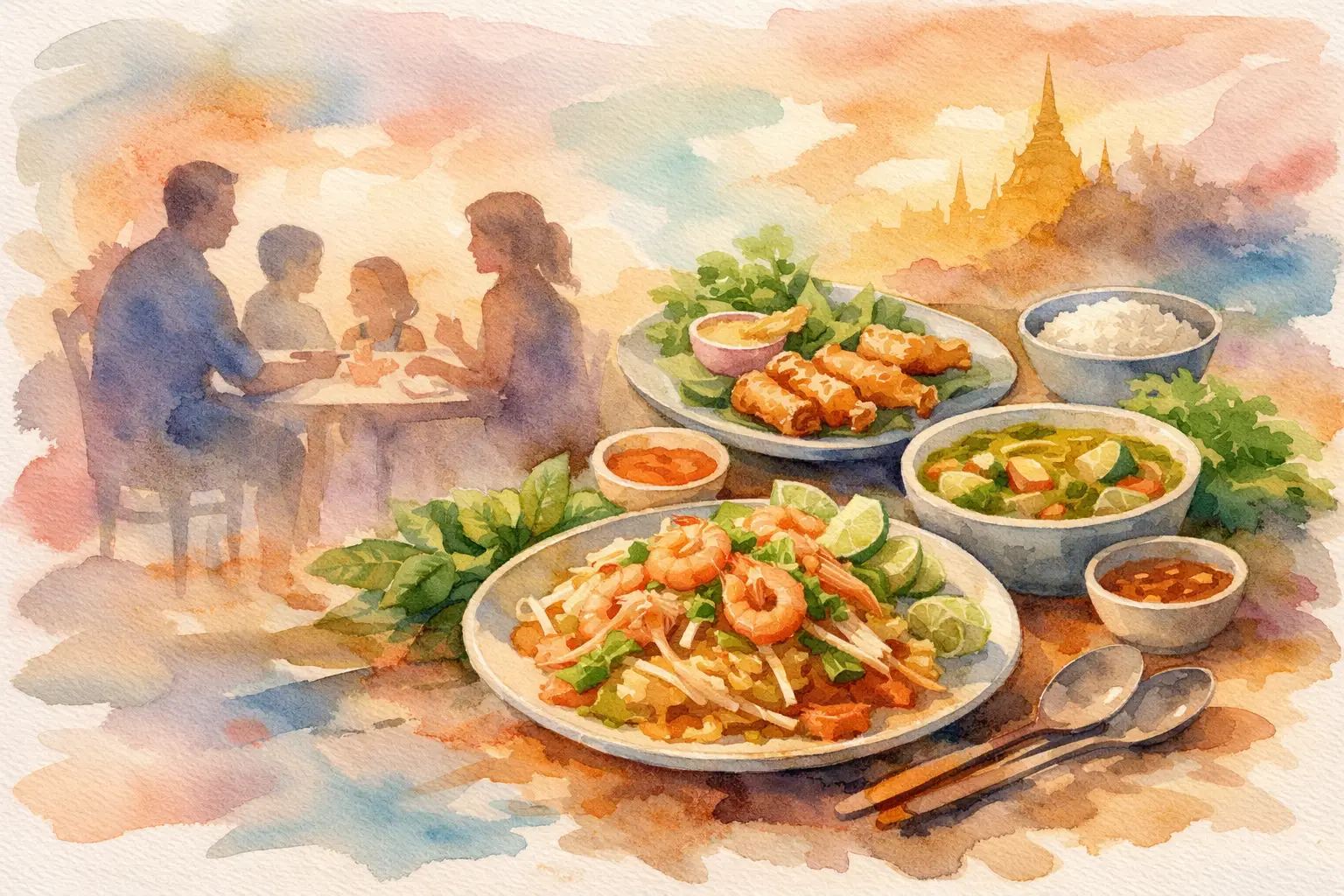
A useful combination might look like this in practice: Tom Kha Soup for a creamy starter, green papaya salad for freshness, green curry for richness, Pad Thai for familiarity, and jasmine rice to tie everything together. If your group wants something more substantial, add a fried rice or a stir-fried protein dish with garlic or basil.
For larger families, appetizers also help smooth out the meal. Crispy starters give people something to share right away and buy time while everyone decides what they like best among the mains.
Ordering for kids, picky eaters, and mixed preferences
Some families want authentic flavor but still need one or two dishes that feel straightforward. That is normal. Family ordering is rarely about pleasing a single palate.
For kids or selective eaters, dishes with clear ingredients and gentle seasoning usually work best. Fried rice, mild noodles, chicken satay, or lightly seasoned stir-fried dishes are often easier choices than strongly sour salads or very spicy curries. The goal is not to water down the whole order. It is to make sure everyone has at least one dish they can enjoy comfortably.
For adults who want more classic Thai flavor, add one dish with herbs and sharper seasoning. Something with lemongrass, basil, galangal, or chili brings the meal back into balance. This is where an online menu with clear descriptions really helps. You can read the ingredients, understand the flavor direction, and order with more confidence instead of guessing from the dish name alone.
That clarity is one reason group ordering from a place like Rustic Thai Kitchen can feel easier. When dishes are described in direct, familiar language, it is simpler to build a meal for both Thai food fans and people who just want a satisfying dinner.
Portion planning matters more than people think
Most family orders go wrong in one of two ways. Either there is not enough base food like rice and noodles, or there are too many mains and not enough appetite left to enjoy them. A practical target is to make sure each main has something to pair with. Curry needs rice. Stir-fry can go with rice or noodles. Soup stretches further when there are side dishes around it.
If your family usually shares evenly, lean into dishes made for the center of the table. If people prefer choosing their own plate, include at least one personalized-feeling dish like Pad Thai or fried rice alongside the shared curries and soups. It depends on how your household actually eats.
Leftovers are not a failure, either. Thai food often holds up well for the next day, especially curries, rice dishes, and noodle stir-fries. So if you are between quantities, ordering slightly up is often better than coming up short during dinner.
The easiest family Thai meal is the one that gives everyone a clear place to start. Pick a comforting base, add one bright dish, add one rich dish, keep the spice levels thoughtful, and make sure the table has enough rice or noodles to carry it all. When the order feels balanced, the meal feels easy – and that is exactly what family dinner should be.