Pad See Ew vs Chow Mein: What’s Different?

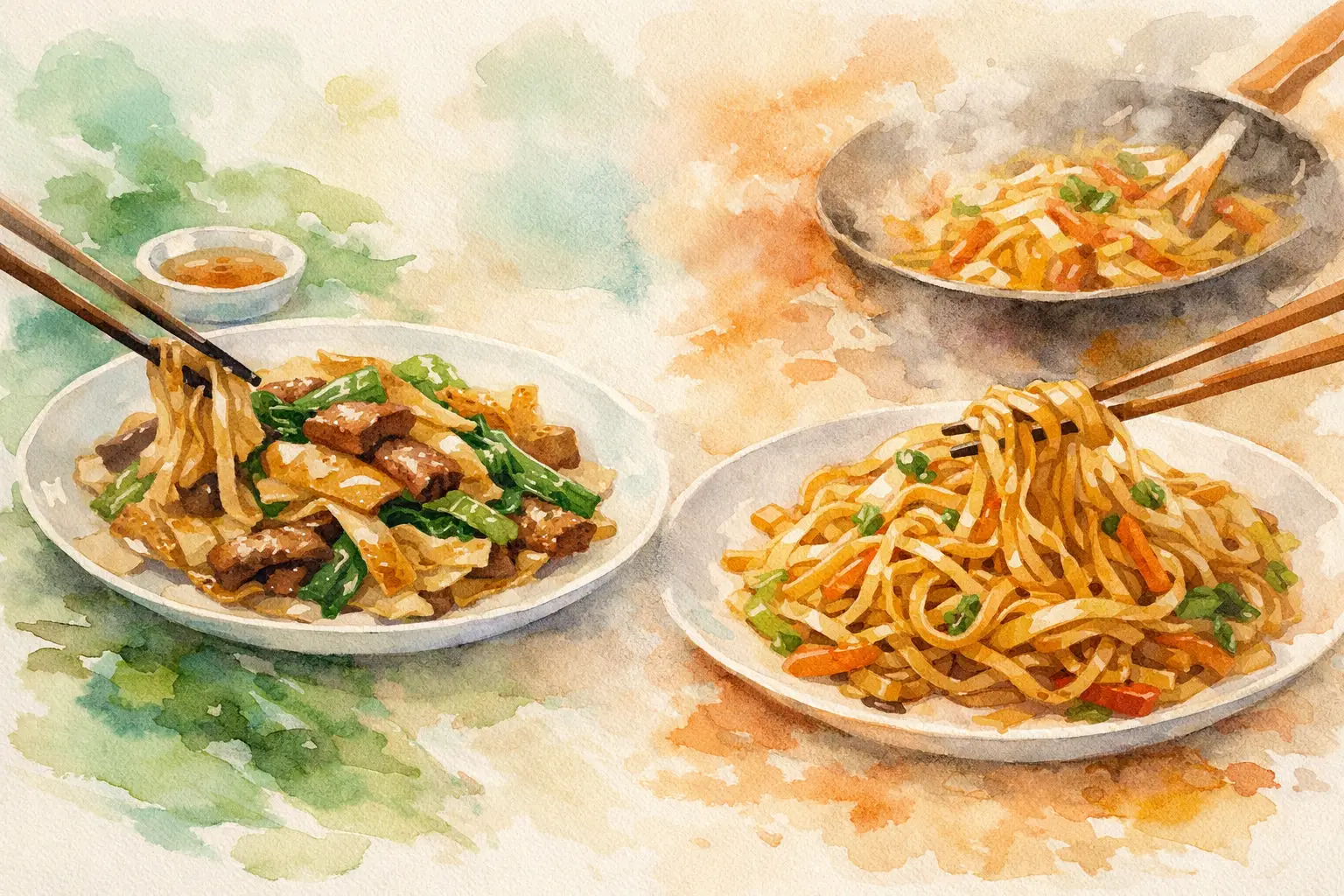
One look at a menu and the pad see ew vs chow mein question usually comes down to one thing: what kind of noodle mood are you in? If you want broad rice noodles with a soft, chewy bite and a rich soy-based finish, pad see ew is usually the better pick. If you want springier wheat noodles, more bite, and that familiar stir-fried Chinese noodle style, chow mein is the one.
That quick answer helps, but these dishes are different in ways that matter when you are deciding what to order for lunch, dinner, or a group meal. The noodles, sauce, vegetables, and overall eating experience are not interchangeable. If you know what each dish is trying to deliver, ordering gets much easier.
Pad See Ew vs Chow Mein at a Glance
Pad see ew is a Thai stir-fried noodle dish built around wide rice noodles, dark soy sauce, Chinese broccoli, egg, and a choice of protein such as chicken, beef, shrimp, or tofu. The flavor is savory, slightly sweet, and smoky when cooked properly in a hot wok. The noodles are soft but still chewy, and the sauce clings to their broad surface.
Chow mein is a Chinese stir-fried noodle dish traditionally made with wheat noodles. Depending on the style, the noodles may be softer and stir-fried through the sauce, or they may be crisped more aggressively for added texture. Chow mein often includes cabbage, onions, carrots, bean sprouts, and protein, with a lighter savory sauce compared with pad see ew.
So if you are comparing them side by side, the simplest difference is this: pad see ew leans chewy, saucy, and deeply savory, while chow mein leans springy, slightly lighter, and more textured.
The Biggest Difference Is the Noodles
If you only remember one detail, make it the noodle base.
Pad see ew uses wide rice noodles. These noodles have a smooth surface and a satisfying chew that feels substantial in every bite. Because they are made from rice, they absorb sauce differently from wheat noodles. They do not have the same bounce as egg noodles, but they carry a soft, slippery texture that works especially well with dark soy and wok char.
Chow mein uses wheat noodles, often egg noodles. That gives the dish a firmer bite and a more elastic texture. Even when the noodles are soft, they still feel springier than rice noodles. In some versions, the noodles are pan-fried until parts turn crisp, which creates a contrast between tender vegetables and crunchy strands.
This is where preference matters. If you like noodles that feel broad, silky, and comforting, pad see ew usually wins. If you like more structure and a little snap in the bite, chow mein may suit you better.
How the Sauces Change the Flavor
The sauce is where these dishes start moving in different directions.
Pad see ew is known for a soy-forward sauce with dark soy sauce doing much of the heavy lifting. That gives it a deeper color and a richer, slightly sweet edge. Good pad see ew tastes savory first, but it also has balance. You may notice a mild sweetness and a smoky finish from high-heat stir-frying. It is not a fiery dish by default, although chili can always be added to taste.
Chow mein sauce is often lighter in color and flavor. It still brings savory depth, but it tends to feel less sweet and less heavy than pad see ew. The exact seasoning depends on the kitchen and style, but the result is usually a cleaner, drier stir-fried noodle profile. The vegetables often stand out more because the sauce does not coat the noodles as thickly.
That means pad see ew often feels richer and more rounded, while chow mein can feel more straightforward and a little lighter on the palate. Neither is better across the board. It depends on whether you want comfort and depth or a more classic stir-fried noodle bite.
Vegetables and Add-Ins Matter Too
Pad see ew is usually quite focused. Wide rice noodles, egg, Chinese broccoli, and protein make up the core. Chinese broccoli adds a mild bitterness and crisp stem texture that cuts through the soy sauce nicely. Because the ingredient list is tighter, each component has more presence in the final dish.
Chow mein often includes a broader mix of vegetables such as cabbage, onions, carrots, celery, and bean sprouts. That gives it more crunch and a more mixed stir-fry feel. If you like noodles with plenty of vegetable texture in every forkful, chow mein often delivers that more consistently.
Protein choices can be similar in both dishes. Chicken is common, and beef, shrimp, or tofu are also popular. But the same protein can taste very different depending on the noodle and sauce around it. Chicken in pad see ew tends to feel more savory and coated, while chicken in chow mein often tastes cleaner and less sauce-heavy.
Pad See Ew vs Chow Mein: Texture Is the Real Decider
A lot of people think this choice is about flavor alone, but texture is usually what settles it.
Pad see ew is softer, broader, and more comforting. When done well, the noodles have just enough chew to keep them from feeling too soft, and the edges pick up slight caramelization from the wok. The egg blends into the noodles, and the Chinese broccoli gives you occasional crunch. It is a satisfying, full-mouth kind of dish.
Chow mein gives more contrast. The noodles are thinner and springier, the vegetables are more varied, and some versions include crisped noodle edges or even distinctly crunchy noodles. It feels more layered in texture and, for some diners, more dynamic bite to bite.
So if you are ordering based on what sounds more satisfying after a long day, pad see ew often feels warmer and more comforting. If you want something that eats a little lighter and has more crunch, chow mein may be the smarter choice.
Which Dish Feels Heavier?
Usually, pad see ew feels heavier than chow mein, but not always.
The wide rice noodles and darker sauce give pad see ew a richer profile. It can feel more filling even when the portion size is similar. That is great when you want one dish that really holds up as a full meal.
Chow mein can feel lighter because the noodles are thinner and the vegetables are often more prominent. But if the noodles are heavily pan-fried or the portion is large, it can still be plenty rich. This is one of those it depends situations where cooking style matters just as much as the recipe.
If you are sharing several dishes, chow mein may fit more easily alongside appetizers, fried rice, or mains because it does not always dominate the table. If noodles are the star of your meal, pad see ew is often the more satisfying solo order.
Which One Is Better for First-Time Ordering?
For someone new to Thai food, pad see ew is one of the easiest entries because the flavor is familiar. It is not aggressively spicy, the soy-based seasoning is approachable, and the noodle texture is appealing to most people who already enjoy stir-fried noodles. It feels distinct without being challenging.
Chow mein is also an easy order because it is widely recognized and very straightforward. If someone in your group prefers familiar Chinese-style noodle dishes, chow mein is the safer choice. It is especially useful for mixed orders where not everyone wants a strongly regional flavor profile.
That is part of why both dishes stay popular. They are accessible, satisfying, and easy to understand from the first bite.
When to Order Pad See Ew Instead of Chow Mein
Choose pad see ew when you want a Thai noodle dish with real wok flavor, chewy broad noodles, and a deeper soy profile. It is a strong pick if you like slightly sweet-savory sauces, fewer but more distinct ingredients, and a meal that feels comforting and filling.
Choose chow mein when you want thinner noodles, more vegetable crunch, and a stir-fried noodle dish with a lighter, springier texture. It works well when you want something familiar, easy to share, or less sauce-driven.
At Rustic Thai Kitchen, this kind of comparison matters because people do not always want the same noodle experience every time. Some days call for soft, smoky rice noodles. Other days, only a hot box of stir-fried wheat noodles with plenty of bite will do.
The Better Choice Depends on the Craving
If your craving is rich, chewy, savory, and comforting, pad see ew usually comes out ahead. If your craving is springy, stir-fried, and packed with texture, chow mein is probably the better fit. Both dishes are worth ordering, but they solve different appetite problems.
The easiest way to decide is to stop asking which one is better and ask what kind of noodle meal you actually want tonight. That answer is usually more accurate than the menu description.