Are Thai Curries Dairy Free? What to Know

If you have ever paused before ordering curry and wondered, are thai curries dairy free, the short answer is usually yes – but not always. Many classic Thai curries get their rich, silky texture from coconut milk, not cow’s milk or cream. That makes them a good option for many diners avoiding dairy, but a few ingredients, add-ons, or kitchen variations can change the answer.
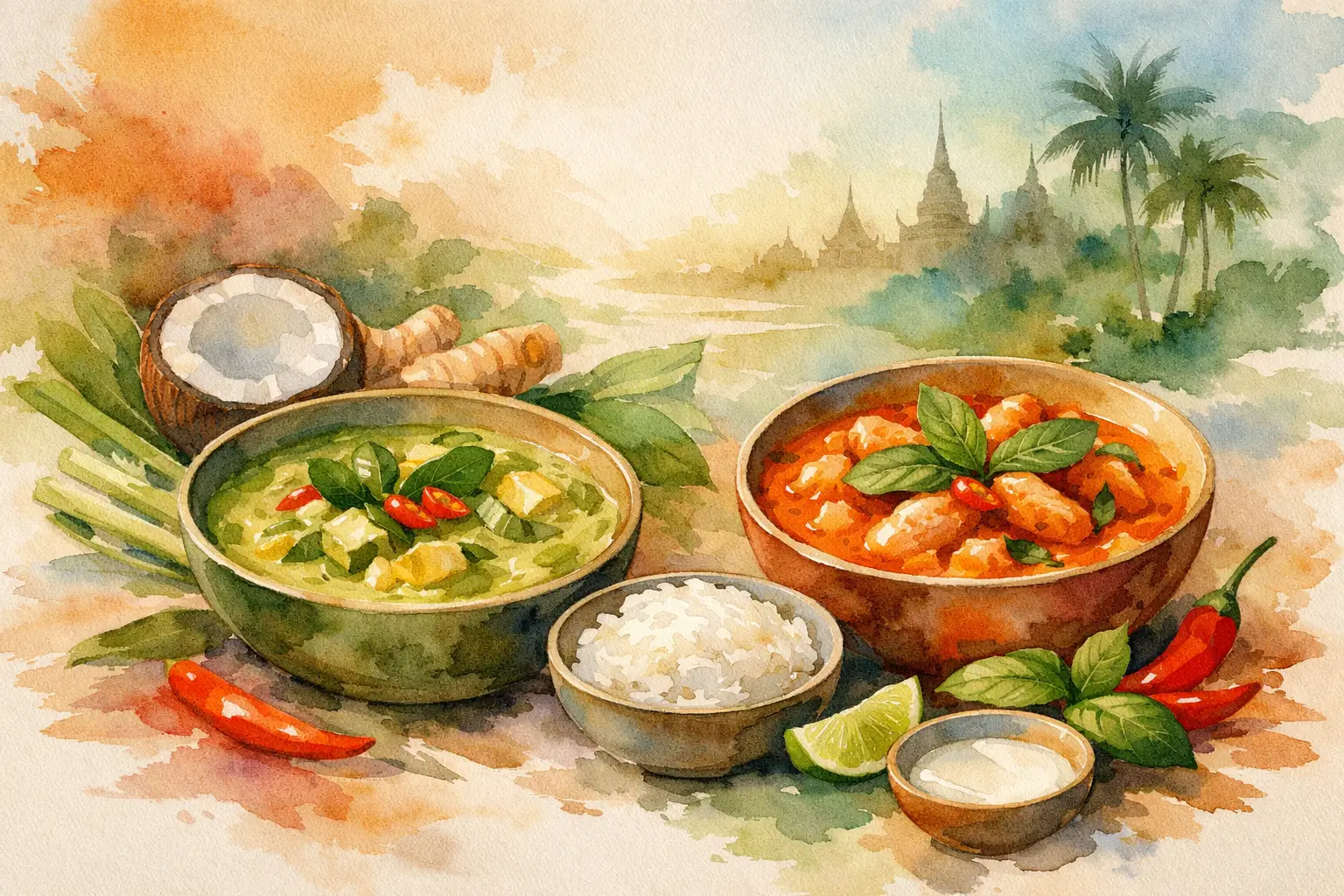
Thai food is full of bold flavor built from herbs, spices, aromatics, and coconut. Red curry, green curry, and Panang curry often look creamy, so it is easy to assume they contain dairy. In most traditional Thai cooking, that creaminess comes from coconut milk simmered with curry paste, garlic, galangal, lemongrass, kaffir lime leaf, basil, and chili. The result is rich and fragrant without needing butter, cheese, or cream.
Are Thai curries dairy free in traditional recipes?
In traditional Thai recipes, most curries are dairy free. Thai cuisine does not rely heavily on dairy the way some Western or Indian dishes do. Instead, richness comes from coconut milk, coconut cream, and slow-cooked curry paste.
That is why many of the curries people know best are naturally dairy free at their base. Green curry is typically made with green curry paste, coconut milk, Thai eggplant, basil, and your choice of protein. Red curry usually follows the same pattern with red curry paste and coconut milk. Panang curry is thicker and slightly sweeter, but it also usually gets its body from coconut rather than dairy.
Massaman curry can also be dairy free in many kitchens. It often includes coconut milk, potatoes, onions, peanuts, and warm spices like cinnamon and cardamom. The main point is that creaminess in Thai curry usually signals coconut, not milk.
Why people get confused about Thai curry
The confusion makes sense. A bowl of curry can look creamy enough to resemble a dish made with heavy cream. On top of that, some restaurants adjust recipes to suit local tastes, simplify prep, or create a milder sauce. Once that happens, ingredients can shift.
Another reason is that not every Thai dish with a creamy broth is handled the same way. Tom Kha soup, for example, is also typically coconut-based and often dairy free, but people sometimes group all creamy Asian dishes together and assume milk is involved. In authentic Thai cooking, coconut milk does most of the work.
There is also a difference between a curry being dairy free by recipe and dairy free in a real restaurant setting. Shared prep areas, customized toppings, and packaged sauces can all introduce ingredients that are not part of the classic version.
Which Thai curries are usually dairy free?
Most of the time, these are the curries most likely to be dairy free when prepared in a traditional style.
Green curry
Green curry is usually dairy free. It is commonly made with green curry paste and coconut milk, then simmered with vegetables and herbs. The flavor is bright, spicy, and slightly sweet.
Red curry
Red curry is also usually dairy free. Its deep color comes from red chilies in the curry paste, while coconut milk softens the heat and creates a smooth sauce.
Panang curry
Panang curry is often dairy free, though it is worth asking. It tends to be thicker and richer than red curry, but that richness usually comes from reduced coconut milk and ground peanuts, not cream.
Massaman curry
Massaman curry is often dairy free too. Since it is mild, warm, and slightly sweet, some diners assume dairy is involved. Traditionally, it is still coconut-based.
Yellow curry
Yellow curry is often dairy free, but this one deserves a quick double-check. Many versions use coconut milk just like other Thai curries, though restaurant adaptations can vary more often here.
When Thai curry may not be dairy free
This is where it helps to ask one clear question before ordering. Even if the curry itself is usually coconut-based, there are a few ways dairy can show up.
Some restaurants may add evaporated milk or cream to create a thicker, softer sauce. This is not standard in classic Thai recipes, but it does happen in some kitchens. Others may use premade curry sauces or curry paste blends with hidden ingredients.
Toppings can be another issue. A curry served with a side that includes butter, creamy dressing, or dairy-based extras may no longer be fully dairy free as a meal. Fried items served alongside the curry can also involve batter or dipping sauces that are not dairy free.
There is also cross-contact to think about if your concern is an allergy rather than preference. A dairy-free recipe prepared in a shared kitchen is different from a guaranteed dairy-free dish.
Ingredients to ask about before ordering
If you want a fast, practical way to order with confidence, ask whether the curry contains coconut milk only or if any dairy is added. That simple question usually gets right to the point.
It also helps to ask about curry paste, especially at restaurants using packaged ingredients. Some curry pastes are fully dairy free, while others may be produced in facilities that handle dairy or contain unexpected additives. If your concern is lactose intolerance, that may not matter as much as a true milk allergy, but it is still worth clarifying.
Rice is usually a safe side with Thai curry, though flavored rice dishes sometimes include butter in nontraditional settings. If you are ordering for delivery and want fewer surprises, plain jasmine rice with curry is often the safest pairing.
Dairy free does not always mean vegan
This is an easy point to miss. A curry can be dairy free and still not be vegetarian or vegan. Many Thai curry pastes contain shrimp paste or fish sauce, which are traditional ingredients and important to the flavor profile.
So if you are avoiding dairy only, you may be fine with a standard curry recipe. If you also avoid animal products, you need to ask a second question about fish sauce, shrimp paste, and protein choices. Coconut milk makes the dish dairy free, but it does not automatically make it plant-based.
How to order a dairy free Thai curry with confidence
The easiest approach is to keep your order simple and ingredient-focused. Choose a classic curry, ask if it is made with coconut milk and no dairy, and pair it with plain rice. If you are adding appetizers or sides, check those separately rather than assuming the whole order follows the same standard.
For families or group orders, it helps to label one dish clearly as dairy free so there is less confusion at the table. If someone is highly sensitive, mention whether you are asking due to preference, intolerance, or allergy. Restaurants can give better guidance when they know how strict the request needs to be.
At Rustic Thai Kitchen, the menu style makes this easier because Thai dishes are presented in a straightforward way, with familiar ingredients and clear categories that help customers order faster.
So, are thai curries dairy free most of the time?
Yes, most Thai curries are dairy free in their traditional form because they use coconut milk instead of dairy. Green curry, red curry, Panang curry, Massaman curry, and many yellow curries usually fit that pattern. But restaurant recipes can vary, and that is where a quick ingredient check matters.
If you love curry for its rich texture, good news – in Thai cooking, that comfort usually comes from coconut, herbs, and spice rather than milk or cream. A simple question before you order can save you the guesswork and help you enjoy the dish the way it is meant to taste: fragrant, balanced, and full of bold Thai flavor.