What Makes Authentic Thai Herbal Broth So Good?

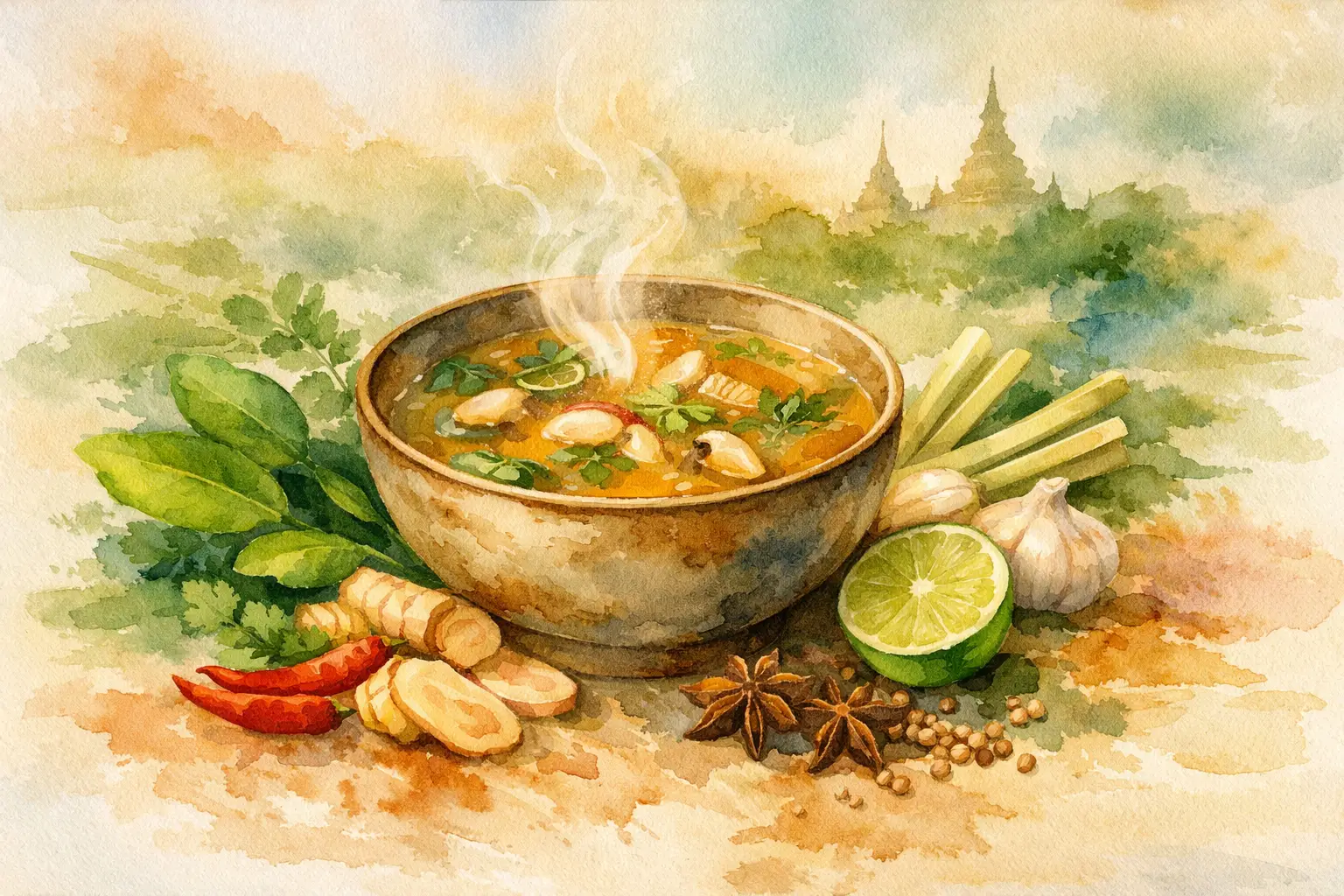
A bowl of authentic Thai herbal broth should wake up your appetite before you take the first sip. The aroma of lemongrass, galangal, citrusy makrut leaf, and fresh chili rises first. Then come the flavors that make Thai soup so satisfying: savory depth, bright sourness, gentle sweetness, and heat that builds instead of simply burning.
That balance is why Thai soups feel so different from a standard chicken broth or a creamy Western soup. The broth is not a quiet background for the ingredients. It is the dish. Whether it is clear and spicy like Tom Yum or rich with coconut milk like Tom Kha, every spoonful carries the fragrance of herbs and the bold seasoning that Thai food is known for.
What Is Authentic Thai Herbal Broth?
Thai herbal broth is a seasoned soup base built around fresh aromatics rather than dried seasoning blends alone. Lemongrass brings a clean lemon scent without the sharpness of lemon juice. Galangal adds a peppery, pine-like warmth that is different from regular ginger. Makrut leaf brings a distinctive citrus perfume, while chili, garlic, fish sauce, lime, and often mushrooms create the savory, sour, spicy character of the finished bowl.
There is no single broth that represents all Thai cooking. Recipes vary by region, household, and the ingredients available that day. Some soups are clear, hot, and sour. Others soften the herbs with coconut milk. Seafood, chicken, shrimp, tofu, and vegetables each change the flavor of the broth as they cook.
What remains consistent is the purpose: fresh herbs should be noticeable, and the seasoning should feel balanced. An authentic Thai soup is not meant to taste only spicy or only sour. Those flavors work together.
The herbs do more than add fragrance
Fresh herbs are the foundation, not a garnish. Lemongrass is usually bruised or sliced so its aromatic oils infuse the liquid. Galangal is sliced into coins, releasing warmth slowly as the broth simmers. Makrut leaves may be torn to expose more aroma. Cilantro can add a green, fresh finish, while Thai basil gives certain soups a sweet, peppery lift.
These ingredients need enough time to flavor the broth, but not so much time that their aromas become dull. That is one reason restaurant-made Thai soup often tastes layered rather than heavy. The broth is carefully simmered, then finished with ingredients such as lime juice and fresh herbs closer to serving time.
The Flavor Balance Behind Thai Soup
The best Thai broth has movement. It begins aromatic and savory, then shifts between sour, spicy, and lightly sweet flavors. Each component has a job.
Fish sauce provides salt and umami. It should make the broth fuller without making it taste fishy. Lime juice gives a bright sour edge that freshens rich ingredients such as shrimp, mushrooms, or coconut milk. Chili brings heat, but also a fruit-like flavor when used in the right amount. A little sugar may be used to round sharp sourness and salt, not to turn the soup sweet.
This is why a broth can taste different from one bowl to the next even when the ingredients look similar. A Tom Yum with extra lime feels sharper and brighter. More chili makes it bolder. Coconut milk in Tom Kha changes the texture and softens the heat, yet the galangal and lemongrass should still come through clearly.
For diners, this makes Thai soup easy to personalize. If you enjoy a clean, lively broth with a stronger sour-spicy profile, Tom Yum is often the right choice. If you want herbal flavor with a creamier, milder finish, Tom Kha is a more comforting option. Neither is better. It depends on what you want from the meal.
Tom Yum and Tom Kha: Two Essential Styles
Tom Yum is one of the clearest examples of Thai herbal broth. Its base is usually clear and intensely aromatic, with lemongrass, galangal, makrut leaf, chili, lime, and fish sauce doing most of the work. Shrimp is a classic addition, but chicken, seafood, mushrooms, and tofu also pair well with its bright flavor.
A good Tom Yum should feel lively, not oily or overly salty. The sourness is present, the chili has character, and the herbs remain easy to recognize. Mushrooms absorb the broth beautifully, while shrimp or seafood adds a natural sweetness that works especially well against the lime and chili.
Tom Kha uses many of the same herbs, but coconut milk gives the soup a richer body. It is creamy without needing to be thick. The coconut milk smooths the sharp edges of the chili and lime, while galangal keeps the flavor unmistakably Thai.
Chicken is especially popular in Tom Kha because it absorbs the fragrant broth and adds a satisfying, hearty bite. For a lighter meal, pair either soup with a fresh salad. For a more filling order, enjoy it alongside steamed rice, fried rice, or noodles that can soak up the extra broth.
Why coconut milk should not hide the herbs
A common misunderstanding is that a coconut soup should taste mainly sweet and creamy. In a well-made Tom Kha, coconut milk supports the herbs instead of covering them. You should still notice galangal, lemongrass, lime, and a touch of heat.
The trade-off is simple. Coconut milk makes the soup feel more filling and mellow, while a clear broth puts the herbal sharpness front and center. If you are ordering for a group with different spice preferences, Tom Kha can be an approachable place to start. Regular Thai soup fans may prefer the direct, punchy profile of Tom Yum.
How to Order Thai Herbal Broth With Confidence
Start with the protein and soup style you enjoy most. Shrimp and mixed seafood bring a briny sweetness that suits Tom Yum. Chicken works naturally in both Tom Yum and Tom Kha. Mushrooms and tofu make excellent choices when you want the broth and herbs to lead the meal.
Then consider the spice level carefully. Thai chili has a fast, clean heat, but the experience changes with the other ingredients. A medium-spicy clear soup can feel hotter than a medium-spicy coconut soup because there is less richness to soften the chili. If you are trying Thai herbal soup for the first time, a moderate spice level lets the lemongrass, galangal, and lime stay in focus.
For delivery, soup travels best when it is treated as part of a complete meal rather than an afterthought. Add rice if you want a comforting, substantial lunch or dinner. Choose a stir-fried noodle dish when you want contrast between a fragrant broth and savory wok flavor. A crisp green papaya salad brings more heat and tang, while spring rolls or dumplings add a satisfying starter without competing with the soup.
At Rustic Thai Kitchen, familiar dish names and clear ingredient descriptions make it easier to choose the bowl that fits your taste. You do not need to know every Thai herb before ordering. Knowing whether you want clear and spicy or creamy and fragrant is usually enough.
The Freshness Test for a Great Bowl
The easiest way to recognize a good Thai herbal broth is to pay attention to what lingers after a spoonful. It should leave a fresh herbal aroma and a clean spicy-sour finish, not a heavy coating of salt or oil. The broth may be bold, but it should still make you want another sip.
Fresh lime is especially important. Added near the end, it gives the soup a lively edge that bottled citrus flavor cannot fully replace. The same is true of lemongrass and galangal. When the herbs are fresh and properly infused, the broth tastes bright even when it is rich with coconut milk or packed with seafood.
Some ingredients in the bowl, such as galangal slices and whole lemongrass pieces, are there mainly to flavor the soup. They are often not meant to be eaten like vegetables. Enjoy the broth, protein, mushrooms, and tender ingredients around them, and let the larger herb pieces do their aromatic work.
A great Thai soup does not need a complicated explanation. It needs fragrant herbs, balanced seasoning, and enough heat, sourness, and savory flavor to make the bowl memorable. Order the style that suits your appetite, add rice or noodles if you want a fuller meal, and give yourself a moment to enjoy the aroma before the first spoonful.