Why Thai Food Tastes Fresh

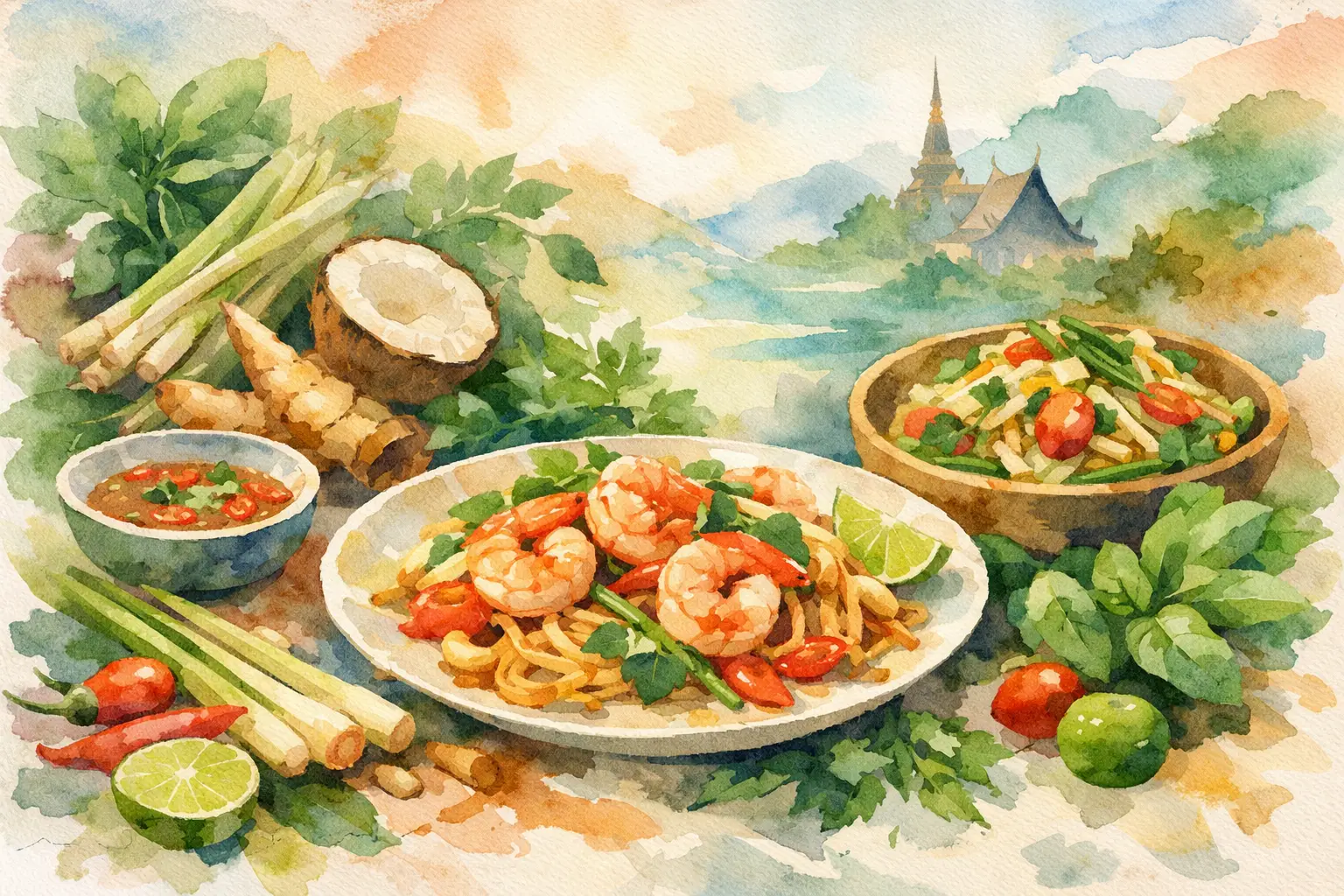
A spoonful of Tom Yum tells the story fast – lemongrass lifts first, lime cuts through next, chilies wake everything up, and fresh herbs keep the finish clean instead of heavy. That balance is a big reason why Thai food tastes fresh, even when the dish is rich, spicy, or deeply savory.
Freshness in Thai food is not just about using vegetables that were chopped an hour ago. It comes from the way ingredients are combined so that no single element sits flat on the palate. Sour, salty, sweet, spicy, and herbal notes all work together. When that balance is right, the food feels bright and lively from the first bite to the last.
Why Thai food tastes fresh in every course
Many cuisines have fresh dishes, but Thai food stands out because freshness is built into the flavor structure itself. A curry, a soup, a salad, and a stir-fry can all taste fresh for different reasons. One may lean on lime and herbs, another on crisp vegetables and quick cooking, and another on aromatic ingredients like galangal and kaffir lime leaf.
This matters for diners because fresh-tasting food feels more satisfying without feeling overly heavy. You can order a creamy coconut soup or a noodle dish with a savory sauce and still get that clean, bright finish people associate with Thai cooking.
Fresh herbs do more than add garnish
In many Thai dishes, herbs are not an afterthought. Thai basil, cilantro, lemongrass, kaffir lime leaf, and sometimes mint are essential to the dish’s identity. They bring aroma, sharpness, and lift.
Lemongrass gives a citrusy fragrance without tasting like juice. Galangal adds a peppery, piney note that is different from regular ginger. Kaffir lime leaf brings a clean floral-citrus aroma that can change the whole character of a soup or curry. Thai basil adds a slightly sweet, spicy herbal finish that keeps stir-fries and curries from tasting one-dimensional.
When these ingredients are used properly, they make a dish smell and taste active. That is one of the clearest answers to why Thai food tastes fresh – the aromatics are vivid, recognizable, and hard to mistake for anything else.
Acidity keeps flavors awake
A lot of people think of spice first when they think of Thai food. Acid is just as important. Lime juice, tamarind, and sometimes green mango or other tart ingredients sharpen the entire dish.
Acidity keeps rich ingredients from becoming dull. Coconut milk is creamy and comforting, but without enough contrast it can feel heavy. Add lime, herbs, and a little heat, and it tastes smoother and brighter. The same thing happens in noodle dishes and salads. Tamarind in Pad Thai brings tang and depth, while lime in papaya salad makes every bite feel crisp and energized.
This is also why Thai food often tastes fresh even in delivery. The sour element travels well when the dish is balanced correctly. It continues cutting through savory and sweet notes instead of fading into the background.
The role of quick cooking and texture
Thai food often relies on fast cooking methods that protect texture and color. Stir-fried dishes are a good example. Vegetables stay slightly crisp, herbs hold their aroma, and proteins pick up sauce without becoming overly soft.
That texture matters more than people realize. Freshness is not only flavor. It is also how the food feels when you eat it. Crunchy papaya salad, tender but not mushy vegetables, springy noodles, and a broth that tastes clear rather than muddy all reinforce that fresh impression.
There is a practical side to this as well. When ingredients are cooked too long, flavors blur together. Thai cooking usually works best when ingredients keep some definition. You should still notice the basil, the garlic, the chili, the lime, and the vegetable itself.
Why balance matters more than intensity
People sometimes assume bold flavor means stronger seasoning across the board. Thai food is more careful than that. The best dishes are balanced, not simply intense.
Take Tom Kha Soup. It has coconut milk, which is rich. But it also has galangal, lime, lemongrass, and often mushrooms and herbs. The result is creamy yet still clean. Or look at green papaya salad. It can be spicy, sour, salty, and a little sweet at once, but if one note dominates too much, it loses that refreshing quality.
This is where experience in the kitchen matters. Fresh-tasting Thai food depends on proportion. Too much sugar and the dish feels sticky. Too much fish sauce and it can taste overly salty. Too little acid and everything feels flat. The freshness comes from getting the balance right, not from making the flavors louder.
Why Thai food tastes fresh even when it is rich
This is one of the most interesting parts of Thai cuisine. Some dishes contain coconut milk, fried elements, or savory sauces with real depth, yet they still do not feel as heavy as people expect.
The reason is contrast. Richness is almost always paired with something bright, aromatic, spicy, or sharp. Red curry and green curry are both comforting, but herbs and chilies keep them from tasting dull. Fried appetizers often come with a sweet chili sauce or a fresh side that adds another layer. Even seafood dishes benefit from garlic, lime, basil, or chili that keeps the flavor moving.
That sense of movement is what many diners describe as fresh. The flavor changes as you eat it. You notice aroma first, then spice, then sourness, then a savory finish. A dish that keeps unfolding tastes fresher than one that lands in only one place.
Ingredients people recognize, flavors that feel new
Thai food is approachable because many ingredients are familiar – chicken, shrimp, noodles, rice, garlic, onions, chilies. What makes it stand out is how these ingredients are layered with herbs, sauces, and acids.
For customers ordering online, this is part of the appeal. You can choose something recognizable like fried rice, stir-fried noodles, or curry, but still get a flavor profile that feels brighter and more distinctive than standard takeout. That is one reason Thai food works so well for both first-time diners and regulars. It feels easy to order, yet the taste is never boring.
At Rustic Thai Kitchen, that fresh character shows up across the menu in dishes like Tom Yum Soup, Tom Kha Soup, green papaya salad, curry, and basil-forward stir-fries. The ingredients do the work when they are allowed to stay clear and vivid.
Freshness also comes from what Thai food avoids
Another answer to why Thai food tastes fresh is that many dishes avoid the overly dense, creamy, or cheese-heavy finish common in other comfort foods. Even when a dish is savory and satisfying, it usually leans on broth, herbs, chilies, citrus, fish sauce, tamarind, or vegetables to keep things light on the palate.
That does not mean every Thai dish is light in calories or mild in seasoning. It means the flavor rarely feels blocked. There is usually a clear top note – lime, basil, lemongrass, chili, garlic – that gives the dish a sense of lift.
It depends on the dish, of course. A heavily sweetened noodle dish or an overcooked curry can lose that effect. Poor balance can make Thai food feel heavier than it should. But when the ingredients are fresh and the seasoning is handled well, the food tastes clean, bright, and very easy to come back to.
What to order if you want that extra-fresh flavor
If you are chasing the freshest side of Thai cuisine, soups and salads are often the fastest route. Tom Yum gives you heat, citrus, and herbs in a clear, aromatic broth. Tom Kha offers a creamier version with the same bright structure. Green papaya salad delivers crunch, lime, chili, and a punchy finish that wakes up the appetite.
After that, stir-fries with basil, garlic, and vegetables are a strong choice, especially if you want something hearty that still tastes lively. Curries work well too, especially when they are made with enough herbs and balanced seasoning rather than just richness.
The easiest way to think about it is this: if a dish includes herbs, acid, heat, and texture, it will usually give you that signature Thai freshness.
The next time a bowl of soup smells citrusy before it reaches the table, or a noodle dish tastes bright instead of heavy, that is not accidental. Thai food is built to feel alive – and that is exactly why so many people keep craving it.