Does Pad Thai Have Peanuts?

If you are scanning a Thai menu and wondering, does pad thai have peanuts, the short answer is usually yes – but not always in the same way. In many restaurants, crushed roasted peanuts are added on top or served on the side rather than cooked deep into the noodles. That matters for flavor, texture, and especially for anyone ordering with a peanut allergy.
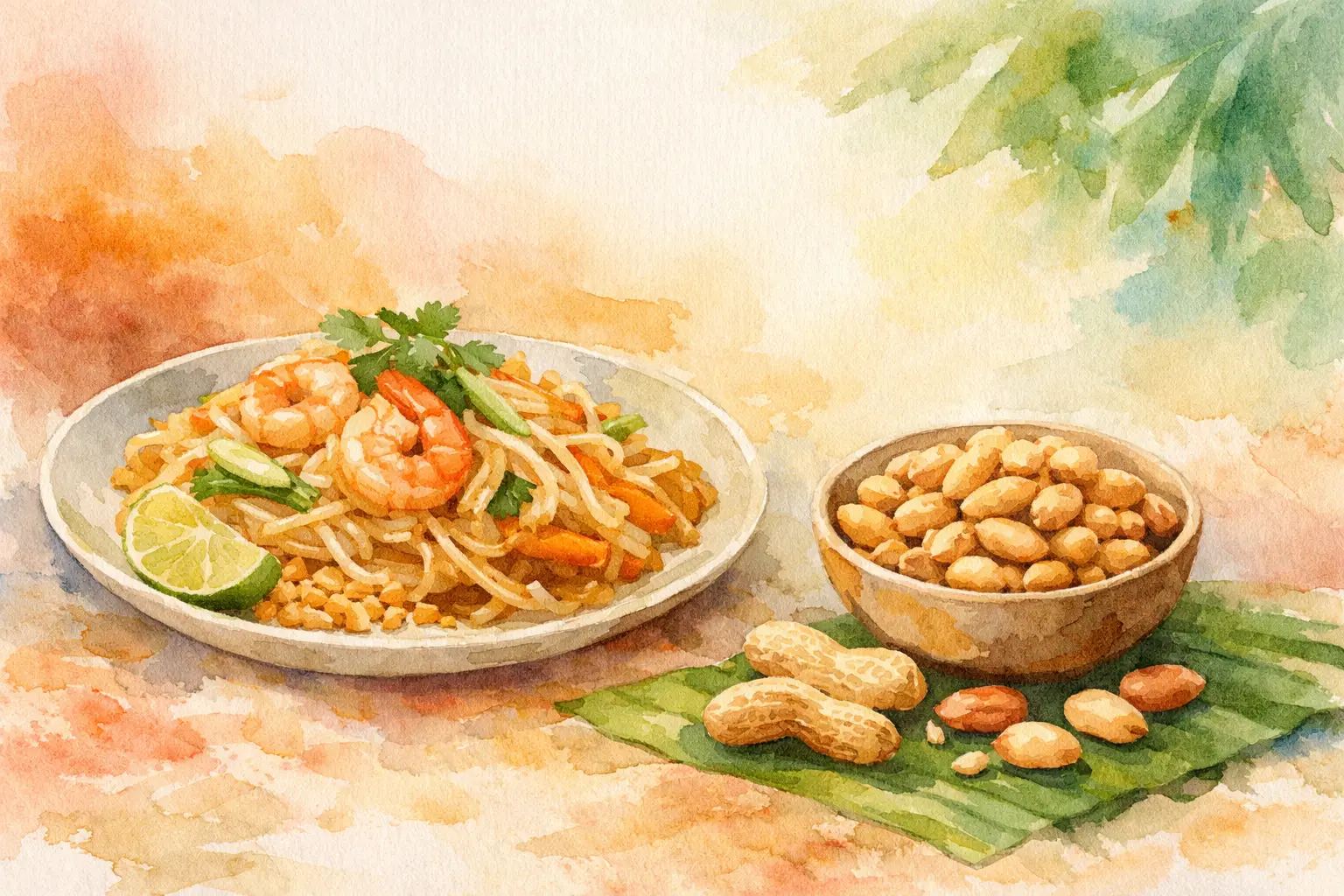
Pad Thai is one of the most recognized Thai noodle dishes because it balances sweet, sour, salty, and savory flavors in one plate. You get rice noodles stir-fried with tamarind sauce, egg, bean sprouts, chives, and your choice of protein, often finished with lime and crushed peanuts. That nutty topping is part of the classic experience, but the exact preparation can vary from one kitchen to another.
Does Pad Thai Have Peanuts in the traditional version?
Traditional Pad Thai commonly includes crushed peanuts as a garnish. They bring a roasted, slightly rich flavor and a dry crunch that contrasts with the soft noodles and tender egg. When paired with tamarind, fish sauce, palm sugar, and lime, peanuts help round out the dish instead of overpowering it.
That said, peanuts are usually not the main ingredient. The heart of Pad Thai is the noodle stir-fry itself – rice noodles, sauce, aromatics, egg, and vegetables. In many authentic preparations, the peanuts are sprinkled on top right before serving, which means the dish can sometimes be prepared without them if requested.
This is where a lot of confusion starts. People often assume that if a dish is known for peanuts, then peanuts must be mixed throughout. With Pad Thai, that is not always the case. Some kitchens fold in a small amount during cooking, while others keep them entirely as a finishing touch.
Why peanuts are added to Pad Thai
Peanuts are not there by accident. They do a specific job in the dish. Pad Thai has a soft, chewy, slightly sticky texture from the rice noodles and sauce. Crushed peanuts cut through that with crunch.
Flavor is another reason. Pad Thai sauce leans on tamarind for tang, fish sauce for saltiness, and sugar for sweetness. Peanuts add roasted depth and make each bite feel more complete. Without them, the dish can still taste good, but it may feel less layered.
There is also a practical side. Thai food often builds contrast into a single plate – hot and cool, soft and crisp, rich and bright. Peanuts sit in that same pattern. Alongside lime wedges and fresh bean sprouts, they let diners adjust the final flavor and texture at the table.
When Pad Thai may not have peanuts
Not every Pad Thai order comes with peanuts automatically. Some restaurants leave them off unless requested. Others serve them on the side, which is helpful for diners who want control over the final dish. In some modern or allergy-aware kitchens, the default version may be peanut-free unless the menu specifically says otherwise.
There are also regional and house-style differences. One restaurant may use a generous peanut topping, while another uses just a spoonful. Some recipes focus more heavily on tamarind and dried shrimp, while others lean sweeter and milder for broader appeal. The dish is still Pad Thai, but the finishing details can shift.
Takeout and delivery can change the setup too. For convenience, peanuts may be packed in a separate container to keep them crisp. That is often the best-case scenario for texture, and it gives customers the choice to add them or skip them.
Does Pad Thai have peanuts if you order it without them?
If you ask for no peanuts, many restaurants can leave off the garnish. That works well for preference. Maybe you like the tangy noodles, egg, and bean sprouts but do not want the extra crunch. In that case, a simple request is often enough.
For allergies, it is more complicated. Asking for no peanuts does not automatically mean the dish is safe for someone with a peanut allergy. Peanuts may be stored nearby, used in prep areas, or added with utensils that touch other dishes. Cross-contact is the real issue, especially in busy kitchens that prepare multiple Thai dishes with nuts, sauces, and shared workstations.
So the better question is not only does pad thai have peanuts, but also how is it prepared in that specific kitchen. If the allergy is serious, customers should clearly say it is an allergy, not a preference, and ask whether the kitchen can safely accommodate it.
What to expect from restaurant Pad Thai
In most restaurants, Pad Thai arrives with the noodles fully cooked and the peanuts added as a final topping or side garnish. That means you will often see visible crushed peanuts rather than hidden peanut pieces throughout the dish. If you are checking for ingredients before you order, that is useful to know.
Still, recipes vary. Some kitchens add peanut powder or finely chopped peanuts during the last stage of stir-frying so the flavor spreads more evenly. Others use no peanuts in the wok at all and rely on garnish only. A few may even offer a simplified version for customers who prefer a cleaner noodle profile.
For online ordering, menu wording matters. If a dish description mentions crushed peanuts, peanut topping, or roasted nuts, assume they are part of the standard build. If the description does not mention peanuts, it is still worth checking, because some menus keep descriptions brief and leave out garnishes.
At Rustic Thai Kitchen, for example, a direct dish description helps customers order with more confidence, especially when ingredients and toppings can affect taste or dietary needs.
How peanuts affect the flavor of Pad Thai
If you have only had Pad Thai without peanuts, you may wonder whether they make a big difference. They do, but not in a heavy way. Peanuts do not change the dish into something nutty like peanut sauce noodles. Instead, they add a toasted finish that supports the tamarind and balances the sweetness.
Texture may be the bigger difference. Pad Thai without peanuts can feel softer overall, especially if it is served hot and saucy. Add crushed peanuts and suddenly the dish has more contrast. Lime juice brightens it, bean sprouts keep it fresh, and the peanuts make it more satisfying bite after bite.
That is why many diners who say they do not usually care about garnishes still notice when peanuts are missing from Pad Thai. The plate can feel less complete, even if the core flavors are still there.
Peanut allergy concerns with Pad Thai
For anyone with a peanut allergy, Pad Thai deserves extra attention. Even if the peanuts are only a topping, the dish may still be prepared in an environment where peanuts are handled regularly. Thai kitchens also often use ingredients like peanut sauce in other menu items, so shared tools and prep surfaces are a real concern.
The safest approach is to ask direct questions before ordering. Ask whether peanuts are added in the wok or only on top. Ask whether the kitchen can prepare the dish separately. Ask whether utensils, pans, or prep areas are shared with peanut-containing dishes. Clear answers matter more than assumptions.
If the allergy is severe, do not rely on visual inspection alone. A dish can look peanut-free and still carry risk from cross-contact. Restaurants that are transparent about ingredients and preparation are always the better choice for allergy-sensitive diners.
So, does Pad Thai have peanuts?
Usually, yes. In the classic version, Pad Thai often includes crushed peanuts as a topping or side garnish. But the details depend on the restaurant, the recipe, and how the dish is prepared for dine-in, takeout, or delivery.
If you love the full traditional balance of sweet tamarind, savory depth, fresh lime, and crunchy texture, peanuts are part of what makes Pad Thai feel complete. If you do not want them, many kitchens can leave them off. If you have an allergy, the key is not just removing the garnish but confirming how the dish is handled from start to finish.
The easiest way to order well is simple: ask how the Pad Thai is finished, say exactly what you need, and choose the version that fits your taste and comfort level.