Tom Yum vs Tom Kha: What’s the Difference?

Choosing between tom yum vs tom kha usually comes down to one question: do you want your soup bright and sharp, or creamy and mellow? Both are classic Thai soups built on herbs like lemongrass, galangal, and kaffir lime leaf, but they land very differently in the bowl. If you have ever looked at a Thai menu and hesitated between the two, the difference is easier to taste once you know what each soup is trying to do.
Tom Yum vs Tom Kha at a glance
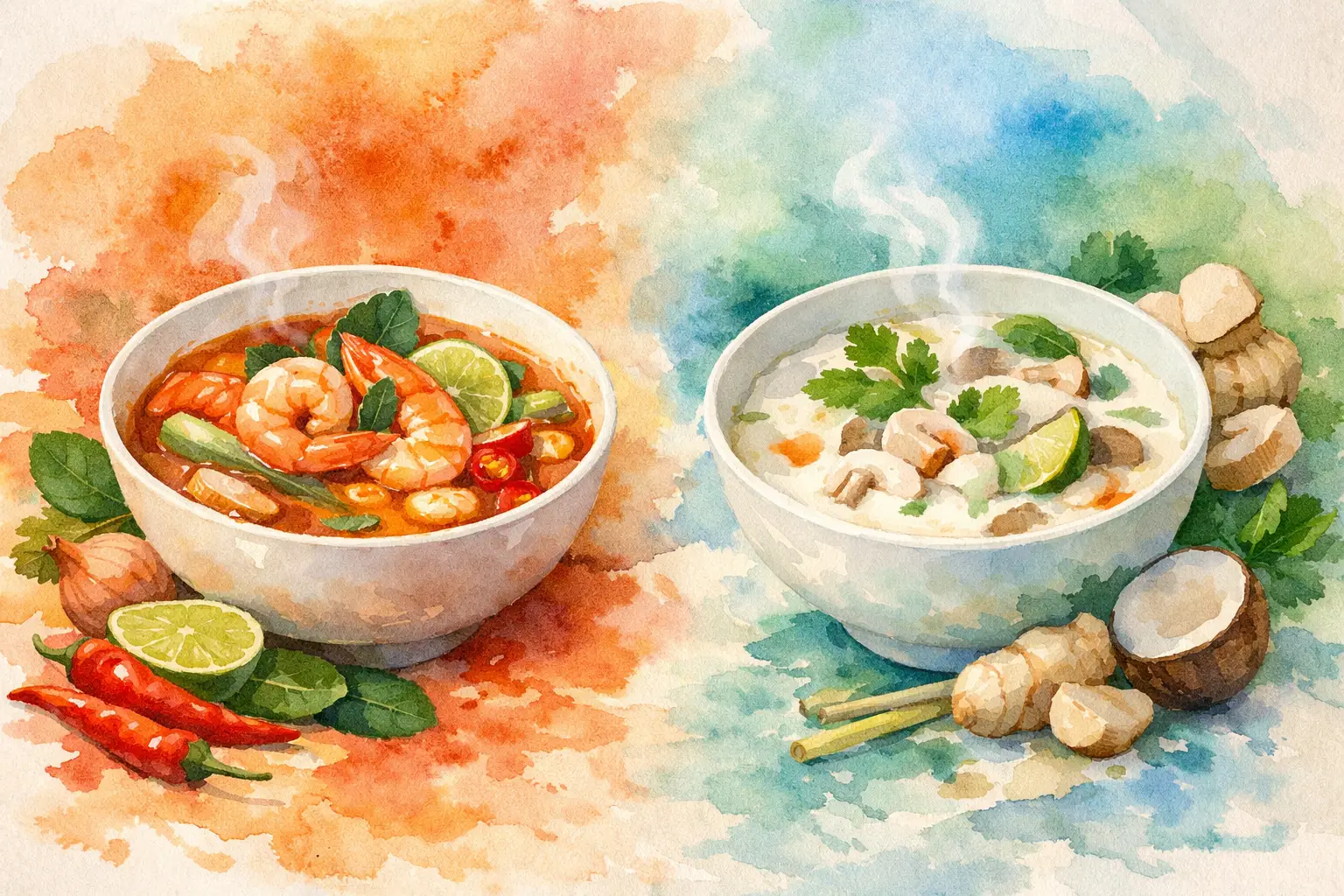
Tom yum is the bolder, hotter, more acidic soup. Its broth is usually clear or lightly cloudy, with a punch of chili heat and a clear sour edge from lime. It tastes lively and direct, with herbs and aromatics doing most of the work.
Tom kha is softer and richer because coconut milk is part of the base. You still get the signature Thai herbal notes from galangal, lemongrass, and kaffir lime leaf, but the texture is creamier and the overall flavor is rounder. It can still have heat and acidity, just with more balance and less edge.
If you like soups that wake up your palate, tom yum often wins. If you want something soothing, fragrant, and still full of flavor, tom kha is usually the better pick.
What makes tom yum different?
Tom yum is known for its hot and sour profile. The broth is built around aromatic ingredients rather than creaminess, so every sip feels lighter but more pointed. You taste lemongrass first, then lime, then chili, with galangal adding a peppery, earthy note that keeps it from tasting one-dimensional.
In many restaurants, tom yum is served with shrimp, which is one of the most familiar versions. Chicken and seafood versions are also common. Mushrooms often go into the bowl as well, giving the soup more body without making it heavy.
A good tom yum should not taste sour just for the sake of being sour. The best versions keep the broth balanced, so the citrusy tang, savory depth, and chili heat all stay in conversation with each other. If any one part dominates too hard, the soup loses the freshness that makes it so appealing.
There is also some variation from kitchen to kitchen. Some tom yum soups are crystal clear and very broth-forward. Others include chili paste and become slightly richer, darker, and more savory. That means one bowl may taste especially sharp and herbal, while another leans deeper and fuller. It is still tom yum, just a different expression.
What makes tom kha different?
Tom kha starts from a similar aromatic foundation, but coconut milk changes the entire experience. Instead of a broth that hits fast and clean, you get a smoother soup with more body. The galangal stands out especially well in tom kha because the creamy base carries its warm, citrusy spice in a gentler way.
Chicken is one of the most common proteins in tom kha, although shrimp and seafood versions are also popular. Mushrooms are a frequent addition, and in a well-made bowl, they absorb the coconut broth without disappearing into it.
The flavor balance in tom kha is more layered than many first-time diners expect. Yes, it is creamy, but it should not be sweet like a dessert-style coconut soup. It still needs acid, salt, herbs, and usually some chili. The coconut milk is there to soften the edges, not cover them.
That is why tom kha often appeals to people who want Thai flavor but are not looking for maximum heat. It has enough richness to feel comforting, yet enough brightness to stay distinctly Thai rather than simply creamy.
Broth, heat, and texture
The clearest way to understand tom yum vs tom kha is to compare the broth itself.
Tom yum usually feels lighter on the spoon. The broth moves quickly across the palate, with sourness and spice arriving early. Because there is no coconut milk to soften it, the flavors feel more immediate. This can make tom yum especially satisfying when you want something clean, hot, and energetic.
Tom kha feels fuller and silkier. Coconut milk gives it weight, so the herbs unfold more gradually. Heat tends to feel less aggressive in tom kha even when the soup includes chilies, simply because the richness cushions the spice.
Neither is better across the board. It depends on your mood, your spice tolerance, and what else you are eating. With a heavier meal, some people prefer the brightness of tom yum. With spicy stir-fry or grilled dishes, tom kha can add a cooling contrast while still matching the same flavor family.
The ingredients they share
These soups are different, but they are also close relatives. Both usually rely on core Thai aromatics that give them their identity.
Lemongrass brings citrusy freshness without tasting like lemon juice. Galangal adds a sharp, aromatic warmth that is more peppery and pine-like than regular ginger. Kaffir lime leaf brings a fragrant, floral citrus note that lingers in the broth. Fish sauce usually supplies salt and savory depth, while lime helps shape the sour finish.
That shared base is why tom yum and tom kha can smell similar at first. The split happens when the broth develops. Tom yum keeps things lean and assertive. Tom kha folds in coconut milk and becomes more rounded.
Which soup is spicier?
Usually, tom yum tastes spicier. Even when both soups use similar chili levels, tom yum presents the heat more directly because the broth is lighter and more acidic. The spice is not hidden behind any creaminess.
Tom kha can still be spicy, especially if a kitchen prepares it that way, but many diners experience it as milder because the coconut milk softens the burn. So if you enjoy flavor but want a gentler introduction to Thai soups, tom kha is often the safer place to start.
That said, spice levels vary by restaurant. One kitchen may serve a softly fragrant tom yum, while another makes it decisively hot. The same goes for tom kha. If spice matters to you, ask how the soup is prepared rather than assuming every version will taste the same.
Which one should you order first?
If you are new to Thai food, tom kha is often the easier first order. It is approachable, creamy, and balanced, and it gives you a clear sense of Thai herbs without hitting too hard with acid or heat. Diners who already enjoy coconut-based curries or mildly spicy soups usually connect with it right away.
If you already like bold, sour, spicy flavors, start with tom yum. It is one of the most refreshing soups on a Thai menu when made well. It feels vibrant rather than heavy, and it pairs especially well with shrimp, seafood, or a full spread of savory dishes.
A practical way to decide is to think about what you are craving from the first spoonful. If you want something cozy, choose tom kha. If you want something brisk and lively, choose tom yum.
Tom yum vs tom kha with different meals
Your main dish can also help make the choice easier. Tom yum works well when the rest of the meal is rich, fried, or sauce-heavy because it cuts through that weight. The acidity and herbs keep the meal from feeling too dense.
Tom kha fits naturally when you want a more rounded, comforting meal. It can sit nicely next to stir-fried noodles, rice dishes, or grilled proteins because it adds richness without becoming as heavy as a curry. For delivery, many people also find tom kha especially satisfying because its creamy broth holds warmth and texture well on the way to the table.
At Rustic Thai Kitchen, both soups fit the same promise customers want from Thai food: fresh herbs, bold seasoning, and flavors that are easy to understand once you know the basics. The right choice is less about rules and more about what kind of bowl sounds good right now.
The real answer to tom yum vs tom kha
This is not really a question of which soup is better. It is a question of which experience you want. Tom yum is bright, spicy, and sharp-edged in the best way. Tom kha is creamy, fragrant, and gentle without being bland.
Once you know that difference, ordering gets simpler. On some days, the answer is a hot, sour broth with real kick. On others, it is coconut milk, galangal, and a smoother finish. If you are stuck between them, let your craving decide – bold and tangy, or rich and comforting.