A Guide to Thai Curry Flavors

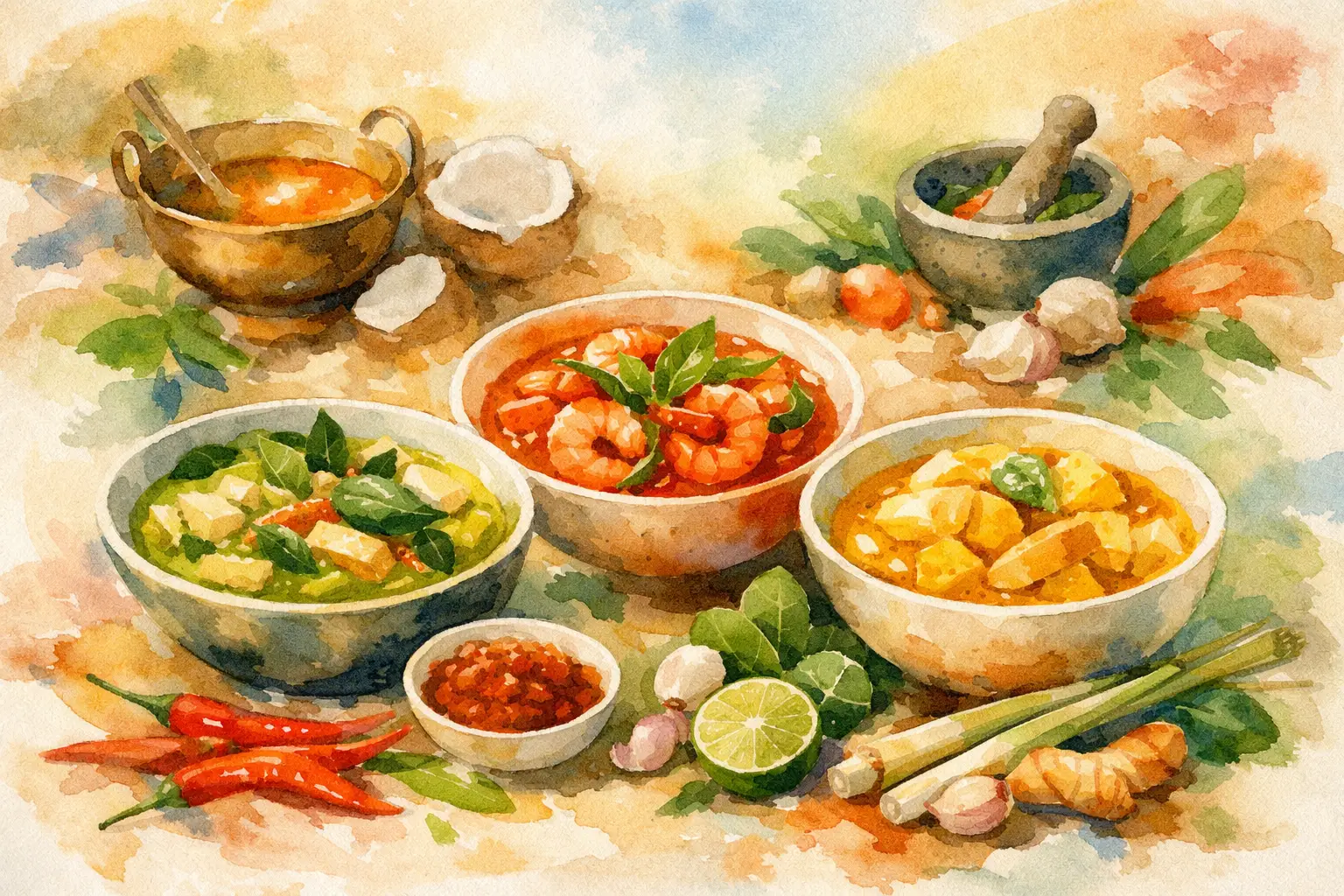
Some curries hit with sharp chili heat first. Others start mellow with coconut milk, then finish with herbs, spice, or a little sweetness. If you have ever scanned a Thai menu and paused at the curry section, this guide to thai curry flavors will help you order with more confidence and get closer to the taste you actually want.
Thai curry is not one single flavor. Each style has its own curry paste, herb mix, spice level, and texture. Coconut milk can make one curry rich and smooth, while another leans brighter, hotter, or more aromatic. The difference matters, especially if you are choosing between green, red, yellow, Panang, or Massaman for dinner.
What shapes Thai curry flavor
At the heart of Thai curry is the paste. That paste usually combines chilies with fragrant ingredients like garlic, shallots, lemongrass, galangal, and kaffir lime leaf. From there, each curry takes a different direction depending on the type of chili used, whether coconut milk is added heavily or lightly, and how sweet, salty, sour, or nutty the final dish becomes.
Protein and vegetables also change the experience. Chicken in green curry tastes lighter and lets the herbs stand out. Beef in Massaman feels deeper and richer. Shrimp can bring a natural sweetness that works especially well in red curry. Even the same curry base can taste different depending on what goes into the pan.
That is why there is no single answer to which Thai curry is best. It depends on whether you want fresh and spicy, creamy and mild, or warm and gently sweet.
A guide to Thai curry flavors by type
Green curry
Green curry is usually the brightest and most herb-forward of the common Thai curries. Its color comes from green chilies, and the flavor often feels lively from basil, kaffir lime leaf, lemongrass, and galangal. It is creamy from coconut milk, but it does not usually taste heavy.
If you like a curry with clear herbal notes and a stronger chili presence, green curry is often the right choice. The heat can range from moderate to quite spicy depending on the kitchen, so it is a good option for diners who want freshness with real kick. With chicken, eggplant, and basil, it has a classic balance that tastes full without feeling too dense.
Red curry
Red curry is one of the easiest starting points for many diners because it is bold but familiar. The paste uses red chilies, garlic, lemongrass, and other aromatics, giving it a deeper chili flavor than green curry. It is usually creamy, slightly savory, and balanced rather than aggressively hot.
Compared with green curry, red curry often feels rounder and a little less sharp. It still has spice, but the flavor leans toward warm chili richness instead of bright herbal intensity. If you want a dependable middle ground between mild and hot, red curry is often the safest order.
Yellow curry
Yellow curry is typically the gentlest and most comfort-forward of the main Thai curry styles. It gets its golden color from turmeric and often includes curry powder-style spices that give it a warmer, softer profile. Coconut milk smooths everything out, and potatoes or onions are common additions.
For diners who enjoy mild spice and a fuller, slightly sweet curry sauce, yellow curry makes sense. It is approachable and easy to pair with chicken or seafood. If green curry sounds too hot and red curry sounds too intense, yellow curry is often the better fit.
Panang curry
Panang curry is richer, thicker, and more concentrated than standard red curry. It usually has a creamy coconut base, but the texture is less soupy and more velvety. Kaffir lime leaf gives it fragrance, while peanuts or a nutty note can add depth.
The taste is slightly sweet, savory, and gently spicy, with a smooth finish. Panang works well for diners who want a curry that feels indulgent without being too fiery. It is especially good with beef or chicken, where the thicker sauce can really cling to the protein.
Massaman curry
Massaman curry is the most distinct from the others because its flavor leans warm, spiced, and subtly sweet rather than sharply herbal. You will often notice spices like cinnamon, cardamom, and clove along with coconut milk, onions, and potatoes. Peanuts may also appear, adding body and richness.
This is a great choice if you want something comforting and layered but not very hot. It is less about chili impact and more about depth. Beef is a classic match because it stands up well to the heavier sauce, though chicken also works beautifully.
Heat level is only part of the story
Many people choose curry based on spice alone, but heat does not tell you enough. Green curry is often hotter, yet it can still feel fresh and balanced because of the herbs. Yellow curry may be milder, but its turmeric and warm spice profile make it taste fuller than plain coconut sauce. Panang can seem less spicy than red curry while still tasting more intense because the sauce is thicker and more concentrated.
A better way to order is to think about the kind of flavor you want first. Do you want herbal, chili-forward, nutty, warm-spiced, or creamy and mild? Once you know that, the heat level becomes easier to manage.
How to choose the right curry for your taste
If you usually like fresh, spicy foods with a clean finish, start with green curry. If you want balanced chili flavor and a classic Thai curry experience, red curry is the easy pick. If you prefer mild, creamy dishes with soft spice, yellow curry is often the most comfortable order.
If your taste runs toward richer sauces, Panang is a strong choice. If you enjoy dishes with potatoes, warm spices, and a slightly sweet edge, Massaman will probably suit you better than the others.
There are also practical pairing questions. Rice matters because it absorbs sauce and softens heat. Protein matters because chicken, beef, shrimp, or tofu each shift the flavor. Even your side dishes matter. A bright papaya salad next to a rich curry creates a different meal than curry with fried rice or noodles.
Common curry misconceptions
One common misunderstanding is that all Thai curries taste similar apart from color. They do not. Color signals ingredients, but the real difference comes from herbs, spices, texture, and the balance of sweet, salty, and heat.
Another misconception is that coconut milk means a curry will be mild. Coconut milk adds richness, but it does not cancel chili heat. A green curry with plenty of coconut milk can still be noticeably spicy.
It is also easy to assume that the hottest curry is the most authentic. That is not how Thai food works. Authenticity is about balance. A well-made curry should let you taste the herbs, spice, and sauce together instead of overwhelming everything with heat.
What to order when you are new to Thai curry
If you are trying Thai curry for the first time, red or yellow curry usually gives the easiest entry point. Red curry offers balanced spice and classic curry flavor. Yellow curry is softer and more mellow, especially for diners who prefer a gentler heat level.
If you already enjoy spicy food, green curry is a smart first order because it shows off the fresh side of Thai cooking. If you normally go for richer comfort dishes, Panang or Massaman may be more satisfying right away.
At Rustic Thai Kitchen, that practical approach matters. You want to look at the menu, understand the flavor quickly, and order something that fits your mood instead of guessing from the name alone.
The best guide to thai curry flavors is your own palate
A menu description can point you in the right direction, but your favorite curry comes down to preference. Some people want basil, chili, and kaffir lime leaf to come through first. Others want coconut milk, potatoes, and warm spice. Neither is more correct. They are simply different expressions of Thai flavor.
The easiest way to find your go-to order is to notice what you already like in other foods. If you enjoy bright herbs and stronger heat, lean green. If you like rounded chili flavor, choose red. If you want mild and creamy, go yellow. If you want thick and rich, go Panang. If you want warm, spiced comfort, go Massaman.
The good news is that Thai curry gives you options without making the choice complicated once you know what each one brings. Order by flavor, not just by name, and the meal gets a lot more satisfying.