Tom Yum vs Hot and Sour Soup

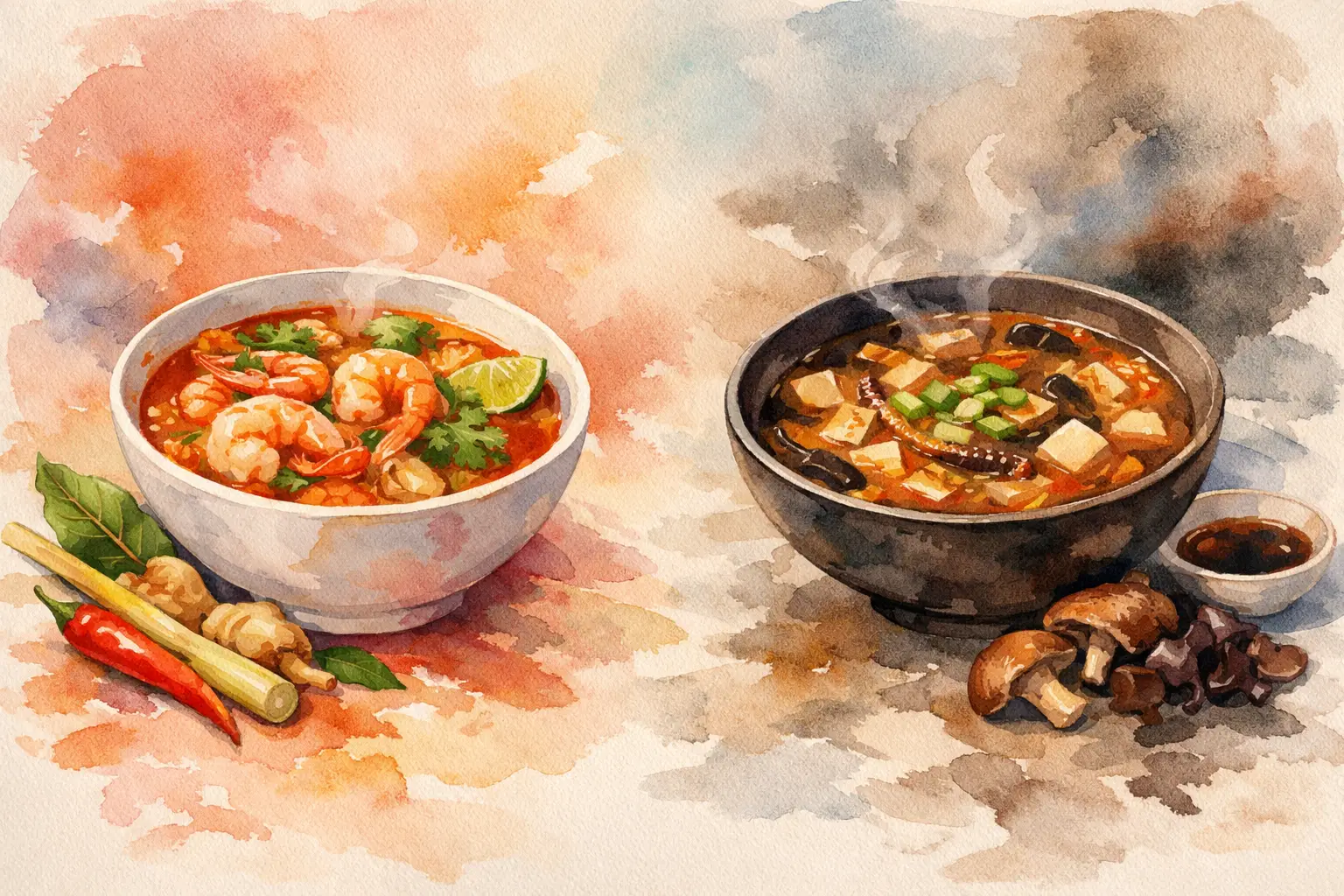
If you are deciding between tom yum vs hot and sour soup, the difference shows up in the first spoonful. One leans bright, citrusy, and herb-forward. The other is deeper, sharper, and usually thicker, with a balance of tang, peppery heat, and savory richness that feels closer to classic Chinese comfort food.
Both soups are famous for being spicy and sour, but they do not taste interchangeable. If you are ordering dinner and want to get it right the first time, it helps to know what gives each soup its identity, what kind of heat to expect, and which one fits your appetite.
Tom Yum vs Hot and Sour Soup: The Core Difference
Tom yum is a Thai soup built around fresh aromatic ingredients. Its signature flavor comes from lemongrass, galangal, kaffir lime leaf, lime juice, fish sauce, and chili. The result is clean, sharp, fragrant, and lively. Even when it is rich with shrimp or mushrooms, it still tastes light on the palate because the herbs stay in front.
Hot and sour soup is usually associated with Chinese cooking, especially Chinese-American menus. It centers more on broth depth, vinegar-based sourness, white pepper heat, soy seasoning, mushrooms, tofu, bamboo shoots, and often egg ribbons. Cornstarch is commonly used to thicken it, which gives the soup a fuller body and a more comforting, almost stew-like texture.
So if you want the shortest answer, here it is: tom yum tastes brighter and more herbal, while hot and sour soup tastes darker, thicker, and more savory.
What Tom Yum Tastes Like
Tom yum is one of those soups that wakes up your whole palate. The sourness usually comes from fresh lime juice, not just vinegar, so it tastes vivid and fresh. The heat often comes from Thai chilies or chili paste, which gives it a direct, punchy spice level.
What really sets tom yum apart is its aroma. Lemongrass gives it a lemony edge without tasting like lemonade. Galangal adds a peppery, piney warmth that is different from regular ginger. Kaffir lime leaf adds a distinct citrus perfume that lingers in the broth. Fish sauce brings salt and depth without making the soup feel heavy.
Depending on the kitchen, tom yum can be clear or slightly creamy if chili paste is added. Some versions are packed with shrimp, mushrooms, and herbs. Others may include chicken or seafood. No matter the variation, the broth usually stays light enough that you notice every ingredient clearly.
For many diners, tom yum is the better choice when you want something bold but not dense. It feels refreshing and intense at the same time.
What Hot and Sour Soup Tastes Like
Hot and sour soup has a very different kind of comfort. The sour note often comes from Chinese black vinegar or rice vinegar, giving it a rounder, darker tang than lime-based soups. The heat is usually built with white pepper, which creates a warming spice that spreads differently across the mouth than fresh chili heat.
The broth is often thickened, so each spoonful feels heartier. Ingredients like wood ear mushrooms, tofu, bamboo shoots, egg, and sometimes pork create more texture and more bite. Soy sauce and stock add a savory backbone, which makes the soup feel richer and more grounded.
If tom yum tastes fresh and aromatic, hot and sour soup tastes layered and warming. It is often the soup people reach for when they want something filling, familiar, and satisfying on a cool night or as part of a larger Chinese-style meal.
Ingredients That Change Everything
The easiest way to understand tom yum vs hot and sour soup is to look at the ingredients doing the heavy lifting.
In tom yum, the key flavors come from Thai herbs and seasonings. Lemongrass, galangal, kaffir lime leaf, lime juice, fish sauce, and chilies define the broth. Mushrooms and shrimp are especially common, and they work well because they absorb the broth without muting it.
In hot and sour soup, the defining ingredients are different from the start. Vinegar, white pepper, soy sauce, mushrooms, tofu, bamboo shoots, and egg shape the flavor and texture. Thickener matters too. Without it, hot and sour soup would lose much of its signature feel.
This is why the two soups can both be spicy and sour but still land in completely different places. The acid is different. The heat is different. The texture is different. Even the aroma tells you which cuisine you are eating before you take a bite.
Which Soup Is Spicier?
It depends on the kitchen, but tom yum often tastes spicier right away. Thai chili heat is more direct, and the bright broth makes that heat feel even sharper. If the soup includes roasted chili paste, the spice can feel deeper and a little richer, but it still stays vivid.
Hot and sour soup can be spicy too, but its heat usually comes across as gentler at first because the soup is thicker and more savory. White pepper creates a warming sensation rather than the quick, pointed heat of fresh chilies.
If you enjoy strong heat with a fresh citrus edge, tom yum is usually the better pick. If you prefer spice that feels warming and balanced by a thicker broth, hot and sour soup may be more your style.
Which Soup Is More Filling?
Hot and sour soup usually feels more filling because of the thicker texture and the mix of tofu, egg, and vegetables. It can almost eat like a light meal on its own, especially if you are not very hungry.
Tom yum is typically lighter, although that does not mean less satisfying. With shrimp, mushrooms, or seafood, it can still be substantial. It just delivers satisfaction in a cleaner, less heavy way.
This matters when you are building an order. If soup is only your starter, tom yum can be a smart choice because it opens the appetite instead of weighing it down. If soup is meant to do more of the work, hot and sour soup often feels more substantial.
Tom Yum vs Hot and Sour Soup for First-Time Diners
If you are new to both, the best choice depends on what you already know you like.
Choose tom yum if you enjoy fresh herbs, citrus, seafood, and broths that taste light but intense. It is a good step for diners who like dishes with clear ingredient identity and a bright finish.
Choose hot and sour soup if you like richer savory flavors, thicker soups, mushrooms, tofu, and peppery warmth. It feels more familiar to many diners who have already enjoyed Chinese takeout classics.
There is also a texture question. Some people love a brothy soup with floating herbs and mushrooms. Others want a soup with more body. That alone can decide it.
When Tom Yum Makes More Sense
Tom yum shines when you want a soup that feels fresh, aromatic, and lively from start to finish. It pairs especially well with Thai favorites like fried rice, stir-fried noodles, basil dishes, or grilled proteins because it brings brightness to the table.
It also works well for diners who want bold flavor without the heaviness of a creamy or thickened soup. If you are ordering for lunch, or you want something satisfying that still feels clean, tom yum often hits the mark.
At Rustic Thai Kitchen, that kind of appeal matters. A soup that delivers lemongrass, lime, chili, and herbs in one bowl gives customers a clear taste of what makes Thai food so memorable.
When Hot and Sour Soup Makes More Sense
Hot and sour soup is a strong pick when you want warmth, depth, and a more comfort-driven bowl. It fits colder weather, bigger appetites, or meals where you want the soup to feel a little more substantial.
It is also a practical choice for diners who prefer earthy mushrooms, tofu, and savory broth over citrus-forward flavors. If bright herbal notes are not your thing, hot and sour soup may feel easier to love right away.
The Better Soup for Delivery
Both travel well, but they behave differently after the ride. Hot and sour soup often holds its texture better because the broth is thicker. It stays cohesive and comforting even after sitting for a bit.
Tom yum can still be excellent for delivery, especially when made fresh with good herbs and balanced seasoning, but its appeal depends more on aroma and brightness. If it sits too long, those fresh top notes matter even more. When prepared properly and delivered promptly, it still arrives lively and satisfying.
For online ordering, your decision comes down to mood more than logistics. Do you want bright and herbal, or warm and hearty?
So Which One Should You Order Tonight?
If you want a clean, citrusy, chili-forward soup with unmistakable Thai character, order tom yum. If you want a thicker, savory, vinegar-and-pepper soup with classic Chinese comfort, order hot and sour soup.
Neither one is better in every situation. Tom yum is usually the move when you want freshness and sharp flavor definition. Hot and sour soup earns its place when you want body, warmth, and a more filling bowl. The good news is that both deliver exactly what their fans come back for, and once you know the difference, ordering gets a lot easier.