What to Order at a Thai Restaurant

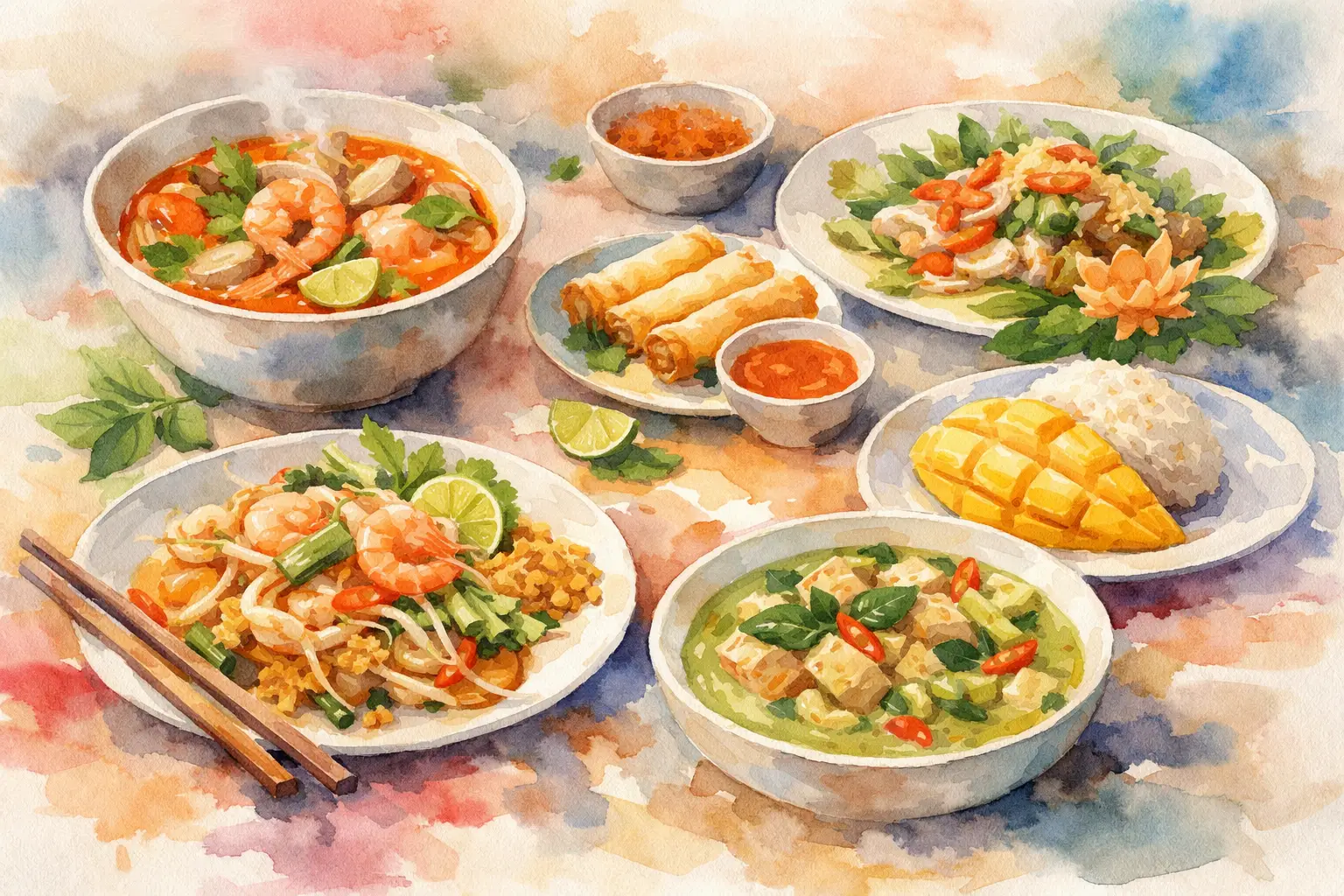
Staring at a Thai menu when you are hungry is its own kind of pressure. Everything sounds good, half the dish names may be unfamiliar, and you do not want to end up with something much hotter, sweeter, or heavier than you expected. If you are wondering what to order at thai restaurant menus, the easiest move is to choose by flavor first, then by appetite, then by spice level.
Thai food usually gives you a strong flavor direction right away. Some dishes lean bright and sour with lime and lemongrass. Others are rich with coconut milk, deeper with curry paste, or savory from garlic, basil, and fish sauce. Once you know which lane you want, ordering gets much easier.
What to order at a Thai restaurant if you are new to Thai food
If this is your first time ordering Thai, start with dishes that are familiar in format but still clearly Thai in flavor. Pad Thai is the obvious example, and there is a reason it stays popular. It gives you stir-fried noodles with tamarind, a light sweetness, balanced acidity, egg, and usually peanuts. It is approachable, filling, and a safe choice for most people.
Pad See Ew is another smart first order if you like a deeper, more savory noodle dish. The wide rice noodles, soy-based seasoning, Chinese broccoli, and egg make it feel comforting and straightforward. Compared with Pad Thai, it is less tangy and usually less sweet.
For rice lovers, Thai fried rice is one of the easiest entries on the menu. Jasmine rice stir-fried with garlic, egg, and your choice of protein gives you a familiar base with more fragrance and seasoning than standard takeout fried rice. If you want something clean and dependable for delivery, this is often a very good call.
A mild curry also works well for beginners, especially yellow curry or a gentler coconut-based curry with chicken. You still get Thai herbs and spice paste, but the coconut milk softens the heat and gives the dish a rounder, richer finish.
Order by flavor, not just by dish name
The best answer to what to order at thai restaurant menus depends on the kind of flavor you want right now.
If you want something rich and comforting
Go for curry. Green curry tends to be more herbal and sharper, with basil and green chilies giving it a fresh but stronger profile. Red curry is usually a little deeper and warmer. Yellow curry often feels mellow and slightly sweeter, with a softer spice level that many diners find easy to like.
Tom Kha soup also fits here if you want comfort without a full curry. Coconut milk, galangal, lemongrass, kaffir lime leaf, and mushrooms create a soup that tastes creamy, aromatic, and lightly tangy rather than heavy. It is especially good when you want something warm that still tastes fresh.
If you want something bright and punchy
Tom Yum soup is the move. It is hot, sour, and fragrant, with lemongrass, lime, chili, and herbs leading the way. It wakes up your palate fast. If you enjoy bold soups with a clear citrusy edge, this is one of the strongest orders on the menu.
Green papaya salad, often called Som Tam, also belongs in this category. It is crisp, tart, spicy, and salty with a little sweetness underneath. This is not the dish to order if you want something mild, but it is excellent if you want crunch and energy on the table.
If you want savory stir-fry flavor
Look at basil dishes, garlic stir-fries, and classic noodle plates. Thai basil chicken or beef gives you a fast hit of garlic, chili, and fragrant basil with a more direct savory profile than curry. It pairs well with steamed rice and works for lunch or dinner.
Drunken noodles are another strong pick if you like bold stir-fried flavor. The noodles are usually broad and chewy, and the sauce leans salty, spicy, and aromatic with basil. Compared with Pad Thai, this dish is less sweet and more aggressive.
The best Thai dishes for different cravings
Sometimes the easiest way to order is by mood rather than cuisine knowledge.
If you want a fast, satisfying solo meal, noodles are usually the safest category. Pad Thai, Pad See Ew, and drunken noodles all travel well and feel complete on their own. The main difference is flavor. Pad Thai is tangy-sweet, Pad See Ew is savory and mellow, and drunken noodles are bolder and spicier.
If you want a proper dinner that feels generous, curry with jasmine rice is hard to beat. It gives you sauce, protein, vegetables, and enough depth to feel like a full meal. This is also a good choice for sharing because one curry can easily work alongside a noodle or rice dish.
If you want something lighter, soup and salad make more sense. Tom Yum, Tom Kha, or papaya salad can keep the meal fresh and flavorful without feeling too heavy. That said, lighter does not always mean milder. A papaya salad can hit harder than a noodle dish when it comes to chili and acidity.
If you are ordering for a group, build contrast into the table. One curry, one noodle, one rice dish, and one appetizer gives everyone a better spread than ordering three similar mains.
Appetizers worth ordering
Thai appetizers are not just filler. The right starter can set up the whole meal.
Spring rolls are an easy crowd-pleaser and work especially well if some people at the table prefer familiar options. Chicken satay is another strong starter because it brings grilled flavor, tenderness, and a peanut sauce that balances sweet, savory, and nutty notes.
If you want something with more crunch and salt, fried shrimp or wings can fit the table well, especially for mixed groups where not everyone wants a fully traditional order. Rustic Thai Kitchen also serves broader Asian-style options, which can help when one person wants Tom Yum and another wants a simpler fried rice or appetizer plate.
How to choose your spice level without regret
Spice is where many orders go wrong. Thai food can be wonderfully hot, but heat should support the dish, not erase it.
If you are unsure, start at mild or medium, especially with curries, basil stir-fries, and papaya salad. You can always go hotter next time. Green curry and drunken noodles often feel hotter than people expect, while Pad Thai and Pad See Ew are usually easier to keep in a moderate range.
It also depends on the dish itself. A coconut curry may carry chili in a softer way because the richness smooths it out. Tom Yum and papaya salad can taste sharper because sourness and spice hit together. If you are ordering for delivery and cannot adjust at the table, it makes sense to be slightly conservative.
What to order at Thai restaurant menus for delivery
Not every dish travels the same way. For delivery, stir-fried noodles, fried rice, curries, and satay usually hold up very well. They stay flavorful, keep their texture reasonably well, and reheat without much trouble.
Crispy items can soften in the container, so they are best when delivery is fast or when you do not mind losing a little crunch. Soups generally travel well, but if you are ordering a full spread, make sure you still have at least one more substantial dish on the table.
For families or shared meals, a practical order is one soup, one curry, one noodle, one rice, and an appetizer. That gives variety without making the meal feel random.
A few easy combinations that rarely miss
If you want a dependable order for one person, try Tom Kha with Pad See Ew. If you want something brighter, pair Tom Yum with Thai fried rice. If you are feeding two people, green curry with jasmine rice and Pad Thai is a balanced combination because one dish is saucy and herbal while the other is noodle-based and slightly tangy.
For a group, chicken satay, papaya salad, a curry, basil stir-fry, and fried rice make a strong mix. You get creamy, crisp, spicy, savory, and fresh elements in one meal.
The real trick is not ordering the “best” Thai dish in some abstract sense. It is ordering the right Thai dish for your taste, hunger level, and comfort with spice. Start there, and the menu gets a lot more rewarding. The next time you open a Thai menu, choose the flavor you want first and let the dish name follow.