Authentic Thai Curry Ingredients Explained

A good Thai curry tells you what it is from the first spoonful. You taste the herbs first, then the spice, then the richness, and finally that balanced finish that makes authentic thai curry ingredients so different from a generic spicy sauce. If you have ever wondered why one curry tastes bright and layered while another tastes flat, the answer is almost always in the ingredient base.
Thai curry is not built around heat alone. The real character comes from fresh aromatics, fermented depth, creamy coconut milk, and a careful balance of salty, sweet, sour, and savory notes. That is why two curries with the same color can taste completely different depending on how the paste is made and what goes into the pot.
What makes authentic Thai curry ingredients different
The biggest difference is freshness. In authentic Thai cooking, curry starts with herbs, roots, chilies, and seasonings that each bring a clear purpose. Lemongrass adds citrusy lift. Galangal brings a sharper, more peppery edge than ginger. Kaffir lime leaves give the curry a fragrant, unmistakably Thai aroma. Shrimp paste adds depth and saltiness that cannot be replaced by chili alone.
That balance matters just as much as the ingredient list itself. Thai curry should not taste only creamy, only spicy, or only sweet. A proper green curry, for example, can be rich from coconut milk but still feel fresh because of basil, lime leaf, and green chilies. A red curry may be deeper and slightly sweeter, but it still needs aromatic lift and enough seasoning to avoid feeling heavy.
This is where many simplified versions miss the mark. They may use curry powder, extra sugar, or too much creaminess, which softens the flavor instead of building it. Authentic curry ingredients create contrast, and that contrast is what makes the dish feel complete.
The core authentic Thai curry ingredients
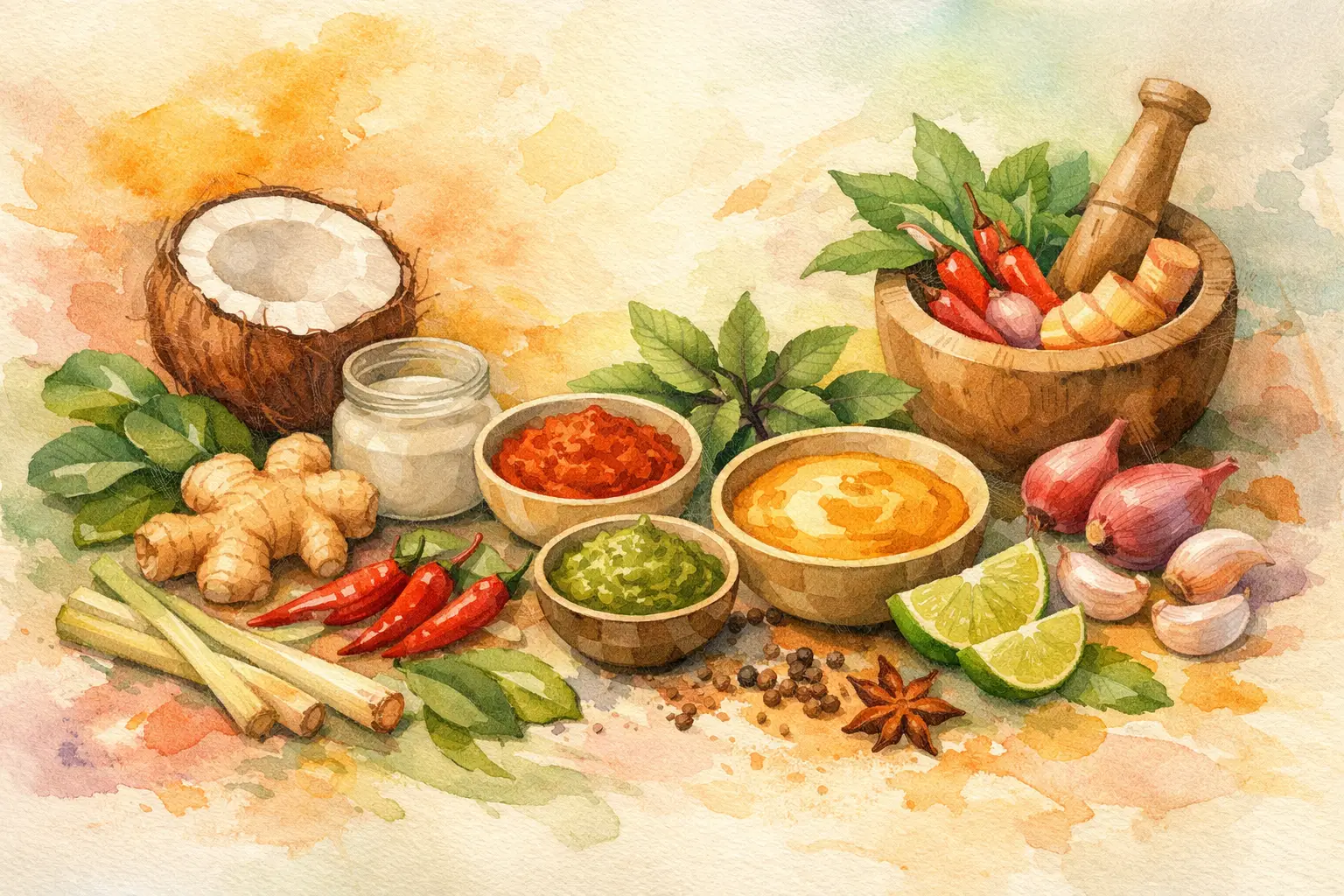
At the heart of most Thai curries is curry paste. That paste is where the main flavor is built, and it usually includes chilies, lemongrass, galangal, garlic, shallots, kaffir lime zest or leaves, coriander root, and shrimp paste. Some versions also include white pepper, cumin, or cilantro stems depending on the curry style.
Fresh chilies do more than add heat. They bring fruitiness, color, and freshness. Red chilies give body and warmth to red curry paste, while green chilies create the sharper, more herbal profile of green curry. Dried chilies are often used for deeper red curries because they add color and a slightly smoky roundness.
Lemongrass is one of the clearest markers of Thai flavor. It gives the paste a clean citrus note without the sharp acidity of lemon juice. Galangal works alongside it, but the flavor is more earthy and peppery. If a curry uses ginger instead of galangal, the result can still be tasty, but it will not have the same authentic profile.
Garlic and shallots bring sweetness and backbone. They help round out the sharper notes from herbs and chilies. Kaffir lime leaves, or sometimes lime zest in the paste, add perfume and brightness. Then there is shrimp paste, which can smell strong on its own but becomes savory and complex when blended into curry.
Coconut milk is the other major pillar. It softens spice, carries aroma, and creates the smooth texture people expect from many Thai curries. But it should not drown the dish. Good curry still tastes alive under the richness. That is why cooks often simmer the paste first to release its oils and fragrance before adding coconut milk gradually.
Fish sauce is another essential ingredient. It provides salt, umami, and depth in a way plain salt cannot. Palm sugar is often used to round out the flavor, not to make the curry sugary. Depending on the dish, a little tamarind or lime may add gentle acidity. Thai basil, pea eggplant, bamboo shoots, or fresh vegetables then shape the final style of the curry.
Authentic Thai curry ingredients by curry type
Green curry ingredients
Green curry is one of the freshest and most herbal Thai curries. Its paste usually includes green chilies, lemongrass, galangal, garlic, shallots, kaffir lime, coriander root, and shrimp paste. Thai basil is especially important here because it gives green curry its sweet, peppery finish.
Coconut milk, fish sauce, palm sugar, pea eggplant, and sometimes bamboo shoots are common in the finished dish. Green curry often feels hotter than red curry, but the flavor should still be balanced and fragrant rather than aggressive.
Red curry ingredients
Red curry relies on dried red chilies for its color and deeper flavor. The paste often includes lemongrass, galangal, garlic, shallots, kaffir lime, coriander root, and shrimp paste, much like green curry, but the dried chilies create a warmer, fuller base.
This curry works especially well with chicken, beef, shrimp, or roasted vegetables because it has enough body to hold richer ingredients. Red curry can lean slightly sweet, especially with coconut milk, but it still needs savory and herbal notes to stay balanced.
Panang curry ingredients
Panang curry is richer, thicker, and a little sweeter than standard red curry. It usually starts from a red-style paste but includes ground peanuts or a nuttier profile, along with coconut milk, fish sauce, palm sugar, and kaffir lime leaves.
The texture is one of its defining traits. Panang clings to meat rather than sitting like a thin broth. That makes the seasoning even more important because a thicker curry can become too sweet or too heavy if the paste lacks enough aromatic depth.
Massaman curry ingredients
Massaman curry shows the broader influences within Thai cuisine. It typically includes dried chilies, lemongrass, galangal, garlic, shallots, shrimp paste, and warm spices such as cinnamon, cardamom, cloves, cumin, and nutmeg. Potatoes, onions, peanuts, tamarind, palm sugar, fish sauce, and coconut milk are common in the final dish.
Compared with green or red curry, Massaman is less sharp and more gently spiced. It is a good example of how authentic Thai curry ingredients are not one fixed formula. The profile changes by region, dish style, and what the curry is meant to highlight.
Why substitutions change the flavor
Some substitutions are practical. Not everyone has access to fresh galangal or kaffir lime leaves every day. But there is a difference between adapting and replacing the core identity of the dish.
Using ginger instead of galangal makes the curry warmer and more familiar, but less distinctly Thai. Using lemon zest instead of kaffir lime leaf can add brightness, but it will not recreate that same floral aroma. Swapping fish sauce for soy sauce changes the savory character, and leaving out shrimp paste removes some of the deep, fermented backbone.
Even coconut milk matters. Thinner, lower-fat products can make the curry watery. Overly sweet coconut cream can throw off the balance. That does not mean a curry becomes bad with substitutions. It just means the result may be inspired by Thai curry rather than truly authentic.
How to recognize quality in Thai curry
A well-made curry smells layered before you even taste it. You should catch herbs, spice, and coconut together, not one flat note. The sauce should look glossy and rich but not heavy like gravy. The first taste should give you more than heat. You should notice freshness, savory depth, and a finish that makes you want another bite.
Texture also tells you a lot. The paste should feel integrated into the curry, not grainy or separated. Vegetables should still have some structure. Proteins should absorb flavor rather than sit in a sauce that feels added afterward.
For diners ordering from a restaurant, ingredient language can be a useful clue. When a menu mentions lemongrass, galangal, kaffir lime leaf, Thai basil, tamarind, and coconut milk clearly, it usually signals a kitchen that is serious about flavor building. That kind of detail helps customers order with more confidence, especially if they want something that tastes true to the dish.
Choosing the right curry for your taste
If you like bright herbs and stronger heat, green curry is usually the best choice. If you want a rounder, fuller flavor, red curry is often the safer pick. Panang is a good option if you enjoy a richer, creamier sauce, while Massaman suits people who want warmth and spice without an intense chili kick.
It also depends on what you are pairing it with. Seafood works beautifully with lighter, more fragrant curries. Beef and chicken can handle heavier, thicker sauces. If you are ordering for a group, choosing one sharper curry and one richer curry gives the table more variety without making the meal complicated.
At Rustic Thai Kitchen, that idea matters because people order with different comfort levels. Some want the familiar richness of coconut curry, while others are looking for the fresh herbal notes that make Thai food stand out from standard takeout.
The best place to start is with the ingredients. Once you know what belongs in a real Thai curry, the flavors make more sense, and choosing your next dish gets much easier. A curry should taste like care, not shortcuts.