Thai Fried Rice vs Chinese Fried Rice

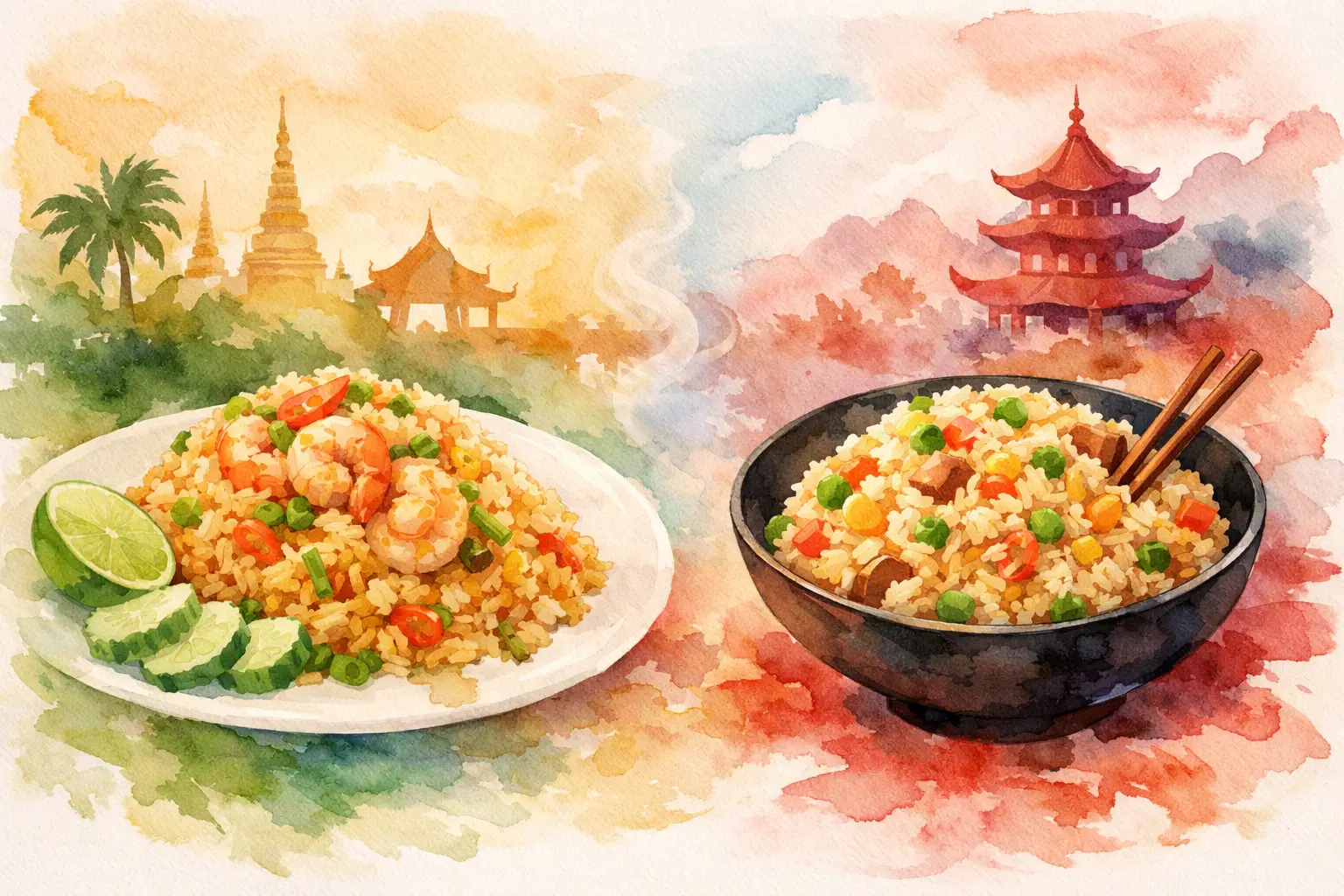
If you are choosing between thai fried rice vs chinese fried rice, the difference shows up fast – in the aroma, the seasoning, and the first bite. One leans bright, savory, and fragrant with jasmine rice and fish sauce. The other usually goes for a more neutral, wok-fired balance built around soy sauce, egg, and a lighter grain separation. Both are satisfying. They just satisfy in different ways.
For many diners, fried rice sounds simple until the plate arrives. Then the details matter. Is the rice soft and fragrant or drier and smoky? Is the flavor deeper from soy sauce or sharper from lime, garlic, and white pepper? Is the dish built to sit beside curry and stir-fry, or is it complete on its own with egg, vegetables, and protein? Those are the differences that make ordering easier.
Thai fried rice vs chinese fried rice: the core difference
The simplest way to separate them is this: Thai fried rice usually highlights fragrance and seasoning from Thai pantry ingredients, while Chinese fried rice often focuses on wok hei, texture, and restrained seasoning. Neither style is one fixed recipe. Both have regional variations, restaurant variations, and house versions. But the overall pattern is clear enough to help you choose.
Thai fried rice is commonly made with jasmine rice, which has a naturally aromatic character and a softer bite. The seasoning often includes fish sauce, garlic, white pepper, and sometimes oyster sauce or a light touch of soy sauce. You may also get tomato, onion, scallion, cilantro, cucumber, and a lime wedge on the side. That finishing setup matters because Thai fried rice is often designed to be adjusted at the table with lime, prik nam pla, or extra chili.
Chinese fried rice usually starts with rice that fries up a little drier and more separate, often long-grain rice depending on the kitchen and style. The seasoning is generally centered on soy sauce, oyster sauce, salt, and sometimes sesame oil. Egg is a major part of the flavor and texture, and the final profile is often more savory than herbal or citrusy. In many versions, the goal is clean stir-fried flavor, not a lot of garnish.
Rice, seasoning, and aroma
The rice itself changes the whole dish. Thai fried rice made with jasmine rice has a softer, more floral character. It can absorb sauce quickly and carry the aroma of garlic, fish sauce, and fresh herbs in a very direct way. Even when it is not spicy, it tends to taste more expressive.
Chinese fried rice often feels more about contrast. The grains stay distinct, the egg coats parts of the rice, and the seasoning usually stays controlled rather than loud. A good version tastes savory and balanced, with a little smokiness from the wok if the heat is high enough. That can make it feel heavier or lighter depending on the recipe, but usually it is less fragrant than Thai fried rice and more focused on texture.
This is where preference matters. If you want a fried rice that smells vivid before you even take a bite, Thai style often wins. If you want a fried rice that pairs easily with many side dishes and does not push too much sweetness, acidity, or herb flavor, Chinese style is often the easier pick.
Why Thai fried rice tastes brighter
Thai fried rice often gets its identity from fish sauce, white pepper, garlic, and garnishes. Fish sauce brings salinity with a deeper fermented edge than soy sauce. Lime adds lift. Cucumber cools the plate. Cilantro or scallion brings freshness. Even a simple chicken fried rice can taste layered because the supporting ingredients are doing more than just seasoning the rice.
Tomato is another clue in many Thai restaurant versions. It adds a little sweetness and moisture, which gives the dish a softer, juicier finish. Not every recipe uses it, but when it appears, it pushes the flavor further away from classic Chinese fried rice.
Why Chinese fried rice tastes more savory and toasted
Chinese fried rice is often less about garnish and more about what happens in the wok. Hot oil, egg, rice, and sauce come together quickly, and a skilled cook keeps the grains separated while creating light browning and smoky depth. Soy sauce brings color and savory backbone. Oyster sauce, when used, adds richness. Green onion and peas are common, but they usually support rather than define the dish.
That does not mean Chinese fried rice is plain. A good one can have excellent depth. It is just a different kind of depth – more toasted and rounded, less sharp and herb-forward.
Protein, vegetables, and what usually comes with each style
Both styles can be made with chicken, beef, shrimp, crab, or mixed seafood. Both can also be served as a flexible house dish for people who want something familiar. The difference is in the supporting cast.
Thai fried rice tends to include ingredients that keep the dish lively. Onion, tomato, scallion, and sometimes Chinese broccoli or basil can appear depending on the kitchen. A lime wedge on the plate is common, and that small detail changes the final bite more than many people expect. Squeeze the lime, and the whole dish lifts.
Chinese fried rice often uses peas, carrots, egg, scallion, and diced protein. It can feel more uniform in texture, which many diners like because every spoonful tastes consistent. If you are ordering for kids or for a mixed group, that familiar profile can be the safer choice.
Which one is spicier?
Usually, neither has to be spicy by default. But Thai fried rice is more likely to offer an easy path to heat. Fresh chili, chili fish sauce, or chili paste can be added without changing the dish too much. Spice fits naturally into the overall flavor profile.
Chinese fried rice is usually not built around heat unless you are ordering a specific spicy version. Its flavor depends more on savory seasoning and wok fry than on chili. So if you want fried rice with room for brightness and spice, Thai style often gives you more flexibility. If you want a milder baseline, Chinese style is often more straightforward.
Thai fried rice vs chinese fried rice for different cravings
If you want something fresh-tasting, fragrant, and a little more dynamic, Thai fried rice is usually the better match. It works well when you want a full meal that already feels seasoned and complete on its own. It also pairs naturally with Thai dishes like grilled satay, basil stir-fry, curries, or soups with lemongrass and galangal.
If you want something classic, comforting, and easy to share with a wider range of dishes, Chinese fried rice makes sense. It is often the better choice when the rest of the table is ordering several mains and you want a dependable side that does not compete too hard for attention.
There is also a texture question. Thai fried rice can be slightly softer because of jasmine rice and juicier vegetables like tomato and onion. Chinese fried rice is often drier in a good way, with grains that stay separate and lightly coated. Some people read that as cleaner. Others read it as less exciting. It depends on what you want from the meal.
When Thai fried rice is the better order
Thai fried rice is a strong choice when you like bold but balanced seasoning. It suits diners who want garlic, fish sauce, herbs, and a fresh finish without committing to a very spicy dish. It is also a smart option if you are ordering one main for yourself and want something satisfying without extra sides.
At a place like Rustic Thai Kitchen, where Thai flavors are central and the menu is built for easy online ordering, Thai fried rice also makes sense for customers who want a familiar format with more personality than standard takeout rice. It is approachable, but it still carries the signature flavors that make Thai food stand out.
When Chinese fried rice is the better order
Chinese fried rice works best when you want comfort and consistency. It is easy to pair with crispy appetizers, saucy entrees, or shared family-style dishes. If someone in your group prefers milder seasoning or does not enjoy fish sauce, lime, or herbs, Chinese fried rice may be the easier fit.
It can also be the right pick if your favorite part of fried rice is the wok flavor itself. When done well, that toasted savory character is the whole point.
So which one is better?
Better is not really the useful question. The more useful question is what kind of fried rice you want tonight. If you want fragrance, a little brightness, and a plate that feels distinctly Thai, go with Thai fried rice. If you want a savory, familiar, wok-fired classic with broad appeal, go with Chinese fried rice.
A good fried rice order should match the rest of your meal and your mood. Some nights call for soy sauce, egg, and smoky grains. Other nights call for jasmine rice, garlic, lime, and the kind of aroma that hits the table before the plate fully lands. Knowing that difference makes ordering simpler, and the meal more satisfying.