Difference Between Pad Thai and Pad See Ew

Trying to decide between two of the most popular Thai noodle dishes? The difference between pad thai and pad see ew comes down to noodles, sauce, texture, and the kind of craving you want to satisfy. One is tangy, nutty, and lively. The other is savory, smoky, and comfort-driven.
If you have ever looked at a Thai menu and paused at these two names, you are not alone. They are both stir-fried noodle favorites, and both are easy to love. But they deliver very different eating experiences. Once you know what sets them apart, ordering gets a lot easier.
The difference between pad thai and pad see ew at a glance
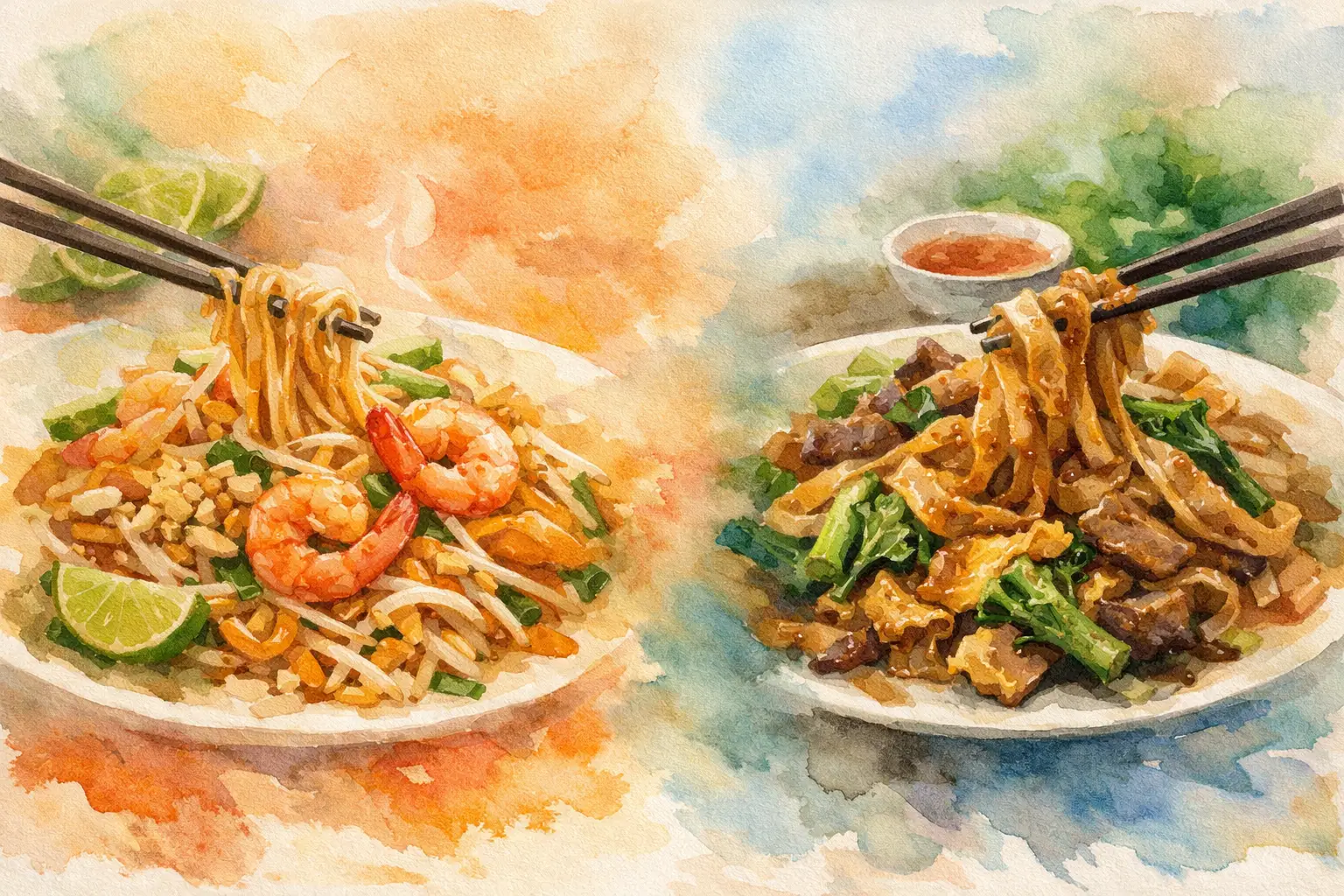
Pad thai is usually made with thin rice noodles stir-fried with tamarind sauce, fish sauce, egg, bean sprouts, and often crushed peanuts. It has a balance of sweet, sour, salty, and a little umami, with a lighter, springier feel.
Pad see ew uses wide rice noodles and a darker soy-based sauce, usually with egg and Chinese broccoli. The flavor leans savory and slightly sweet, with a richer taste and a softer, chewier texture. If pad thai feels bright and punchy, pad see ew feels warm and deeply satisfying.
That is the short answer. The better answer is in the details, because texture, sweetness, and wok flavor matter just as much as ingredients.
Noodles make a big difference
The first thing you notice is the noodle itself. Pad thai uses thinner rice noodles. They catch the sauce without becoming too heavy, which helps the dish stay light on the palate even when it includes egg, tofu, shrimp, or chicken.
Pad see ew is built around wide rice noodles. These noodles are broader, softer, and more substantial. They absorb the soy-based sauce differently and create a fuller bite. That is one reason pad see ew often feels more like comfort food, while pad thai feels more lively and layered.
For some diners, this noodle difference alone decides the order. If you like a more delicate, springy noodle, pad thai usually wins. If you want a chewier, silkier noodle with more heft, pad see ew is often the better pick.
Sauce and seasoning: tamarind versus soy
This is where the two dishes separate even more clearly.
Pad thai gets much of its signature flavor from tamarind. Tamarind gives the dish its gentle tang, which is then balanced by sweetness and saltiness. Fish sauce adds depth, sugar rounds it out, and lime often sharpens the finish. The result is a dish with more contrast in every bite.
Pad see ew leans on dark soy sauce and other soy-based seasonings. Instead of a noticeable sour note, you get savory depth, a mild sweetness, and a more rounded finish. Good pad see ew also carries a touch of wok char, which adds that slightly smoky, stir-fried taste many people look for in noodle dishes.
If you enjoy a noodle dish with more sweet-sour balance, pad thai is usually the better match. If you want something less tangy and more savory, pad see ew tends to be the safer choice.
Texture and mouthfeel
Flavor gets attention, but texture is often what people remember.
Pad thai typically has more contrast in the bowl. You get tender noodles, soft egg, crisp bean sprouts, chopped peanuts, and sometimes a wedge of lime on the side. That mix gives the dish a little crunch and freshness between the richer bites.
Pad see ew is smoother and more unified. The wide noodles, tender egg, and Chinese broccoli create a softer, more cohesive texture. There can still be some bite from the greens, but overall it eats in a more mellow, comforting way.
Neither is better across the board. It depends on mood. If you want texture with a little brightness and lift, pad thai stands out. If you want something that feels rich, soft, and deeply stir-fried, pad see ew usually hits the spot.
Typical ingredients in each dish
While recipes vary from kitchen to kitchen, a classic pad thai often includes rice noodles, egg, bean sprouts, garlic, tamarind, fish sauce, sugar, and peanuts, with protein options like shrimp, chicken, or tofu. Some versions include chives or green onion, and lime is often served alongside.
A classic pad see ew usually includes wide rice noodles, egg, Chinese broccoli, garlic, and dark soy sauce, with chicken, beef, shrimp, or tofu as common protein choices. The ingredient list is simpler in feel, and that simplicity is part of the appeal.
This matters when you are ordering for personal taste or dietary preference. If you do not like peanuts, bean sprouts, or tangier sauces, pad see ew may feel more straightforward. If you like bold contrast and a few extra toppings, pad thai often gives you more going on in the bowl.
Which one is sweeter?
People often assume pad thai is always sweeter, but that is only partly true.
Pad thai usually has a more noticeable sweet-and-sour balance because tamarind and sugar work together. The sweetness is there, but it is checked by acidity and salt.
Pad see ew can also be sweet, especially from dark soy sauce and added sugar, but it reads as gentler and more savory overall. The sweetness sits in the background rather than leading the dish.
So if you are sensitive to sweet flavors, the answer is not automatic. A well-made pad thai should not taste like dessert. A well-made pad see ew should not taste flat or overly sugary. It comes down to balance and the kitchen’s style.
Which dish is spicier?
Neither dish is necessarily spicy by default.
Pad thai is often served mild, with chili added to taste. Pad see ew is also usually mild unless the kitchen builds in heat or you request extra spice. Thai noodle dishes are more about balance than automatic heat.
If you like spice, both can handle it. But spice changes them differently. In pad thai, heat sharpens the sweet-sour profile. In pad see ew, heat cuts through the richer soy flavor and makes the dish feel a little less heavy.
Pad thai vs pad see ew for first-time Thai food customers
For someone new to Thai food, both are approachable. The better starting point depends on what you already like.
If you enjoy sweet-salty combinations, peanut toppings, and a little tang, pad thai is often the easiest entry. It is familiar to many diners and has a flavor profile that feels bright and friendly.
If you usually order soy-based noodle dishes, chow mein-style meals, or savory stir-fries, pad see ew may feel more natural. It is often the better bridge for diners who want Thai food but prefer something less tart and less texturally busy.
For families or group orders, it is common to choose both. They complement each other well because they do not overlap as much as people think.
The difference between pad thai and pad see ew when ordering online
When you are ordering delivery, texture matters even more.
Pad thai usually travels well because the thinner noodles hold sauce without becoming too dense. The peanuts and bean sprouts can still give a little contrast, especially if packed well. It tends to arrive with its flavor profile intact.
Pad see ew also travels well, but because the noodles are wider and softer, it can feel heavier by the time it gets to you. That is not necessarily a downside. For many people, that rich, tender texture is exactly why they order it.
If you want a brighter noodle dish for lunch, pad thai can be the better choice. If you want a more filling dinner that leans savory and comforting, pad see ew often makes more sense. At Rustic Thai Kitchen, both fit the kind of meal that feels satisfying without being complicated to choose.
So which one should you order?
Order pad thai if you want contrast – tangy tamarind, a little sweetness, some crunch, and a lighter noodle feel. It is a good pick when you want something energetic and layered.
Order pad see ew if you want depth – wide noodles, savory soy flavor, soft texture, and that warm stir-fried comfort. It is a good pick when you want something fuller and more mellow.
There is no universal winner, and that is the point. These dishes are popular for different reasons. One is not a substitute for the other. They simply answer different cravings.
The next time you are stuck choosing, think less about which dish is more famous and more about what sounds right at that moment. Bright and tangy, or rich and savory? Your best order starts there.